dharma-talks
The Four Stages of Silent Illumination
The Four Stages of Silent Illumination
The Four Stages of Silent Illumination
By Venerable Guo Huei
By Venerable Guo Huei

Editor’s Note
Venerable Guo Huei, a Dharma heir of the late Chan Master Sheng Yen, currently serves as the sixth Abbot President of Dharma Drum Mountain in Taiwan. A scholar and practitioner, he holds a PhD in Buddhist Literature from Rissho University in Japan and lectures at Dharma Drum Sangha University. He was ordained under Master Sheng Yen in 1985 and named one of his Dharma heirs in 2005.
This article is adapted from a Dharma talk given during a seven-day Volunteer Chan Retreat at the Dharma Drum Retreat Center on December 12, 2012. In it, Venerable Guo Huei presents the four progressive stages of Silent Illumination as taught by Master Sheng Yen, guiding practitioners from contemplating the whole body to the absolute relinquishment of self-centeredness in the state of no-mind. Translated by Venerable Chang Hwa and Ricky Lee and edited by Edward Lin.
— ✦ —
The Four Stages of Silent Illumination
Everyone knows that the Silent Illumination method taught by Master Sheng Yen comprises four progressive stages: contemplating the whole body, contemplating the whole environment, contemplating the infinity of inner and outer, and the absolute contemplation of Silent Illumination.
The basic prerequisites for practice are great faith, great vows, great diligence, and lastly, great compassion. By “great faith,” one aspect is the person who gives guidance—the teacher or a wise mentor. Of course, it also means believing that you yourself are capable of practice. In addition, it is faith in the Dharma—the principles and methods of practice
1. Contemplating the Whole Body
Among the four stages, the first stage is contemplating the whole body. In this stage, our attention is usually drawn to a local place and becomes focused on a particular area. Therefore, the practice is this: when we become aware that attention has settled on a certain part of the body, immediately place it back on the whole body. Although we are continuously observing the whole body, there is no need to make any deliberate effort; simply being aware is enough.
When practicing Silent Illumination, very little effort is required. What is meant by contemplating the whole body is not deliberately watching the whole body but rather expanding the object of awareness to include—and be aware of—the entire body. This is not done through imagination, but through direct and natural knowing.
We can sense the presence of the body and use this bodily sensation and tactile awareness as the basis of practice. This sensation or tactile feeling of the whole body is total rather than localized. To avoid falling into habitual control by the conscious mind, while contemplating the whole body, it is enough to know whether we being drawn away by local sensations.
When contemplating the whole body is done well, it is like jumping into water while swimming: the entire body feels immersed in water, and the body’s heaviness diminishes, or may even disappear.
2. Contemplating the Whole Environment
The second stage is contemplating the whole environment. As Master Sheng Yen explained in Hoofprint of the Ox: Principles of the Chan Buddhist Path, Silent Illumination does not use the "six sense faculties" nor does it rely on seeing, hearing, feeling, or knowing.
This has two meanings. First, it means not using or concerning specific parts of the six sense faculties: eyes, ears, nose, tongue, body, or mind. Second, it refers to the Sudden Method of absolute contemplation in which the mind is neither inside, outside, nor in between. Our mind is not inside the body, nor outside the body, nor elsewhere in between. Our mind goes beyond the body—it pervades all space and extends throughout the entire Dharma Realm. This is what is meant by "the mind embraces the vast emptiness and pervades all Saha worlds."
At the second stage, the entire environment is experienced as inseparable from the body. Besides using bodily sensations and tactile feelings, we can also use the way ear faculty and auditory contact to examine this. When we hear a sound, the sound must be at a distance from the ear faculty. If our mind is confined within our body, it would be impossible for us to hear sounds from outside of the body. Therefore, our mind cannot be only inside the body.
Upon reaching the second level, when we hear sounds, we clearly know that our mind has already gone beyond the body. Then what happens? At first, the sound may seem to come from a single point or a particular direction, but we immediately recognize that our mind is not located only at that point or in that direction; rather, it is everywhere as a whole, encompassing the entire environment.
Since both the body and the entire environment are our mind, the ear faculty does not need to reach outward to grasp at specific sounds; instead, sounds are allowed to come to the ear naturally. At this point, we are equally aware of all sounds—of everything that is heard— and returning from the "heard" to the "hearer." This is what the Śūraṅgama Sūtra, in the chapter on the complete penetration of the ear faculty, describes as returning to the inner nature of hearing.
Here, awareness is not drawn away by any specific sound; this is the contemplation of the total environment. However, to avoid drifting into conceptualization, we simply maintain this kind of awareness or contemplation without fixating on any sound or direction.

Photo by pexels-kathrinepnw
3. Contemplating Infinite Inner and Outer
The third stage is contemplating the infinity of inner and outer, and it uses the mind faculty and mental contact.
When the second stage of practice is done well, there will be very few deluded thoughts. Any thought that arises in the mind is seen with complete clarity. We then realize that the true mind is inherently complete and should not contain deluded thoughts.
When you notice a deluded thought, do not pay attention to that thought, and immediately return to the state of no thought, knowing that the mind as a whole is free from deluded thought. In other words, a mind with deluded thoughts must be localized, whereas the mind as a whole is free from such thoughts. If we remain in this wholeness of mind, this mind is indeed a unified mind. When this third stage is well practiced, it naturally aligns with the state of Samadhi.
At the first stage, when our awareness shifts to a local region of the body, we immediately return the awareness to the whole body. We do not deliberately apply force; we simply remain gentle and aware—that is enough. This is the approach that uses body contact and body faculty.
At the second stage, the mind is no longer confined within the body. The true mind encompasses the entire environment and space. This can be exercised through auditory contact and the ear faculty.
At the third stage, when we are aware of deluded thoughts, we know that the mind is localized. At this moment, disregard deluded thoughts and simply return to the whole mind. This approach uses mental contact and the mind faculty.
The difference between the second and third stages is that, in the second stage, although we conceptually recognize the entire environment as our mind, our contemplative awareness has not yet fully actualized that the entire environment is indeed our mind. Our mind is merely moving in that direction.
At the third stage, our mind power has matured to the point where the entire environment perceived is our whole mind. This is the state of infinite inner and outer, entering a state of absolute totality, where nothing lies outside the mind
4. Absolute Contemplation of Silent Illumination
The fourth stage is the absolute contemplation of Silent Illumination. This is the total relinquishment of all deluded thoughts and the letting go of both body and mind. This is what is meant by “dropping myriad conditions and not giving rise to any single thought.”
I vividly remember one time in the office of the Sheng Yen Education Foundation on Ren-ai Road, Master Sheng Yen talking about how easy and simple Silent Illumination is in a meeting with some of our monastic members. Master said to us, “It's not difficult to practice! Just drop all worldly conditions and do not give rise to any single thought!”
In comparison to Huàtóu Chan method, whose key lies in arousing a profound doubt sensation about life and death, the emphasis of the Silent Illumination is the cultivation of a deep insight into no-self.
The "Chapter on Bodhisattva Pure Wisdom" (清淨慧菩薩章) from the Sutra of Complete Enlightenment
“At all times, do not give rise to any deluded thought.”
“With deluded minds, do not extinguish them either.”
“Amidst in deluded realm, do not add conceptual understanding.”
“With no conceptual understanding, do not discern what is real.”
「居一切時,不起妄念。」
「於諸妄心,亦不息滅。」
「住妄想境,不加了知。」
「於無了知,不辨真實。」
These four lines all point to the stage of absolute contemplation of Silent Illumination.
“At all times, do not give rise to deluded thoughts.” This means not only refraining from deluded thoughts during sitting meditation, but also not giving rise to deluded thoughts at every moment and in every circumstance. This corresponds to the awakened state described in the Platform Sutra as "Mindfulness without deluded thoughts."
“Regarding deluded minds, do not extinguish them either.” Deluded minds are the minds with deluded thoughts, which are either coarse or subtle. Regardless of their coarseness or subtlety, once you are aware of them, they are already gone—the deluded mind does not exist fundamentally, so there’s no need to generate another deluded thought to eliminate the deluded mind.
“Abiding in the deluded realm, do not add conceptual understanding.” When a deluded thought arises, a corresponding deluded realm inevitably appears. However, one should not pursue that deluded realm by asking, "What is it?"
Deluded thoughts are illusory, which differs from the view of annihilation on nonexistence and nothingness. The deluded realm is ultimately unreal, so there is no need to judge or ascertain whether it is truly real or false. There is no need to define what the deluded realm is, nor is there a need to understand where it comes from.
It is like when we wake up from a dream—we certainly know that it is a dream realm and not real. The deluded realm is likewise fundamentally empty; upon knowing its emptiness, let it go immediately—there is no need for further inquiry.
“With no conceptual understanding, do not discern what is real.” True knowledge is not-knowing. However, this no conceptual understanding or not-knowing does not mean knowing nothing. Rather, it refers to our true, pure nature, which transcends both subject and object—neither a knower nor something known.
Chan Master Fayan Wenyi was traveling to Hunan on a pilgrimage. On the way, due to the heavy rain that caused the river to rise, he visited Zen Master Luohan Guichen instead.
Master Luohan asked, "What is the purpose of your pilgrimage?"
Fayan replied, "I do not know."
Luohan remarked, "Not knowing is most intimate."
Fayan suddenly got enlightened.
Not knowing does not mean being ignorant but realizing one's original face—free and unobstructed—dropping the discriminating mind that clings to the real existence of birth-and-death and afflictions.
Furthermore, these four lines from the Sutra of Complete Enlightenment can also be applied to the practice of Silent Illumination (Mozhao) at different levels. The first three stages of Silent Illumination can be accomplished through direct contemplation.
What is called direct contemplation is: when encountering any circumstance, do not give it a name, do not compare it, and do not describe it. In fact, everything we see, hear, or think of never departs from sounds, words, concepts, and symbols—none of which has any direct involvement with our pure, original nature of mind.
When contemplating the whole body, we do not pay attention to local area or give rise to discrimination. This is equivalent to “With no conceptual understanding, do not discern what is real.” When contemplating the whole environment, one is “abiding in the deluded realm, do not add conceptual understanding.” Simply maintaining contemplative awareness is enough.
The so-called realm itself is nothing other than the mind itself. If we were to add conceptual understanding to it, it would be like adding a head on top of a head. Deluded realms and deluded thoughts are originally nonexistent; they do not truly exist. They arise only because of the discriminating mind. Therefore, there is no need to pursue or investigate them. In practice, the fundamental attitude is always to return to the method and pay no attention to the deluded thoughts at all.
During the stage of contemplating the infinite inner and outer, when any thought arises, do not pay attention to it; you do not generate a subsequent thought to extinguish the previous one. This is precisely the meaning of: “With deluded minds, do not extinguish them either.”
This approach to contemplating the infinite inner and outer closely resembles contemplation of Ocean-Seal Samādhi. One observes only the entire vast, deep, and boundless ocean without paying attention to the slight ripples or waves on its surface. As contemplation continues, the waves eventually disappear, leaving only the ocean in totality. At this point, you have attained a very stable state of one-mind, a state of single-mindedness.
During the stage of absolute contemplation of Silent Illumination, one can drop all worldly conditions and not give rise to a single thought. As mentioned in Master Sheng Yen’s Teachings on Silent Illumination: “Let go of all phenomenal forms and rest from the myriad affairs.” Let go of all forms, whether concrete or abstract.
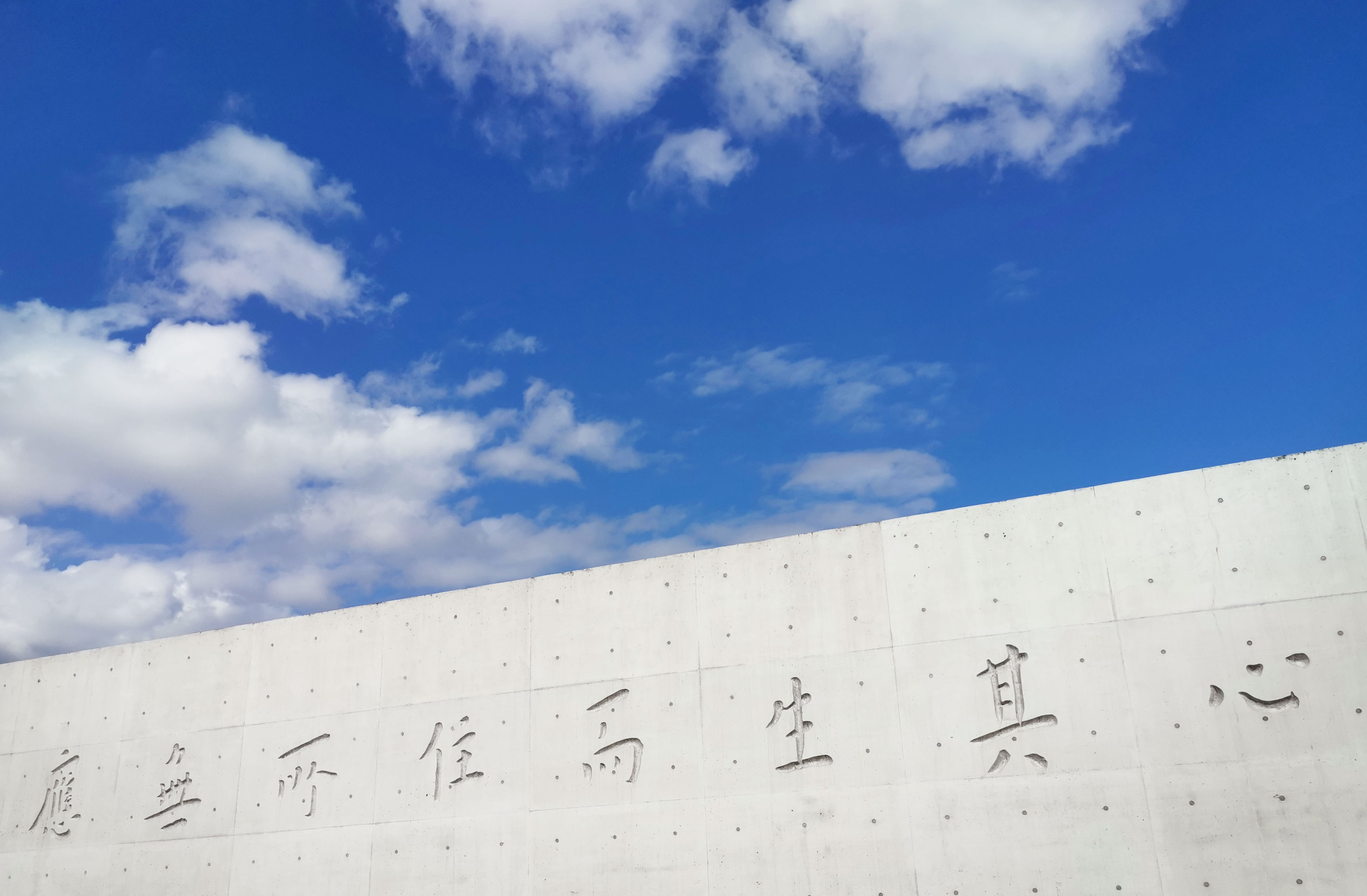
Photo by Ven. Chang Duo
This accords with the teaching of the Sutra of Complete Enlightenment: “At all times, do not give rise to deluded thoughts.” At this stage, one lets go of even the unified mind and enters the enlightened state of no-mind.
In fact, the practice of Silent Illumination can be traced back to the Chan method described by Patriarch Bodhidharma in The Treatise on the Two Entrances and Four Practices: “Externally, cease all conditions; internally, let the mind have no agitation. When the mind is like a wall, one may enter the Way.”
When ceasing all external conditions, everything—from outward perceptions such as seeing, hearing, and knowing to every thought arising within the mind—is an external condition; not a single one is excluded. Furthermore, internally, when the mind has no agitation, it is like a wall—giving rise to no deluded thoughts, solid and immovable. In such a state, one is ready to enter the Way.
In contrast, Huàtóu is a tight, contracting method. It uses an indirect yet actively generated doubt sensation to absorb, compress, and sever deluded thoughts. This ultimately leads to the shattering and exploding of the self-centered mind, revealing one's original face. This is a practice of reduction to the infinitely small.
Silent Illumination, however, is a relaxed, expanding method. Through a direct—directly contemplating the nature of mind, or just sitting—yet in a passive, non-doing approach, the method of no-method, it diffuses and settles deluded thoughts. Ultimately, self-centeredness falls away and is released, leading to awakening and the seeing of one's nature. This is a practice of expansion to the infinitely large.
— ✦ —
Cover photo by pexels daka & eberhard-grossgasteiger
Editor’s Note
Venerable Guo Huei, a Dharma heir of the late Chan Master Sheng Yen, currently serves as the sixth Abbot President of Dharma Drum Mountain in Taiwan. A scholar and practitioner, he holds a PhD in Buddhist Literature from Rissho University in Japan and lectures at Dharma Drum Sangha University. He was ordained under Master Sheng Yen in 1985 and named one of his Dharma heirs in 2005.
This article is adapted from a Dharma talk given during a seven-day Volunteer Chan Retreat at the Dharma Drum Retreat Center on December 12, 2012. In it, Venerable Guo Huei presents the four progressive stages of Silent Illumination as taught by Master Sheng Yen, guiding practitioners from contemplating the whole body to the absolute relinquishment of self-centeredness in the state of no-mind. Translated by Venerable Chang Hwa and Ricky Lee and edited by Edward Lin.
— ✦ —
The Four Stages of Silent Illumination
Everyone knows that the Silent Illumination method taught by Master Sheng Yen comprises four progressive stages: contemplating the whole body, contemplating the whole environment, contemplating the infinity of inner and outer, and the absolute contemplation of Silent Illumination.
The basic prerequisites for practice are great faith, great vows, great diligence, and lastly, great compassion. By “great faith,” one aspect is the person who gives guidance—the teacher or a wise mentor. Of course, it also means believing that you yourself are capable of practice. In addition, it is faith in the Dharma—the principles and methods of practice
1. Contemplating the Whole Body
Among the four stages, the first stage is contemplating the whole body. In this stage, our attention is usually drawn to a local place and becomes focused on a particular area. Therefore, the practice is this: when we become aware that attention has settled on a certain part of the body, immediately place it back on the whole body. Although we are continuously observing the whole body, there is no need to make any deliberate effort; simply being aware is enough.
When practicing Silent Illumination, very little effort is required. What is meant by contemplating the whole body is not deliberately watching the whole body but rather expanding the object of awareness to include—and be aware of—the entire body. This is not done through imagination, but through direct and natural knowing.
We can sense the presence of the body and use this bodily sensation and tactile awareness as the basis of practice. This sensation or tactile feeling of the whole body is total rather than localized. To avoid falling into habitual control by the conscious mind, while contemplating the whole body, it is enough to know whether we being drawn away by local sensations.
When contemplating the whole body is done well, it is like jumping into water while swimming: the entire body feels immersed in water, and the body’s heaviness diminishes, or may even disappear.
2. Contemplating the Whole Environment
The second stage is contemplating the whole environment. As Master Sheng Yen explained in Hoofprint of the Ox: Principles of the Chan Buddhist Path, Silent Illumination does not use the "six sense faculties" nor does it rely on seeing, hearing, feeling, or knowing.
This has two meanings. First, it means not using or concerning specific parts of the six sense faculties: eyes, ears, nose, tongue, body, or mind. Second, it refers to the Sudden Method of absolute contemplation in which the mind is neither inside, outside, nor in between. Our mind is not inside the body, nor outside the body, nor elsewhere in between. Our mind goes beyond the body—it pervades all space and extends throughout the entire Dharma Realm. This is what is meant by "the mind embraces the vast emptiness and pervades all Saha worlds."
At the second stage, the entire environment is experienced as inseparable from the body. Besides using bodily sensations and tactile feelings, we can also use the way ear faculty and auditory contact to examine this. When we hear a sound, the sound must be at a distance from the ear faculty. If our mind is confined within our body, it would be impossible for us to hear sounds from outside of the body. Therefore, our mind cannot be only inside the body.
Upon reaching the second level, when we hear sounds, we clearly know that our mind has already gone beyond the body. Then what happens? At first, the sound may seem to come from a single point or a particular direction, but we immediately recognize that our mind is not located only at that point or in that direction; rather, it is everywhere as a whole, encompassing the entire environment.
Since both the body and the entire environment are our mind, the ear faculty does not need to reach outward to grasp at specific sounds; instead, sounds are allowed to come to the ear naturally. At this point, we are equally aware of all sounds—of everything that is heard— and returning from the "heard" to the "hearer." This is what the Śūraṅgama Sūtra, in the chapter on the complete penetration of the ear faculty, describes as returning to the inner nature of hearing.
Here, awareness is not drawn away by any specific sound; this is the contemplation of the total environment. However, to avoid drifting into conceptualization, we simply maintain this kind of awareness or contemplation without fixating on any sound or direction.
Photo by pexels-kathrinepnw
3. Contemplating Infinite Inner and Outer
The third stage is contemplating the infinity of inner and outer, and it uses the mind faculty and mental contact.
When the second stage of practice is done well, there will be very few deluded thoughts. Any thought that arises in the mind is seen with complete clarity. We then realize that the true mind is inherently complete and should not contain deluded thoughts.
When you notice a deluded thought, do not pay attention to that thought, and immediately return to the state of no thought, knowing that the mind as a whole is free from deluded thought. In other words, a mind with deluded thoughts must be localized, whereas the mind as a whole is free from such thoughts. If we remain in this wholeness of mind, this mind is indeed a unified mind. When this third stage is well practiced, it naturally aligns with the state of Samadhi.
At the first stage, when our awareness shifts to a local region of the body, we immediately return the awareness to the whole body. We do not deliberately apply force; we simply remain gentle and aware—that is enough. This is the approach that uses body contact and body faculty.
At the second stage, the mind is no longer confined within the body. The true mind encompasses the entire environment and space. This can be exercised through auditory contact and the ear faculty.
At the third stage, when we are aware of deluded thoughts, we know that the mind is localized. At this moment, disregard deluded thoughts and simply return to the whole mind. This approach uses mental contact and the mind faculty.
The difference between the second and third stages is that, in the second stage, although we conceptually recognize the entire environment as our mind, our contemplative awareness has not yet fully actualized that the entire environment is indeed our mind. Our mind is merely moving in that direction.
At the third stage, our mind power has matured to the point where the entire environment perceived is our whole mind. This is the state of infinite inner and outer, entering a state of absolute totality, where nothing lies outside the mind
4. Absolute Contemplation of Silent Illumination
The fourth stage is the absolute contemplation of Silent Illumination. This is the total relinquishment of all deluded thoughts and the letting go of both body and mind. This is what is meant by “dropping myriad conditions and not giving rise to any single thought.”
I vividly remember one time in the office of the Sheng Yen Education Foundation on Ren-ai Road, Master Sheng Yen talking about how easy and simple Silent Illumination is in a meeting with some of our monastic members. Master said to us, “It's not difficult to practice! Just drop all worldly conditions and do not give rise to any single thought!”
In comparison to Huàtóu Chan method, whose key lies in arousing a profound doubt sensation about life and death, the emphasis of the Silent Illumination is the cultivation of a deep insight into no-self.
The "Chapter on Bodhisattva Pure Wisdom" (清淨慧菩薩章) from the Sutra of Complete Enlightenment
“At all times, do not give rise to any deluded thought.”
“With deluded minds, do not extinguish them either.”
“Amidst in deluded realm, do not add conceptual understanding.”
“With no conceptual understanding, do not discern what is real.”
「居一切時,不起妄念。」
「於諸妄心,亦不息滅。」
「住妄想境,不加了知。」
「於無了知,不辨真實。」
These four lines all point to the stage of absolute contemplation of Silent Illumination.
“At all times, do not give rise to deluded thoughts.” This means not only refraining from deluded thoughts during sitting meditation, but also not giving rise to deluded thoughts at every moment and in every circumstance. This corresponds to the awakened state described in the Platform Sutra as "Mindfulness without deluded thoughts."
“Regarding deluded minds, do not extinguish them either.” Deluded minds are the minds with deluded thoughts, which are either coarse or subtle. Regardless of their coarseness or subtlety, once you are aware of them, they are already gone—the deluded mind does not exist fundamentally, so there’s no need to generate another deluded thought to eliminate the deluded mind.
“Abiding in the deluded realm, do not add conceptual understanding.” When a deluded thought arises, a corresponding deluded realm inevitably appears. However, one should not pursue that deluded realm by asking, "What is it?"
Deluded thoughts are illusory, which differs from the view of annihilation on nonexistence and nothingness. The deluded realm is ultimately unreal, so there is no need to judge or ascertain whether it is truly real or false. There is no need to define what the deluded realm is, nor is there a need to understand where it comes from.
It is like when we wake up from a dream—we certainly know that it is a dream realm and not real. The deluded realm is likewise fundamentally empty; upon knowing its emptiness, let it go immediately—there is no need for further inquiry.
“With no conceptual understanding, do not discern what is real.” True knowledge is not-knowing. However, this no conceptual understanding or not-knowing does not mean knowing nothing. Rather, it refers to our true, pure nature, which transcends both subject and object—neither a knower nor something known.
Chan Master Fayan Wenyi was traveling to Hunan on a pilgrimage. On the way, due to the heavy rain that caused the river to rise, he visited Zen Master Luohan Guichen instead.
Master Luohan asked, "What is the purpose of your pilgrimage?"
Fayan replied, "I do not know."
Luohan remarked, "Not knowing is most intimate."
Fayan suddenly got enlightened.
Not knowing does not mean being ignorant but realizing one's original face—free and unobstructed—dropping the discriminating mind that clings to the real existence of birth-and-death and afflictions.
Furthermore, these four lines from the Sutra of Complete Enlightenment can also be applied to the practice of Silent Illumination (Mozhao) at different levels. The first three stages of Silent Illumination can be accomplished through direct contemplation.
What is called direct contemplation is: when encountering any circumstance, do not give it a name, do not compare it, and do not describe it. In fact, everything we see, hear, or think of never departs from sounds, words, concepts, and symbols—none of which has any direct involvement with our pure, original nature of mind.
When contemplating the whole body, we do not pay attention to local area or give rise to discrimination. This is equivalent to “With no conceptual understanding, do not discern what is real.” When contemplating the whole environment, one is “abiding in the deluded realm, do not add conceptual understanding.” Simply maintaining contemplative awareness is enough.
The so-called realm itself is nothing other than the mind itself. If we were to add conceptual understanding to it, it would be like adding a head on top of a head. Deluded realms and deluded thoughts are originally nonexistent; they do not truly exist. They arise only because of the discriminating mind. Therefore, there is no need to pursue or investigate them. In practice, the fundamental attitude is always to return to the method and pay no attention to the deluded thoughts at all.
During the stage of contemplating the infinite inner and outer, when any thought arises, do not pay attention to it; you do not generate a subsequent thought to extinguish the previous one. This is precisely the meaning of: “With deluded minds, do not extinguish them either.”
This approach to contemplating the infinite inner and outer closely resembles contemplation of Ocean-Seal Samādhi. One observes only the entire vast, deep, and boundless ocean without paying attention to the slight ripples or waves on its surface. As contemplation continues, the waves eventually disappear, leaving only the ocean in totality. At this point, you have attained a very stable state of one-mind, a state of single-mindedness.
During the stage of absolute contemplation of Silent Illumination, one can drop all worldly conditions and not give rise to a single thought. As mentioned in Master Sheng Yen’s Teachings on Silent Illumination: “Let go of all phenomenal forms and rest from the myriad affairs.” Let go of all forms, whether concrete or abstract.
Photo by Ven. Chang Duo
This accords with the teaching of the Sutra of Complete Enlightenment: “At all times, do not give rise to deluded thoughts.” At this stage, one lets go of even the unified mind and enters the enlightened state of no-mind.
In fact, the practice of Silent Illumination can be traced back to the Chan method described by Patriarch Bodhidharma in The Treatise on the Two Entrances and Four Practices: “Externally, cease all conditions; internally, let the mind have no agitation. When the mind is like a wall, one may enter the Way.”
When ceasing all external conditions, everything—from outward perceptions such as seeing, hearing, and knowing to every thought arising within the mind—is an external condition; not a single one is excluded. Furthermore, internally, when the mind has no agitation, it is like a wall—giving rise to no deluded thoughts, solid and immovable. In such a state, one is ready to enter the Way.
In contrast, Huàtóu is a tight, contracting method. It uses an indirect yet actively generated doubt sensation to absorb, compress, and sever deluded thoughts. This ultimately leads to the shattering and exploding of the self-centered mind, revealing one's original face. This is a practice of reduction to the infinitely small.
Silent Illumination, however, is a relaxed, expanding method. Through a direct—directly contemplating the nature of mind, or just sitting—yet in a passive, non-doing approach, the method of no-method, it diffuses and settles deluded thoughts. Ultimately, self-centeredness falls away and is released, leading to awakening and the seeing of one's nature. This is a practice of expansion to the infinitely large.
— ✦ —
Cover photo by pexels daka & eberhard-grossgasteiger
Get Chan Magazine sent to your inbox
Once quarterly
Please check your mailbox to confirm your subscription after clicking Subscribe.
Get Chan Magazine sent to your inbox
Once quarterly
Please check your mailbox to confirm your subscription after clicking Subscribe.