teachings
Samadhi and Wisdom in Silent Illumination
Samadhi and Wisdom in Silent Illumination
Samadhi and Wisdom in Silent Illumination
By Chan Master Sheng Yen
By Chan Master Sheng Yen

Editor’s Note
This article is based on teachings given during Silent Illumination retreats in 2001 and 2002 and is excerpted from Master Sheng Yen’s book, Master Sheng Yen Teaches Silent Illumination (Chinese, pp. 48–58), originally published as 聖嚴法師教默照禪 in 2004. This abridged selection presents a clear and practical teaching on the relationship between samadhi and wisdom in the Chan tradition. Drawing on the Platform Sutra and the Diamond Sutra, it moves from doctrinal understanding to direct practice. The article was translated by Venerable Chang Hwa and edited by Edward Lin.
— ✦ —
(I) Samadhi (Meditative Absorption)
Samadhi can be divided into two major categories:
(1) Sequential samadhi, which has nine stages, is attained progressively through cultivating the four dhyanas and eight samadhis to achieve the ninth liberation samadhi.
(2) Sudden-awakened samadhi, which bypasses sequential stages, eschews scriptural reliance, and directly points to the mind—this refers to the tradition transmitted by Chinese Chan school.
Sequential samadhi is a practice specifically during sitting meditation and is time-bounded; outside the period of formal sitting is not considered to be in samadhi.
Four Types of Mahayana Meditation Methods
According to Chinese Tiantai Master Zhiyi's Great Calming and Contemplation (Mohe Zhiguan摩訶止觀) (CBETA 2024), Mahayana meditation comprises four types of samadhi: (1) constant sitting samadhi (常坐三昧), (2) constant walking samadhi (常行三昧), (3) half walking and half sitting samadhi (半行半坐三昧), and (4) neither walking nor sitting samadhi (非行非坐三昧).
The single-practice samadhi (一行三昧) advocated in the Platform Sutra of the Sixth Patriarch (Platform Sutra) belongs to the fourth category, the neither walking nor sitting samadhi, also known as the spontaneous-unrestrained samadhi (隨自意三昧). This is because the “Samadhi and Wisdom” chapter of the Platform Sutra states: "Single-practice samadhi means that, in all places, whether walking, standing, sitting, or lying down, one always maintain a single-unwavering mind (一直心).
What is this single-unwavering mind? It means having no attachment to any dharma. What does it mean by having no attachment?
For every thought, remain no-thinking (於念而無念).
For every form, detach from its appearance (於相而離相).
In every thought, not thinking about its previous conditions (念念之中,不思前境).
In other words, the single-unwavering mind out of the spontaneous-unrestrained samadhi is no-thought (無念), no-form (無相), and no-abiding (無住), a Mahayana meditation practice that can be applied anytime, anywhere, to the four major activities in daily life. The Sixth Patriarch Master Huineng himself practiced this single-practice samadhi, and thus he transmitted it to his disciples.
Samadhi in Silent Illumination
From the biographical materials of the Sixth Patriarch Huineng, it is difficult to prove he ever sat in meditation. However, the “Sitting Meditation” chapter” of the Platform Sutra explains that this school's meditation practice does not cling to the mind, nor to purity, nor to an unmoving state. Externally, when facing all good and evil conditions, not giving rise to any thought is called sitting; internally, seeing unmoving self-nature is called meditation. Thus, not thinking of good, not thinking of evil is the method of Chan practice. Nevertheless, Chinese Chan masters before Huineng did practice sitting meditation, and those after him also practiced it.
Although the method of Silent Illumination was promoted by Master Hongzhi Zhengjue (宏智正覺) in the twelfth century, its source primarily comes from the Sixth Patriarch Huineng's meditation practice of the single-practice samadhi. It is introduced as follows:
Not Clinging to the Mind
Not clinging to the deluded mind essentially means detaching all phenomena and resting all things (放捨諸相,休息萬事). When noticing deluded thoughts, do not dislike, resent, reject, or cling to them. Noticing deluded thoughts is perfectly fine, and just remaining neither resisting nor welcoming is not clinging to the mind.
Do not treat wandering thoughts as targets, then wandering thoughts are not a problem. For ordinary practitioners, completely eliminating deluded thoughts is impossible. Simply disregard them and return to the method of Silent Illumination, then deluded thoughts will gradually diminish.
Not Clinging to Purity
Delighting in purity and disliking defilement is the discriminative mind; clinging to purity and rejecting defilement is the grasping mind; the mind awaiting enlightenment is the mind of birth-and-death.
Therefore, when practicing the method of Silent Illumination, silence means not clinging to any single dharma (phenomenon), while illumination means embracing the whole impartially without discriminatory thoughts of good or evil, only the thought that I am sitting.
Do not be troubled by bad situations, and do not feel delighted by good experiences. Keep the mind bright and clear and remain unaffected; just sit when it is time to sit; rise when it is time to rise. Whether scattered thoughts arise or not, do not bother to react. Simply keep silent with constant illumination and remain illuminated with constant silence. Neither perceiving the mind as pure, nor perceiving it as impure; purity and impurity are both equal.
Not Cling to Unmoving State
Unmoving has two meanings: one is the wisdom mind remains unmoved by emotions, the other is the samadhi state where the mind stills at one thought. The Diamond Sutra's "the mind should arise without dwelling on anything (應無所住而生其心)" is not referring to the unmoving mind in samadhi, but the wisdom mind that remains unmoved by emotions and attachments.
Upon entering ordinary sequential samadhi, the body is not moving, and the mind is not moving—the unmoving body refers to the still sitting posture, while the unmoving mind refers to the mind dwelling in a quiet state.
Chan meditation does not teach people to constantly sit without moving, nor does it teach one to observe the mind and contemplate quietude. Rather, one should know the phenomena without clinging to the phenomena; know the thoughts while detached from the thoughts, and in every single thought, do not dwell on its previous states. Knowing the phenomena is illumination; not clinging to the phenomena is silence.
Knowing that thoughts exist is illumination, detaching from thoughts is silence; discerning every thought clearly is illumination, not dwelling on its previous states is silence. Therefore, we can see that the original source of Silent Illumination is directly connected to the Platform Sutra.
Whether in sequential samadhi or Mahayana Chan practice, the fundamental principle is to let go of one state after another. For example: within the four dhyanas, there are stages such as arising from detachment (離生), arising from samadhi (定生), beyond joy (離喜), and beyond thoughts (捨念). After entering a certain samadhi state, one must let go of it in order to advance to the next level.
This progressive letting-go extends even to the four formless meditations, ultimately reaching the Nirvana state where there is nothing left to let go of–yet, in reality, there is no Nirvana, it is simply the state of not dwelling in any state. That is why Mahayana Chan emphasizes non-abiding.
The Diamond Sutra states: “All that have appearances are illusory.” Clinging to the unmoving state of samadhi is itself an illusory state. Thus, the Platform Sutra advocates the unity of samadhi and wisdom. This means that in Mahayana, meditative samadhi and wisdom are neither one nor two; they are inseparable in essence and function.
Samadhi is silence and wisdom is illumination; the unity of samadhi and wisdom is precisely the simultaneousness of silence and illumination.
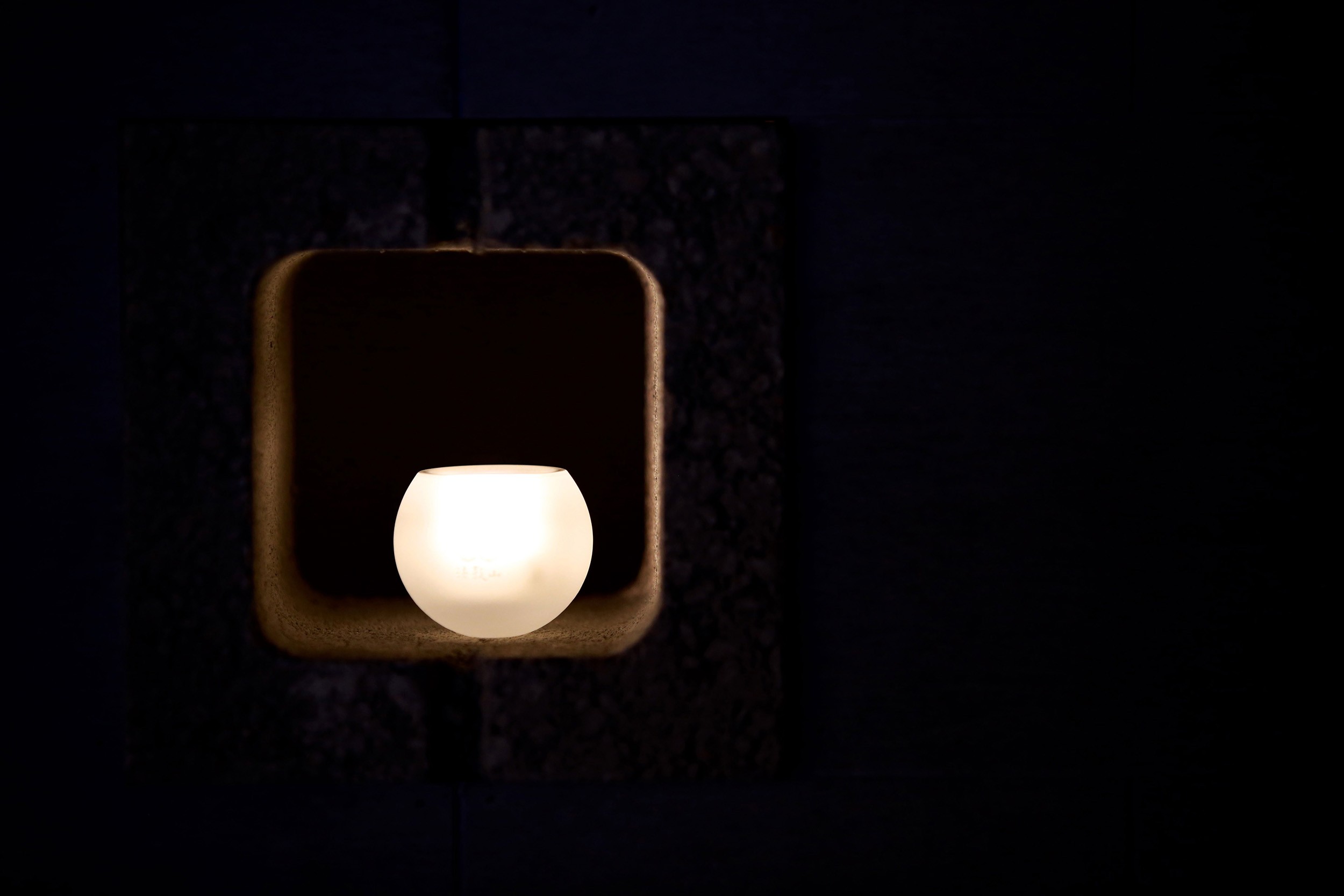
Photo by Hong-Jun Fu 傅鴻均
(II) Wisdom (Prajna)
Wisdom, known in Sanskrit as prajna, differs slightly in meaning from the term wisdom used in English and Zhihui (智慧) used by Chinese people. As I have said before, the Sanskrit name for wisdom is prajna; it is not knowledge, not experience, not scholarship. Rather, it is a mindset of no-self.
The "Prajna” chapter of the Platform Sutra states: “The wisdom of Bodhi-prajna is inherently possessed by all people. It is only because the mind is deluded that one cannot awaken to it. Therefore, one must rely on great virtuous teachers to guide one to see one's true nature.” It further states: “All prajna wisdom arises from one’s own self-nature; but not from outside.”
The prajna wisdom elucidated in the Platform Sutra is another name for bodhi, which has the function of realizing one’s self-nature and illuminating power that remains unattached to all objects and states. This wisdom is detached from forms and is itself formless. Because it transcends all forms, it is able, as the Heart Sutra states, to see that all five aggregates are empty and thereby transcend all suffering and afflictions.
This refers to the higher training of wisdom, which is also the wisdom paramita (prajnaparamita) among the six paramitas. It can also be said that the foundation of the Buddhadharma is wisdom. All worldly knowledge, learning, cleverness, and intelligence, though useful, cannot eliminate afflictions. Only the wisdom of prajna, free from all forms and attachments, is the paramita (perfection/liberation), which can enable one to awaken and go beyond the deluded world.
When practicing meditation, if not guided by the wisdom of Buddhadharma, one may, at most, attain the highest level of the four dhyanas and eight samadhis; however, this often comes with numerous side effects. As long as there are expectations in mind, situations will occur—some manifest as mental disorders, others might be possessed by ghosts or spirits. Therefore, whenever encountering any physical or mental condition, the safest approach is to detach all phenomena and rest all things. “All appeared phenomena are illusory” is the wisdom revealed in the Diamond Sutra.
Wisdom is the attitude of no-self
Wisdom is not knowledge, scholarship, or experience; it is a mindset of no-self. However, it is exceedingly difficult to truly develop a mindset of no-self; ordinary people must practice some methods. Those who claim to possess the mindset of no-self without practice often express it as: I don't care what others think or say about me; I never act for my own benefit; I do everything for you. This is arrogance. Or they say: It's fine with me, I truly understand nothing; I'm insignificant—please don't include me. This is an inferiority complex. Many mistakenly equate arrogance or inferiority with no-self; this is very wrong.
According to the Platform Sutra, prajna and wisdom are both a method of practice and an experience of practice. For those unenlightened, they serve as methods; for the enlightened, they are experience. How so? The chapter on “Prajna” in the Platform Sutra uses three terms to describe mahaprajnaparamita: no-abiding (無住), no-going (無往), and no-coming (無來)—all Buddhas of the three periods manifest from it.” No-abiding means not abiding in the present; no-going means not clinging to the past; no-coming means not clinging to the future. If one is equipped with these three minds, the past, present, and future are transcended. One who is not restrained by the three periods of time is a person with great wisdom; they are able to arise and walk together with all Buddhas of the three realms. All Buddhas of the three periods of time are present within a single thought of the mind.
Some people might use their vivid imaginations, thinking they truly can hold hands and walk alongside the Buddhas of the three times. In their imaginations, this seems profoundly subtle and fascinating. Indeed, without any attachment, the wisdom mind vertically penetrates the limits of the three periods, horizontally pervades the shores of the ten directions. This is merely an analogy for the great wisdom mind. Only when this mind is utterly unattached to the past, the present, and the future can it attain absolute freedom and ease. At this point, it is called no-mind (無心).
However, when practicing the methods, one may initially focus solely on the present, disregarding both past and future—minding every thought at the present moment and letting go of the present moment in every thought as well. This is the practice of no-abiding in the past, the future and the present in between. This is Middle Way contemplation (Madhyamika), also called emptiness contemplation (sunyata-vipasyana). This mind, as described in the Platform Sutra, has no attachment to any dharma, and is also known as the single-practice samadhi.
This perspective from the Platform Sutra is identical to what stated in the Diamond Sutra "The past mind cannot be obtained, the present mind cannot be obtained, and the future mind cannot be obtained." The past has already passed; the future has not yet begun; the present thought, suspended between past and future, is devoid of either. When the present thought is compressed to its absolute limit, it does not exist. From the perspective of the wisdom mind, every moment of thought reveals only the dusty traces of the past and the dreamscapes of the future; a fixed present state does not actually exist.
Ordinary beings cannot directly realize it; therefore, they must use the method of Chan practice to experience it. To experience no-abiding in every thought, do not dwell on the past, do not long for the fabricated future, and do not even cling to an extremely short moment of the present. This is actually the cultivation of what has been mentioned earlier: the contemplation of the Middle Way, the contemplation of emptiness, and the single-practice samadhi.
At the outset of practice, one must consistently apply the method in every circumstance. When any mental activities or physical reactions arise, whether good or bad, do not cling to them. Detach from all appearances and abide solely in the method. When the method is applied to the point of neither clinging to what was before nor to what will come after, then one can also cease clinging to the present moment in between. Without the emotional mind generated from the attachment to the three times, there remains a wisdom mind that functions in accordance with reality.
At this point, one can grasp the profound meaning of the Diamond Sutra's teaching: “the mind should arise without dwelling on anything.”
No-Thought, No-Recollection, No-Attachment
Additionally, in the “Prajnaparamita” chapter of the Platform Sutra, three terms applicable to the method are mentioned: no-thought (無念), no-recollection (無憶), and no-attachment (無著). The original passage reads: “Wisdom constantly manifests, never departing from one's self-nature. Those who realize this teaching embody no-thought, no-recollection, and no-attachment, and give rise to no hubris. Employing the true suchness of self-nature to contemplate all dharmas with wisdom, neither grasping nor rejecting, is what is called seeing the nature and attaining Buddhahood.”
This means that everyone’s wisdom is constantly present and readily available, for it never leaves from one’s self-nature. If one can realize this Dharma of wisdom, it is through the practice of no-thought, no-recollection, and no-attachment. The wisdom mind after enlightenment is in a state of no-thought, no-recollection, and no-attachment, at which all wild, deluded thoughts cease. Thus, the application of the true suchness of self-nature is the function of contemplative illumination of wisdom.
What can be considered as the contemplative illumination of wisdom? That is, when facing all dharmas, do not grasp nor reject. In other words, if one detaches from all phenomenal appearances until there is nothing to detach, and furthermore, if even this detaching can be let go of, then, seeing the nature and attaining Buddhahood will be realized.

Photo by pexels-frank-cone
The methods for cultivating no-thought, no-recollection, and no-attachment are outlined as follows:
No-thought
This means, in every thought, being mindful of thoughts without clinging to thoughts. Even though tightening the mind with a method is also a deluded thought, the purpose is to replace scattered deluded thoughts with the deluded thought of a method. Then one neither dwells on scattered deluded thoughts nor clings to the deluded thought of the method. When scattered deluded thoughts arise, employ the deluded thought of the method. When no scattered deluded thoughts exist, even the thought of practicing the method becomes a deluded thought to be let go of. When the mind that clings to deluded thoughts transforms into a mind that neither grasps nor abandons, the wisdom mind of no-thought manifests.
No-recollection
No-recollection means not looking back at the immediately preceding thought of practicing the method. The moment you look back, you have already dwelled on the past and dropped the method of practice in use, which makes it a true deluded thought. Therefore, do not look back at thoughts that have already passed, whatever they were. Whether good or bad, do not cling to or dwell on them. Without grasping or abandoning any thoughts, one is observing them as they truly are with wisdom.
(3) No-Attachment
This means the mind should neither grasp nor abandon; neither cling to the wild, scattered mind nor attach to the focused mind when the method is employed; neither cling to the focused mind when the method is employed, nor attach to the unified mind when the method is sustained; neither cling to the unified mind that merges with the universe, nor attach to the liberated mind that is pure and at ease. Only then does the great wisdom mind of no-grasping and no-abandoning manifest.
Indeed, the mind of no-grasping and no-abandoning, which is no-thought, no-recollection, and no-attachment, is precisely the great wisdom mind in which Silent Illumination occurs simultaneously. Being silent, it naturally conceals and remains hidden, yet the mind remains utterly clear—this is illumination. It is simply that, while responding truthfully to all phenomena of body, mind, and environment, no self-attached deluded mind arises. This is silent illumination occurring simultaneously. The outcome of practicing silent illumination simultaneously is actually the state of “the mind arises without dwelling on anything.”
— ✦ —
Cover photo by birger-strahl-unsplash
Editor’s Note
This article is based on teachings given during Silent Illumination retreats in 2001 and 2002 and is excerpted from Master Sheng Yen’s book, Master Sheng Yen Teaches Silent Illumination (Chinese, pp. 48–58), originally published as 聖嚴法師教默照禪 in 2004. This abridged selection presents a clear and practical teaching on the relationship between samadhi and wisdom in the Chan tradition. Drawing on the Platform Sutra and the Diamond Sutra, it moves from doctrinal understanding to direct practice. The article was translated by Venerable Chang Hwa and edited by Edward Lin.
— ✦ —
(I) Samadhi (Meditative Absorption)
Samadhi can be divided into two major categories:
(1) Sequential samadhi, which has nine stages, is attained progressively through cultivating the four dhyanas and eight samadhis to achieve the ninth liberation samadhi.
(2) Sudden-awakened samadhi, which bypasses sequential stages, eschews scriptural reliance, and directly points to the mind—this refers to the tradition transmitted by Chinese Chan school.
Sequential samadhi is a practice specifically during sitting meditation and is time-bounded; outside the period of formal sitting is not considered to be in samadhi.
Four Types of Mahayana Meditation Methods
According to Chinese Tiantai Master Zhiyi's Great Calming and Contemplation (Mohe Zhiguan摩訶止觀) (CBETA 2024), Mahayana meditation comprises four types of samadhi: (1) constant sitting samadhi (常坐三昧), (2) constant walking samadhi (常行三昧), (3) half walking and half sitting samadhi (半行半坐三昧), and (4) neither walking nor sitting samadhi (非行非坐三昧).
The single-practice samadhi (一行三昧) advocated in the Platform Sutra of the Sixth Patriarch (Platform Sutra) belongs to the fourth category, the neither walking nor sitting samadhi, also known as the spontaneous-unrestrained samadhi (隨自意三昧). This is because the “Samadhi and Wisdom” chapter of the Platform Sutra states: "Single-practice samadhi means that, in all places, whether walking, standing, sitting, or lying down, one always maintain a single-unwavering mind (一直心).
What is this single-unwavering mind? It means having no attachment to any dharma. What does it mean by having no attachment?
For every thought, remain no-thinking (於念而無念).
For every form, detach from its appearance (於相而離相).
In every thought, not thinking about its previous conditions (念念之中,不思前境).
In other words, the single-unwavering mind out of the spontaneous-unrestrained samadhi is no-thought (無念), no-form (無相), and no-abiding (無住), a Mahayana meditation practice that can be applied anytime, anywhere, to the four major activities in daily life. The Sixth Patriarch Master Huineng himself practiced this single-practice samadhi, and thus he transmitted it to his disciples.
Samadhi in Silent Illumination
From the biographical materials of the Sixth Patriarch Huineng, it is difficult to prove he ever sat in meditation. However, the “Sitting Meditation” chapter” of the Platform Sutra explains that this school's meditation practice does not cling to the mind, nor to purity, nor to an unmoving state. Externally, when facing all good and evil conditions, not giving rise to any thought is called sitting; internally, seeing unmoving self-nature is called meditation. Thus, not thinking of good, not thinking of evil is the method of Chan practice. Nevertheless, Chinese Chan masters before Huineng did practice sitting meditation, and those after him also practiced it.
Although the method of Silent Illumination was promoted by Master Hongzhi Zhengjue (宏智正覺) in the twelfth century, its source primarily comes from the Sixth Patriarch Huineng's meditation practice of the single-practice samadhi. It is introduced as follows:
Not Clinging to the Mind
Not clinging to the deluded mind essentially means detaching all phenomena and resting all things (放捨諸相,休息萬事). When noticing deluded thoughts, do not dislike, resent, reject, or cling to them. Noticing deluded thoughts is perfectly fine, and just remaining neither resisting nor welcoming is not clinging to the mind.
Do not treat wandering thoughts as targets, then wandering thoughts are not a problem. For ordinary practitioners, completely eliminating deluded thoughts is impossible. Simply disregard them and return to the method of Silent Illumination, then deluded thoughts will gradually diminish.
Not Clinging to Purity
Delighting in purity and disliking defilement is the discriminative mind; clinging to purity and rejecting defilement is the grasping mind; the mind awaiting enlightenment is the mind of birth-and-death.
Therefore, when practicing the method of Silent Illumination, silence means not clinging to any single dharma (phenomenon), while illumination means embracing the whole impartially without discriminatory thoughts of good or evil, only the thought that I am sitting.
Do not be troubled by bad situations, and do not feel delighted by good experiences. Keep the mind bright and clear and remain unaffected; just sit when it is time to sit; rise when it is time to rise. Whether scattered thoughts arise or not, do not bother to react. Simply keep silent with constant illumination and remain illuminated with constant silence. Neither perceiving the mind as pure, nor perceiving it as impure; purity and impurity are both equal.
Not Cling to Unmoving State
Unmoving has two meanings: one is the wisdom mind remains unmoved by emotions, the other is the samadhi state where the mind stills at one thought. The Diamond Sutra's "the mind should arise without dwelling on anything (應無所住而生其心)" is not referring to the unmoving mind in samadhi, but the wisdom mind that remains unmoved by emotions and attachments.
Upon entering ordinary sequential samadhi, the body is not moving, and the mind is not moving—the unmoving body refers to the still sitting posture, while the unmoving mind refers to the mind dwelling in a quiet state.
Chan meditation does not teach people to constantly sit without moving, nor does it teach one to observe the mind and contemplate quietude. Rather, one should know the phenomena without clinging to the phenomena; know the thoughts while detached from the thoughts, and in every single thought, do not dwell on its previous states. Knowing the phenomena is illumination; not clinging to the phenomena is silence.
Knowing that thoughts exist is illumination, detaching from thoughts is silence; discerning every thought clearly is illumination, not dwelling on its previous states is silence. Therefore, we can see that the original source of Silent Illumination is directly connected to the Platform Sutra.
Whether in sequential samadhi or Mahayana Chan practice, the fundamental principle is to let go of one state after another. For example: within the four dhyanas, there are stages such as arising from detachment (離生), arising from samadhi (定生), beyond joy (離喜), and beyond thoughts (捨念). After entering a certain samadhi state, one must let go of it in order to advance to the next level.
This progressive letting-go extends even to the four formless meditations, ultimately reaching the Nirvana state where there is nothing left to let go of–yet, in reality, there is no Nirvana, it is simply the state of not dwelling in any state. That is why Mahayana Chan emphasizes non-abiding.
The Diamond Sutra states: “All that have appearances are illusory.” Clinging to the unmoving state of samadhi is itself an illusory state. Thus, the Platform Sutra advocates the unity of samadhi and wisdom. This means that in Mahayana, meditative samadhi and wisdom are neither one nor two; they are inseparable in essence and function.
Samadhi is silence and wisdom is illumination; the unity of samadhi and wisdom is precisely the simultaneousness of silence and illumination.
Photo by Hong-Jun Fu 傅鴻均
(II) Wisdom (Prajna)
Wisdom, known in Sanskrit as prajna, differs slightly in meaning from the term wisdom used in English and Zhihui (智慧) used by Chinese people. As I have said before, the Sanskrit name for wisdom is prajna; it is not knowledge, not experience, not scholarship. Rather, it is a mindset of no-self.
The "Prajna” chapter of the Platform Sutra states: “The wisdom of Bodhi-prajna is inherently possessed by all people. It is only because the mind is deluded that one cannot awaken to it. Therefore, one must rely on great virtuous teachers to guide one to see one's true nature.” It further states: “All prajna wisdom arises from one’s own self-nature; but not from outside.”
The prajna wisdom elucidated in the Platform Sutra is another name for bodhi, which has the function of realizing one’s self-nature and illuminating power that remains unattached to all objects and states. This wisdom is detached from forms and is itself formless. Because it transcends all forms, it is able, as the Heart Sutra states, to see that all five aggregates are empty and thereby transcend all suffering and afflictions.
This refers to the higher training of wisdom, which is also the wisdom paramita (prajnaparamita) among the six paramitas. It can also be said that the foundation of the Buddhadharma is wisdom. All worldly knowledge, learning, cleverness, and intelligence, though useful, cannot eliminate afflictions. Only the wisdom of prajna, free from all forms and attachments, is the paramita (perfection/liberation), which can enable one to awaken and go beyond the deluded world.
When practicing meditation, if not guided by the wisdom of Buddhadharma, one may, at most, attain the highest level of the four dhyanas and eight samadhis; however, this often comes with numerous side effects. As long as there are expectations in mind, situations will occur—some manifest as mental disorders, others might be possessed by ghosts or spirits. Therefore, whenever encountering any physical or mental condition, the safest approach is to detach all phenomena and rest all things. “All appeared phenomena are illusory” is the wisdom revealed in the Diamond Sutra.
Wisdom is the attitude of no-self
Wisdom is not knowledge, scholarship, or experience; it is a mindset of no-self. However, it is exceedingly difficult to truly develop a mindset of no-self; ordinary people must practice some methods. Those who claim to possess the mindset of no-self without practice often express it as: I don't care what others think or say about me; I never act for my own benefit; I do everything for you. This is arrogance. Or they say: It's fine with me, I truly understand nothing; I'm insignificant—please don't include me. This is an inferiority complex. Many mistakenly equate arrogance or inferiority with no-self; this is very wrong.
According to the Platform Sutra, prajna and wisdom are both a method of practice and an experience of practice. For those unenlightened, they serve as methods; for the enlightened, they are experience. How so? The chapter on “Prajna” in the Platform Sutra uses three terms to describe mahaprajnaparamita: no-abiding (無住), no-going (無往), and no-coming (無來)—all Buddhas of the three periods manifest from it.” No-abiding means not abiding in the present; no-going means not clinging to the past; no-coming means not clinging to the future. If one is equipped with these three minds, the past, present, and future are transcended. One who is not restrained by the three periods of time is a person with great wisdom; they are able to arise and walk together with all Buddhas of the three realms. All Buddhas of the three periods of time are present within a single thought of the mind.
Some people might use their vivid imaginations, thinking they truly can hold hands and walk alongside the Buddhas of the three times. In their imaginations, this seems profoundly subtle and fascinating. Indeed, without any attachment, the wisdom mind vertically penetrates the limits of the three periods, horizontally pervades the shores of the ten directions. This is merely an analogy for the great wisdom mind. Only when this mind is utterly unattached to the past, the present, and the future can it attain absolute freedom and ease. At this point, it is called no-mind (無心).
However, when practicing the methods, one may initially focus solely on the present, disregarding both past and future—minding every thought at the present moment and letting go of the present moment in every thought as well. This is the practice of no-abiding in the past, the future and the present in between. This is Middle Way contemplation (Madhyamika), also called emptiness contemplation (sunyata-vipasyana). This mind, as described in the Platform Sutra, has no attachment to any dharma, and is also known as the single-practice samadhi.
This perspective from the Platform Sutra is identical to what stated in the Diamond Sutra "The past mind cannot be obtained, the present mind cannot be obtained, and the future mind cannot be obtained." The past has already passed; the future has not yet begun; the present thought, suspended between past and future, is devoid of either. When the present thought is compressed to its absolute limit, it does not exist. From the perspective of the wisdom mind, every moment of thought reveals only the dusty traces of the past and the dreamscapes of the future; a fixed present state does not actually exist.
Ordinary beings cannot directly realize it; therefore, they must use the method of Chan practice to experience it. To experience no-abiding in every thought, do not dwell on the past, do not long for the fabricated future, and do not even cling to an extremely short moment of the present. This is actually the cultivation of what has been mentioned earlier: the contemplation of the Middle Way, the contemplation of emptiness, and the single-practice samadhi.
At the outset of practice, one must consistently apply the method in every circumstance. When any mental activities or physical reactions arise, whether good or bad, do not cling to them. Detach from all appearances and abide solely in the method. When the method is applied to the point of neither clinging to what was before nor to what will come after, then one can also cease clinging to the present moment in between. Without the emotional mind generated from the attachment to the three times, there remains a wisdom mind that functions in accordance with reality.
At this point, one can grasp the profound meaning of the Diamond Sutra's teaching: “the mind should arise without dwelling on anything.”
No-Thought, No-Recollection, No-Attachment
Additionally, in the “Prajnaparamita” chapter of the Platform Sutra, three terms applicable to the method are mentioned: no-thought (無念), no-recollection (無憶), and no-attachment (無著). The original passage reads: “Wisdom constantly manifests, never departing from one's self-nature. Those who realize this teaching embody no-thought, no-recollection, and no-attachment, and give rise to no hubris. Employing the true suchness of self-nature to contemplate all dharmas with wisdom, neither grasping nor rejecting, is what is called seeing the nature and attaining Buddhahood.”
This means that everyone’s wisdom is constantly present and readily available, for it never leaves from one’s self-nature. If one can realize this Dharma of wisdom, it is through the practice of no-thought, no-recollection, and no-attachment. The wisdom mind after enlightenment is in a state of no-thought, no-recollection, and no-attachment, at which all wild, deluded thoughts cease. Thus, the application of the true suchness of self-nature is the function of contemplative illumination of wisdom.
What can be considered as the contemplative illumination of wisdom? That is, when facing all dharmas, do not grasp nor reject. In other words, if one detaches from all phenomenal appearances until there is nothing to detach, and furthermore, if even this detaching can be let go of, then, seeing the nature and attaining Buddhahood will be realized.
Photo by pexels-frank-cone
The methods for cultivating no-thought, no-recollection, and no-attachment are outlined as follows:
No-thought
This means, in every thought, being mindful of thoughts without clinging to thoughts. Even though tightening the mind with a method is also a deluded thought, the purpose is to replace scattered deluded thoughts with the deluded thought of a method. Then one neither dwells on scattered deluded thoughts nor clings to the deluded thought of the method. When scattered deluded thoughts arise, employ the deluded thought of the method. When no scattered deluded thoughts exist, even the thought of practicing the method becomes a deluded thought to be let go of. When the mind that clings to deluded thoughts transforms into a mind that neither grasps nor abandons, the wisdom mind of no-thought manifests.
No-recollection
No-recollection means not looking back at the immediately preceding thought of practicing the method. The moment you look back, you have already dwelled on the past and dropped the method of practice in use, which makes it a true deluded thought. Therefore, do not look back at thoughts that have already passed, whatever they were. Whether good or bad, do not cling to or dwell on them. Without grasping or abandoning any thoughts, one is observing them as they truly are with wisdom.
(3) No-Attachment
This means the mind should neither grasp nor abandon; neither cling to the wild, scattered mind nor attach to the focused mind when the method is employed; neither cling to the focused mind when the method is employed, nor attach to the unified mind when the method is sustained; neither cling to the unified mind that merges with the universe, nor attach to the liberated mind that is pure and at ease. Only then does the great wisdom mind of no-grasping and no-abandoning manifest.
Indeed, the mind of no-grasping and no-abandoning, which is no-thought, no-recollection, and no-attachment, is precisely the great wisdom mind in which Silent Illumination occurs simultaneously. Being silent, it naturally conceals and remains hidden, yet the mind remains utterly clear—this is illumination. It is simply that, while responding truthfully to all phenomena of body, mind, and environment, no self-attached deluded mind arises. This is silent illumination occurring simultaneously. The outcome of practicing silent illumination simultaneously is actually the state of “the mind arises without dwelling on anything.”
— ✦ —
Cover photo by birger-strahl-unsplash
Get Chan Magazine sent to your inbox
Once quarterly
Please check your mailbox to confirm your subscription after clicking Subscribe.
Get Chan Magazine sent to your inbox
Once quarterly
Please check your mailbox to confirm your subscription after clicking Subscribe.