teachings
Persistent and Consistent Practice
Persistent and Consistent Practice
Persistent and Consistent Practice
By Venerable Chi Chern
By Venerable Chi Chern
Editor’s Note
Venerable Chi Chern is the first Dharma heir of Master Sheng Yen. Born in Malaysia in 1955, he is one of the most respected meditation teachers in Malaysia and Singapore. The article is adapted from the Chinese book The Mind of Chan in Silent Illumination (禪心默照) (Taipei City, Taiwan: Dharma Drum Culture, 2012), pp. 133-136. It emphasizes the importance of steady daily practice, encouraging practitioners to cultivate regular meditation, balanced effort, and firm faith on the Chan path. Translated by Venerable Chang Hwa and edited by Edward Lin.
— ✦ —
Since many participants arrive at meditation retreats with weary bodies and minds, I usually allow everyone to release their fatigue first-let them sleep if they must. This is an unavoidable approach, for when one feels sleepy, it is impossible to practice meditation properly. Of course, I could use the incense board to force everyone to practice diligently, but before the second-strike lands, they may already be asleep again. It's better to simply let them get a good rest first.
When the body and mind are exhausted, effort becomes futile.
The reason this happens reveals a simple fact: one likely has not been diligent in practice in daily life! In the early Chan monasteries, sleeping during meditation was strictly forbidden. The moment one dozes off, a strike from the incense board follows, or even a punishment such as kneeling for the entire period. However, some practitioners would fall asleep as soon as they sat down, and no one would notice. This is very dangerous. This is what Chan Buddhism refers to as falling into the Black Mountain Ghost Cave (黑山鬼窟). Such practitioners are not merely in a state of dullness (無記); they fall asleep through every sitting period. These practitioners have even less hope than those suffering from leg pain or constant wandering thoughts. At least leg pain allows one to contemplate impermanence, and wandering thoughts can be observed as they arise and perish.
Those accustomed to indulgence and laziness in daily life tend to become drowsy during meditation. Those who maintain daily meditation practice should find their spirits quickly lifted upon entering the meditation hall. For someone whose practice is well developed, as soon as they sit down, the body naturally relaxes. During meditation, the subtle energy channels—known as qi—begin to function. If the body remains relaxed, qi will not be dissipated, allowing energy to be stored.
Therefore, those who practice well will find their sleep time gradually decreasing as they continue sitting. With greater energy reserved, they require less rest—some need only a few minutes. Those who practice even better need not lie down at all, meditating morning and night—what is known as the practice of never lying down (Pali: nesajjika). In the past, when practicing in the monastery, the place for sleeping and sitting was the same. Thus, some practitioners simply refrained from lying down, meditating throughout the day. This was possible because they cultivated their practice diligently each day, allowing their cultivation to become concentrated and function smoothly.
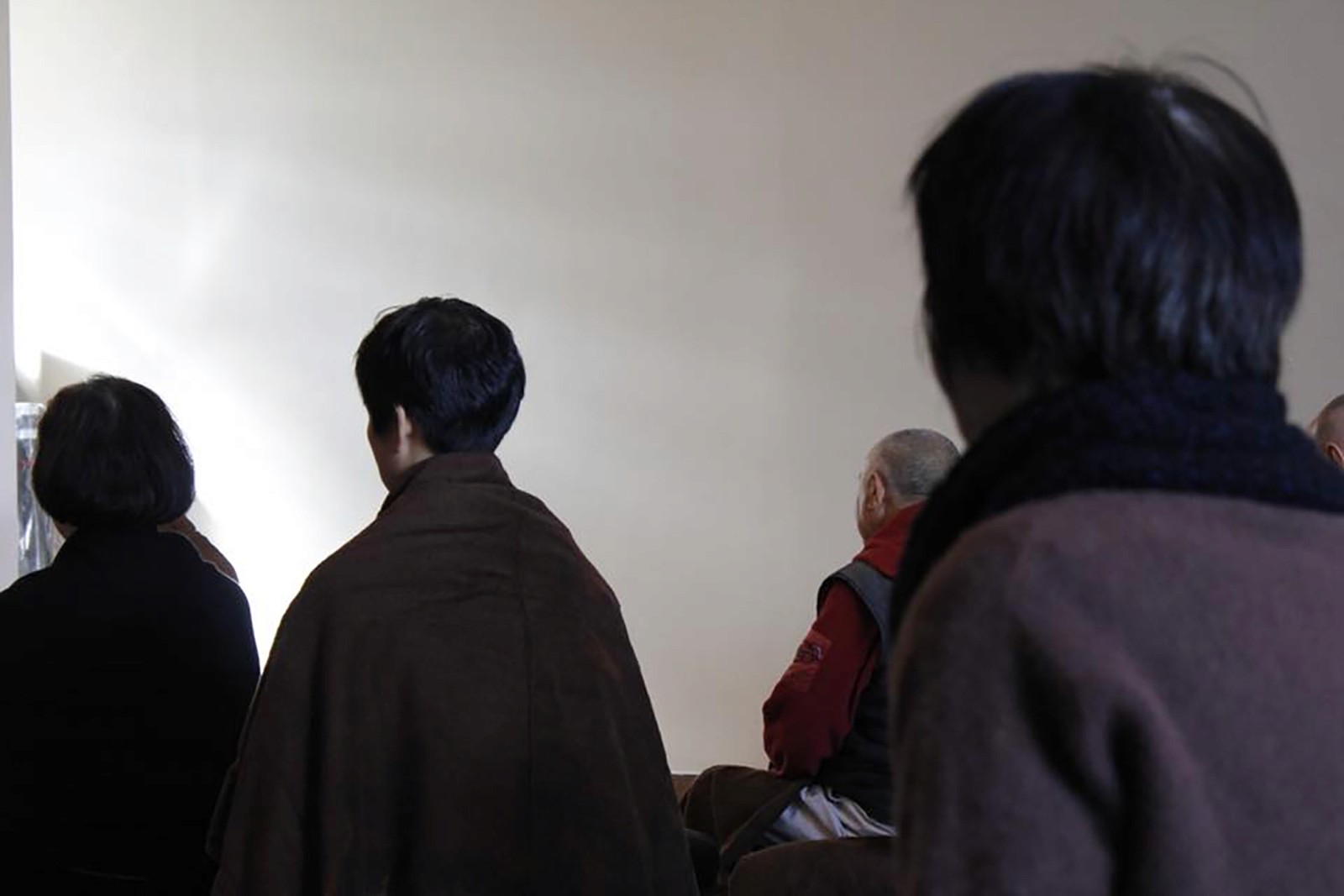
Photo by Chan Meditation Center
Practice at fixed times and in fixed amounts.
Our circumstances are different now. Most who come to participate in meditation retreats are usually very busy in their daily lives. Therefore, all kinds of conditions will manifest. If we recognize meditation's vital importance for both body and mind—not merely as a means of balance, but as a process of spiritual elevation and purification—and if we approach life with a sense of doubt, wishing to seek its true nature, we must look into the deeper layers of our minds. This exploration can only be achieved through the practice of meditation. At this point, we will naturally adjust our way of living, integrating meditation into our daily routine.
Beyond eating and sleeping, life offers moments of downtime. If we can find time to watch a movie during these moments, why can’t we make time for meditation? Failing to integrate meditation practice into our daily routine implies that we consider it unimportant. This reflects our attitude toward life. Cultivating meditation as a genuine interest and practicing regularly and consistently each day allows us to skip unnecessary steps when attending meditation sessions. Of course, we shouldn't set our daily practice requirements too high; the main point is to relax the body and mind. The fundamental practice for relaxation is to ensure your posture is always upright.
Sometimes when you come home after class or work, feeling physically exhausted and unable to meditate properly, it's okay to rest first. Or when sitting, simply straighten your posture without using any specific method—just relax. If you fall asleep, let yourself sleep soundly. If many wandering thoughts arise, let them pass without attachment.
Most of these thoughts stem from the events that occurred during the day; let them pass. Because we create many karmic actions daily, these thoughts tend to churn and swirl together. If we fail to release them, they linger in our minds, layering and weighing down the mind. Gradually, frequent or habitual actions become ingrained tendencies and part of our personality. Even events from long ago may surface during meditation.
If we can allow these matters to pass through and be released without accumulating them during daily meditation, it greatly benefits our mind and body. Those who can relax both body and mind do not carry today's affairs into tomorrow, so fatigue does not accumulate into the next day. Some not only achieve this but also experience little to no drowsiness or excessive wandering thoughts during meditation. This is because their daily lives are relatively simple.
At this stage, methods like counting the breath or reciting a huatou can be employed. With Silent Illumination, one simply maintains clear awareness of the whole body—that is, just sitting.
Cultivating Firm Faith and Attitude
We must understand that meditation practice requires sustained, long-term effort. This is why many practitioners in earlier times attained enlightenment during retreats. Because they diligently practiced daily, when participating in Chan retreats, they devoted their whole body and mind to the practice.
Therefore, we must practice diligently in our daily lives, setting aside a fixed time each day for meditation—say, fifteen minutes before bed. Without using any specific method, simply relax until drowsiness sets in. Then massage your entire body, stretch, and go to sleep. Daily relaxation and harmonization build familiarity with the practice; infrequent use leads to unfamiliarity. If we wait until entering the meditation hall to collect and settle our minds, half the time will already be gone. We must strive to adjust ourselves so that upon entering the meditation hall, we can immediately enter the state of practice. This is only achievable through daily adjustment and diligent practice in our ordinary lives.
If we can regard meditation as the most important practice in life, as this belief grows stronger, our efforts in practice naturally become more effective. Some individuals practice diligently yet struggle to apply the methods effectively. This is often because, at critical moments, mental obstacles arise and their confidence is not strong enough.
Therefore, we begin by cultivating unwavering faith and a proper attitude, integrating this with our daily meditation practice. In this way, we create a virtuous cycle, guiding us along a path of continuous elevation.
— ✦ —
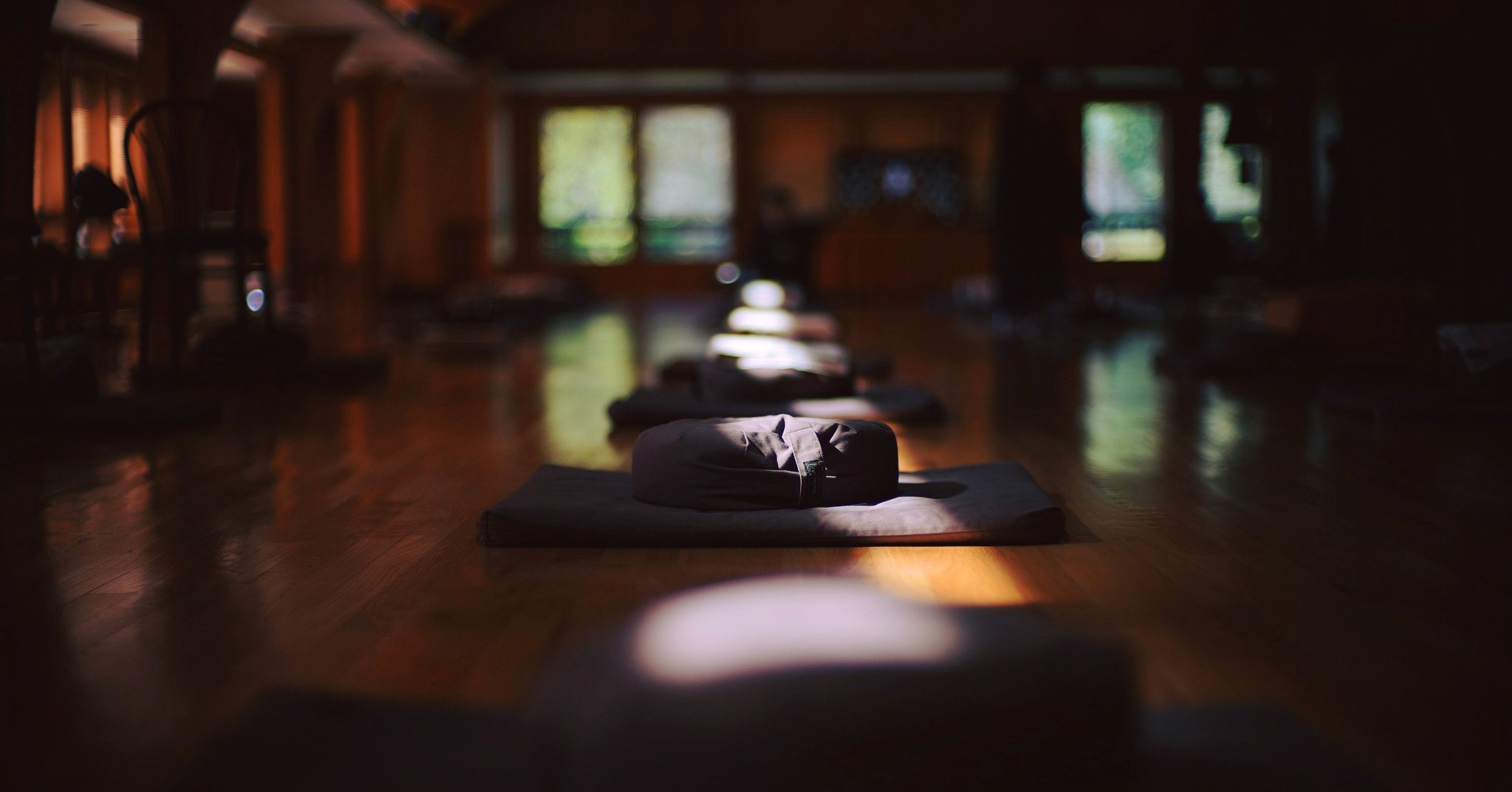
Cover photo by Yin Ting
Editor’s Note
Venerable Chi Chern is the first Dharma heir of Master Sheng Yen. Born in Malaysia in 1955, he is one of the most respected meditation teachers in Malaysia and Singapore. The article is adapted from the Chinese book The Mind of Chan in Silent Illumination (禪心默照) (Taipei City, Taiwan: Dharma Drum Culture, 2012), pp. 133-136. It emphasizes the importance of steady daily practice, encouraging practitioners to cultivate regular meditation, balanced effort, and firm faith on the Chan path. Translated by Venerable Chang Hwa and edited by Edward Lin.
— ✦ —
Since many participants arrive at meditation retreats with weary bodies and minds, I usually allow everyone to release their fatigue first-let them sleep if they must. This is an unavoidable approach, for when one feels sleepy, it is impossible to practice meditation properly. Of course, I could use the incense board to force everyone to practice diligently, but before the second-strike lands, they may already be asleep again. It's better to simply let them get a good rest first.
When the body and mind are exhausted, effort becomes futile.
The reason this happens reveals a simple fact: one likely has not been diligent in practice in daily life! In the early Chan monasteries, sleeping during meditation was strictly forbidden. The moment one dozes off, a strike from the incense board follows, or even a punishment such as kneeling for the entire period. However, some practitioners would fall asleep as soon as they sat down, and no one would notice. This is very dangerous. This is what Chan Buddhism refers to as falling into the Black Mountain Ghost Cave (黑山鬼窟). Such practitioners are not merely in a state of dullness (無記); they fall asleep through every sitting period. These practitioners have even less hope than those suffering from leg pain or constant wandering thoughts. At least leg pain allows one to contemplate impermanence, and wandering thoughts can be observed as they arise and perish.
Those accustomed to indulgence and laziness in daily life tend to become drowsy during meditation. Those who maintain daily meditation practice should find their spirits quickly lifted upon entering the meditation hall. For someone whose practice is well developed, as soon as they sit down, the body naturally relaxes. During meditation, the subtle energy channels—known as qi—begin to function. If the body remains relaxed, qi will not be dissipated, allowing energy to be stored.
Therefore, those who practice well will find their sleep time gradually decreasing as they continue sitting. With greater energy reserved, they require less rest—some need only a few minutes. Those who practice even better need not lie down at all, meditating morning and night—what is known as the practice of never lying down (Pali: nesajjika). In the past, when practicing in the monastery, the place for sleeping and sitting was the same. Thus, some practitioners simply refrained from lying down, meditating throughout the day. This was possible because they cultivated their practice diligently each day, allowing their cultivation to become concentrated and function smoothly.
Photo by Chan Meditation Center
Practice at fixed times and in fixed amounts.
Our circumstances are different now. Most who come to participate in meditation retreats are usually very busy in their daily lives. Therefore, all kinds of conditions will manifest. If we recognize meditation's vital importance for both body and mind—not merely as a means of balance, but as a process of spiritual elevation and purification—and if we approach life with a sense of doubt, wishing to seek its true nature, we must look into the deeper layers of our minds. This exploration can only be achieved through the practice of meditation. At this point, we will naturally adjust our way of living, integrating meditation into our daily routine.
Beyond eating and sleeping, life offers moments of downtime. If we can find time to watch a movie during these moments, why can’t we make time for meditation? Failing to integrate meditation practice into our daily routine implies that we consider it unimportant. This reflects our attitude toward life. Cultivating meditation as a genuine interest and practicing regularly and consistently each day allows us to skip unnecessary steps when attending meditation sessions. Of course, we shouldn't set our daily practice requirements too high; the main point is to relax the body and mind. The fundamental practice for relaxation is to ensure your posture is always upright.
Sometimes when you come home after class or work, feeling physically exhausted and unable to meditate properly, it's okay to rest first. Or when sitting, simply straighten your posture without using any specific method—just relax. If you fall asleep, let yourself sleep soundly. If many wandering thoughts arise, let them pass without attachment.
Most of these thoughts stem from the events that occurred during the day; let them pass. Because we create many karmic actions daily, these thoughts tend to churn and swirl together. If we fail to release them, they linger in our minds, layering and weighing down the mind. Gradually, frequent or habitual actions become ingrained tendencies and part of our personality. Even events from long ago may surface during meditation.
If we can allow these matters to pass through and be released without accumulating them during daily meditation, it greatly benefits our mind and body. Those who can relax both body and mind do not carry today's affairs into tomorrow, so fatigue does not accumulate into the next day. Some not only achieve this but also experience little to no drowsiness or excessive wandering thoughts during meditation. This is because their daily lives are relatively simple.
At this stage, methods like counting the breath or reciting a huatou can be employed. With Silent Illumination, one simply maintains clear awareness of the whole body—that is, just sitting.
Cultivating Firm Faith and Attitude
We must understand that meditation practice requires sustained, long-term effort. This is why many practitioners in earlier times attained enlightenment during retreats. Because they diligently practiced daily, when participating in Chan retreats, they devoted their whole body and mind to the practice.
Therefore, we must practice diligently in our daily lives, setting aside a fixed time each day for meditation—say, fifteen minutes before bed. Without using any specific method, simply relax until drowsiness sets in. Then massage your entire body, stretch, and go to sleep. Daily relaxation and harmonization build familiarity with the practice; infrequent use leads to unfamiliarity. If we wait until entering the meditation hall to collect and settle our minds, half the time will already be gone. We must strive to adjust ourselves so that upon entering the meditation hall, we can immediately enter the state of practice. This is only achievable through daily adjustment and diligent practice in our ordinary lives.
If we can regard meditation as the most important practice in life, as this belief grows stronger, our efforts in practice naturally become more effective. Some individuals practice diligently yet struggle to apply the methods effectively. This is often because, at critical moments, mental obstacles arise and their confidence is not strong enough.
Therefore, we begin by cultivating unwavering faith and a proper attitude, integrating this with our daily meditation practice. In this way, we create a virtuous cycle, guiding us along a path of continuous elevation.
— ✦ —
Cover photo by Yin Ting
Get Chan Magazine sent to your inbox
Once quarterly
Please check your mailbox to confirm your subscription after clicking Subscribe.
Get Chan Magazine sent to your inbox
Once quarterly
Please check your mailbox to confirm your subscription after clicking Subscribe.