Editorial and Reflective
The Origin of Chan Magazine
The Origin of Chan Magazine
The Origin of Chan Magazine
by Ernest Heau
by Ernest Heau
Editor's note
In The Origin of Chan Magazine, Ernest Heau traces how Master Sheng Yen’s early teachings in America took root in the form of a small publication that became a lasting record of Chan practice in the West. Ernest connects the magazine's creation to Shifu's journey from a young monk, through his Ph.D. in Buddhist literature from Rissho University, to his pioneering work bringing Chan teachings to American practitioners. As Chan Magazine transitions to digital format, this article chronicle’s Shifu’s vision and honors contributors including long-serving Editor-in-Chief Buffe Laffey while bridging the magazine's history with its continuing mission to preserve Chan Buddhism wisdom for future generations.
— ✦ —
To write about the origin of Chan Magazine, it is important to recall and appreciate the legacy of Chan Master Sheng Yen (1930-2009) who became known to his followers as “Shifu.” Shifu was born in China to a family of farmers who were not Buddhists. However at the age of 13, he became a member of a Buddhist monastery in Shanghai, where among his monastic duties, he performed funeral rites for lay practitioners. It was during this period that he became committed to remain a Buddhist monk.
At the age of 18, he was drafted into the National Army as the part of the country’s reaction to the rise of Communism. But eventually, the Chinese government (Kuomintang) relocated to Taiwan, and Shifu served for several years in the Army there.
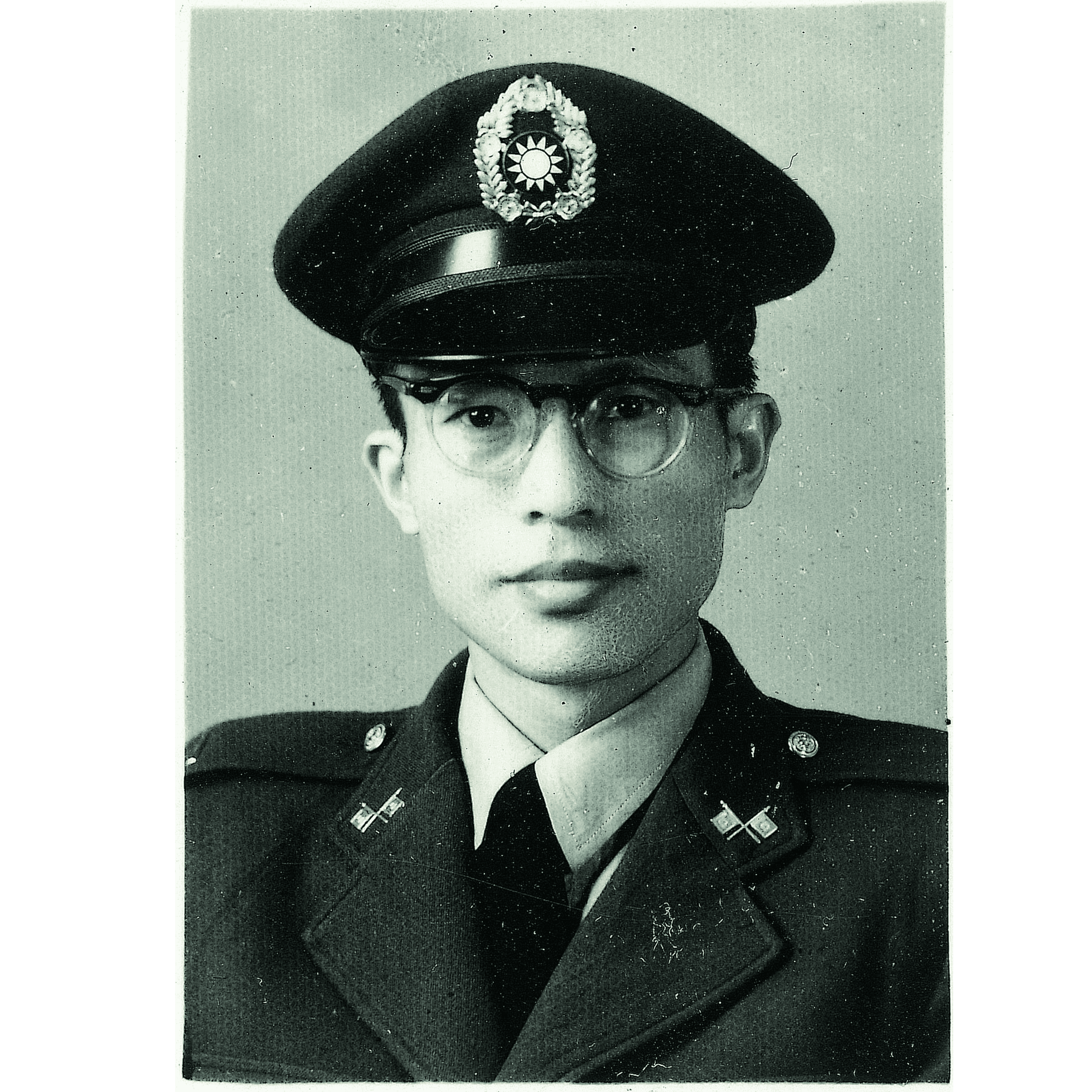
Young Shifu as a Soldier in Taiwan.
While in the Army, Shifu spent much time developing his writing interests and publishing skills. “My greatest gain in the Army was to develop my writing skills…the essays I wrote often won awards, and the [unit’s] newspaper would post my articles regularly.” This tells us that the Army helped Shifu by giving him enough spare time to become a devoted writer and publisher.
Becoming a Scholar
After Shifu returned to a monk’s life, his master Dong Chu made Shifu the new editor of Humanity Magazine, a journal of Chinese Buddhism. Next, beginning in 1961 he spent six years in solitary retreat in a mountainous area, dedicating himself to the study of the Buddhist sila (moral discipline) and vinaya (precepts). Before ending his retreat, he completed The Essentials of Buddhist Sila and Vinaya, which became a classic.
Emerging from retreat in 1969, he enrolled at Rissho University in Tokyo, where in 1975 he completed his Ph.D. in Buddhist literature. Doing this gave him the ability to research and author deeply complex Buddhist texts at the highest level of scholarship. Thus his experiences made him a monk who was not just a devoted practitioner, but also a dedicated scholar, writer, editor, and publisher, even before he came to America.
Arriving in America: The Temple of Enlightenment
After earning his degree and returning to Taiwan, Master Sheng Yen was unsure about his prospects for the future. But due to karmic affinity and good fortune, in 1975 he was invited to come to America by a dedicated Buddhist and wealthy businessman, Dr. C. T. Shen, to the Temple of Enlightenment in the Bronx, a section of New York City. There Shifu started a Chan meditation class which was composed of a mix of Westerners and ethnic Chinese.
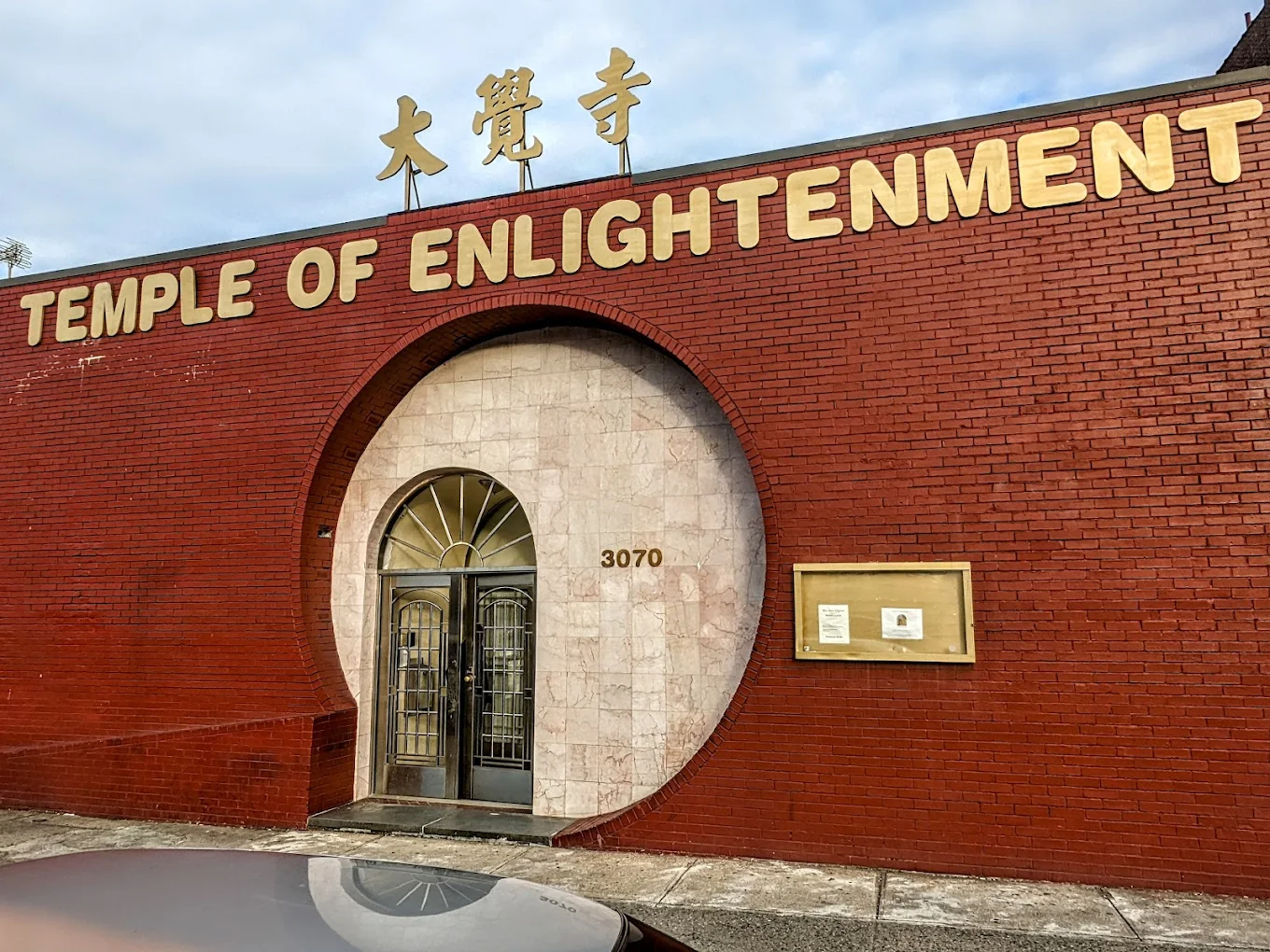
The Temple of Enlightenment in the Bronx, a part New York City.
After at least a year of developing his own group of students at the Temple of Enlightenment, a decision was made to begin a magazine whose purpose would be to collect and publish Shifu’s teachings, as well as recording the activities of the group to promote Chan Buddhism in America. It was called Chan Magazine.
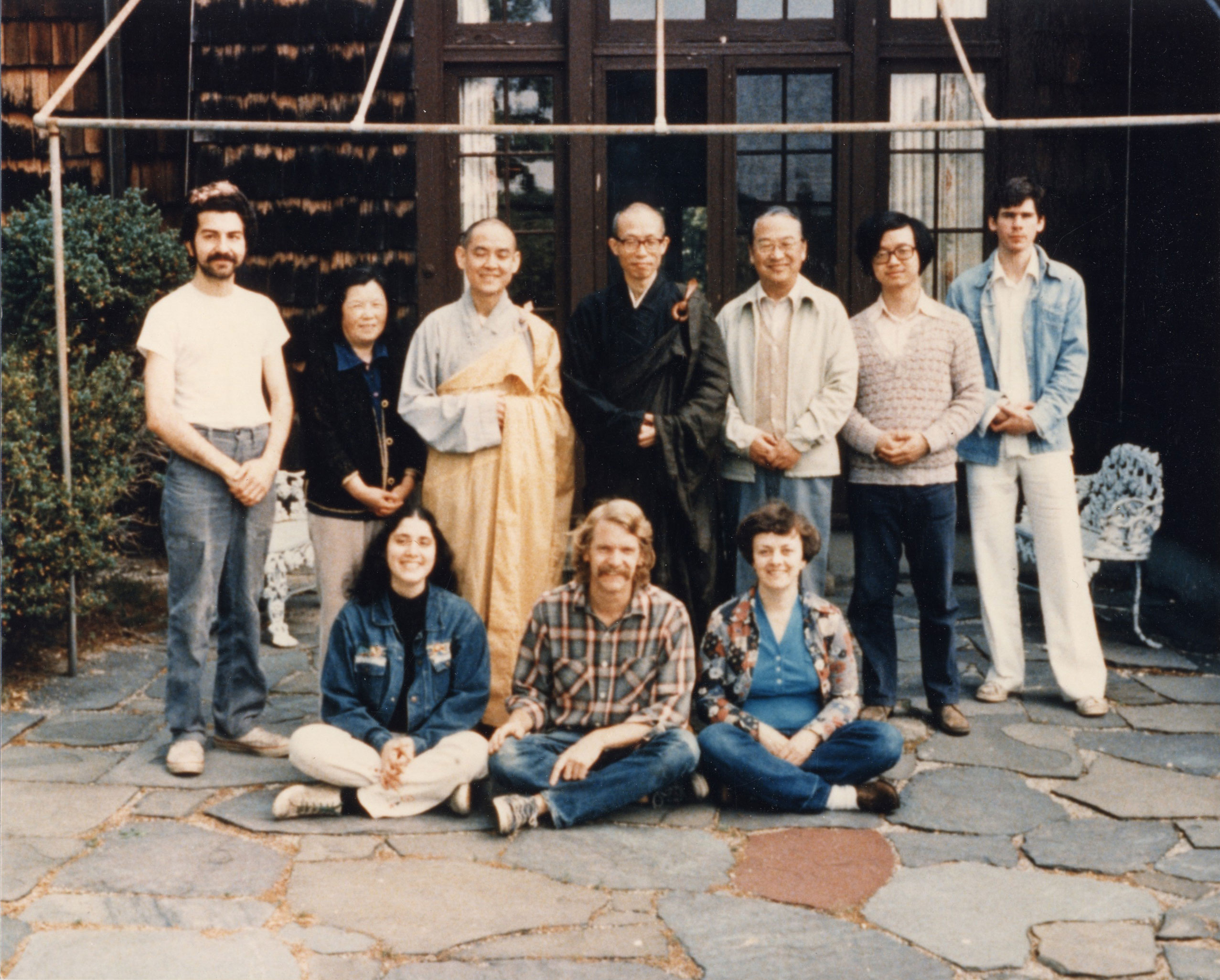
Shifu at center, and early students probably on retreat at the home of Dr. C. T. Shen (standing left of Shifu), at Dr. Shen’s home in Setauket, Long Island, New York.
Beginning the Chan Meditation Center
Because his group of meditation classes at the Temple of Enlightenment was growing so rapidly, Shifu had to consider moving out. By moving to Queens in a building that used to be a factory, Shifu probably did not realize that his actions would lead to his group becoming one of America’s most prominent Chan Buddhism organizations. Shifu named his new organization the Chan Meditation Center, and a key part of its activities was to continue the publishing of Chan Magazine.
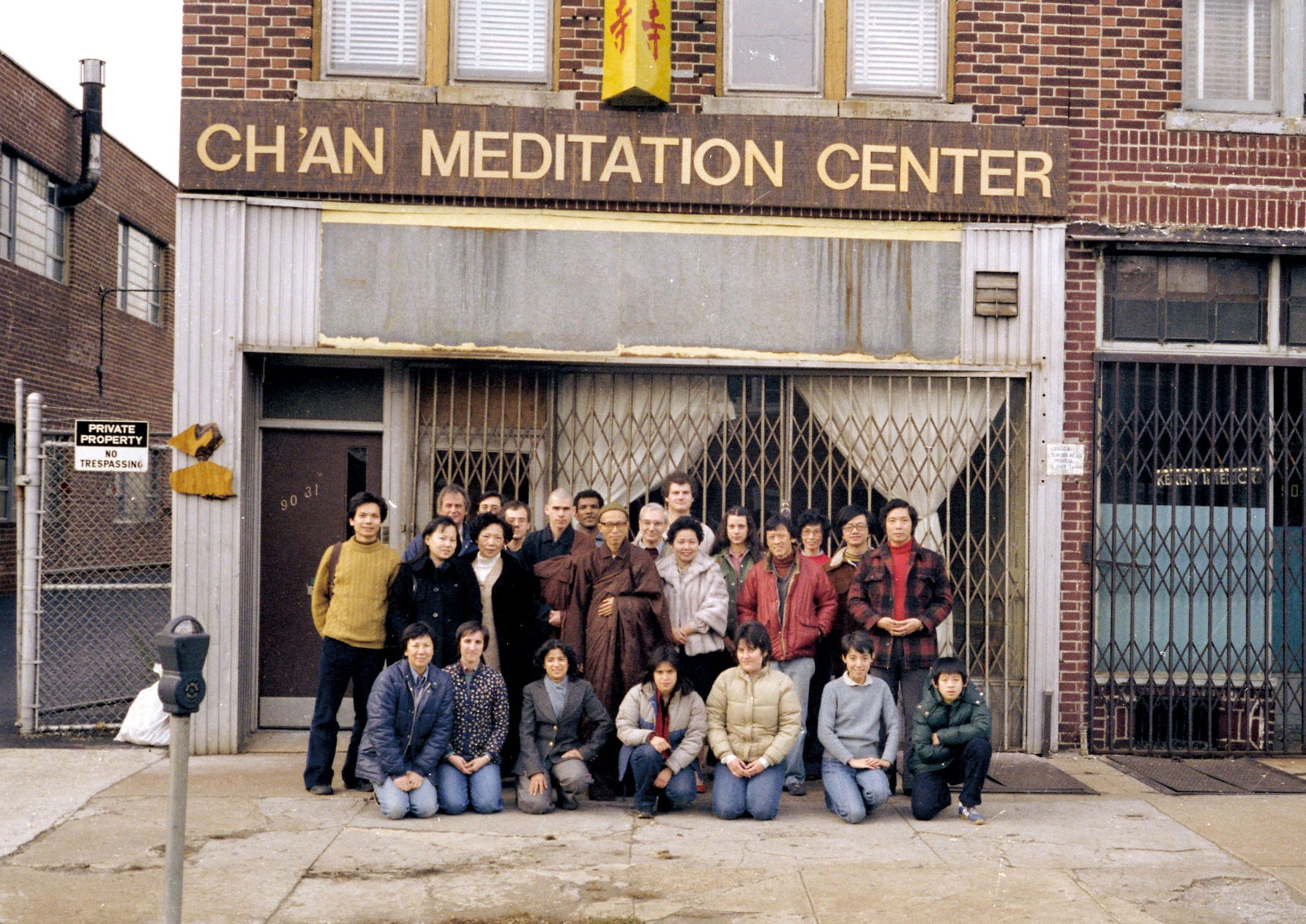
Shifu and early students at the first Chan Meditation Center, in Elmhurst, in Queens,
New York City. The new Chan Meditation Center is on the same street.
From that time on, Master Sheng Yen began a journey of nearly 32 years, during which he jetted back and forth between America and Taiwan, while creating two thriving environments for Chan practice, and authoring a stunning array of scholarly and more accessible books. Despite having to share his time between Taiwan and the United States, Shifu made the Chan Meditation Center a successful gathering place to American practitioners of Buddhism. So much so that he eventually had to move the Chan Meditation Center to a larger location on the same street in Queens, and today it is thriving with a huge gathering of followers.
Having endured chronic illness for several years, in 2006, Shifu returned to Taiwan, where he continued to direct the growth of the practice and educational centers at Dharma Drum Mountain. He also engaged in one of his favorite post-retirement activities, which was calligraphy.
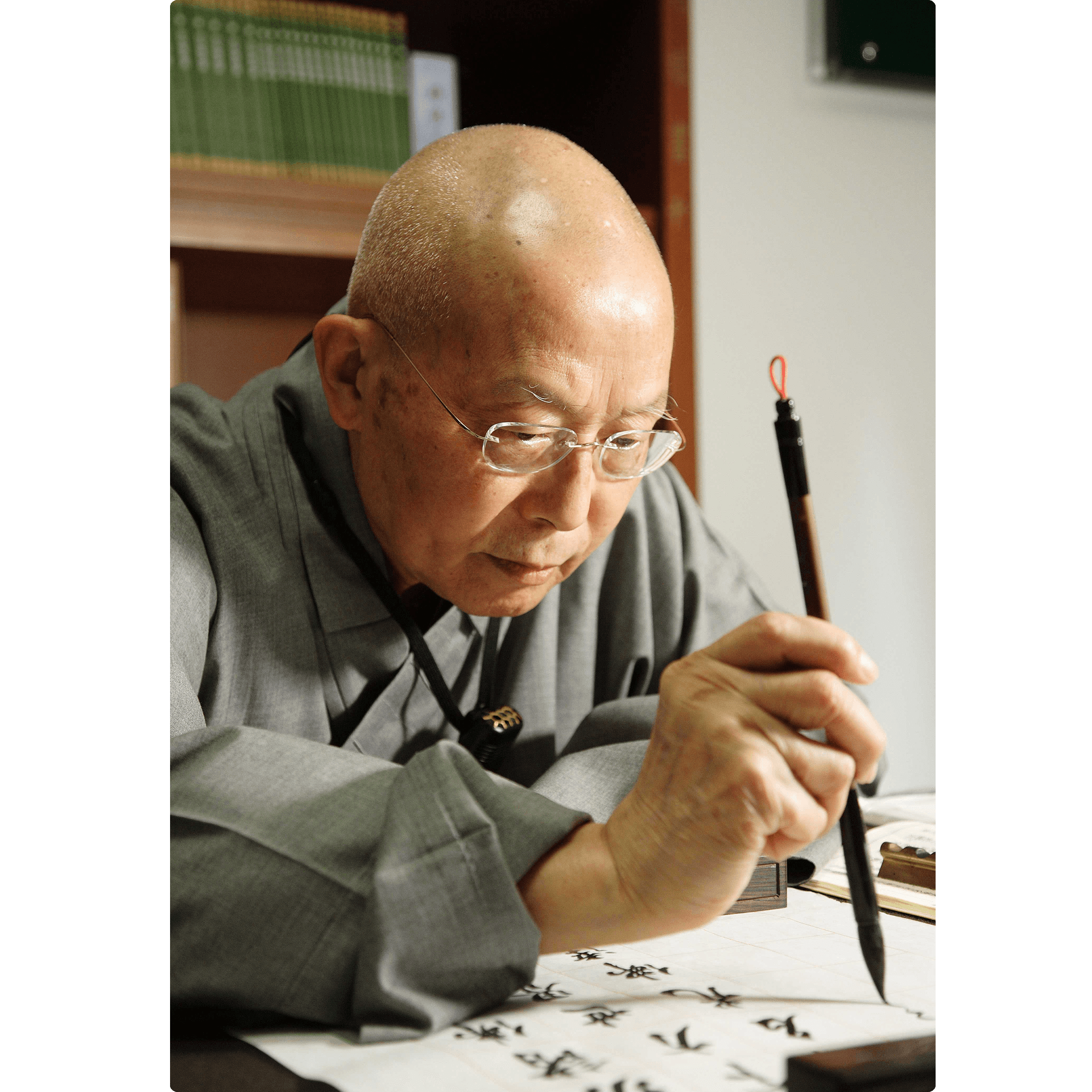
Shifu devoted much of his later life to calligraphy
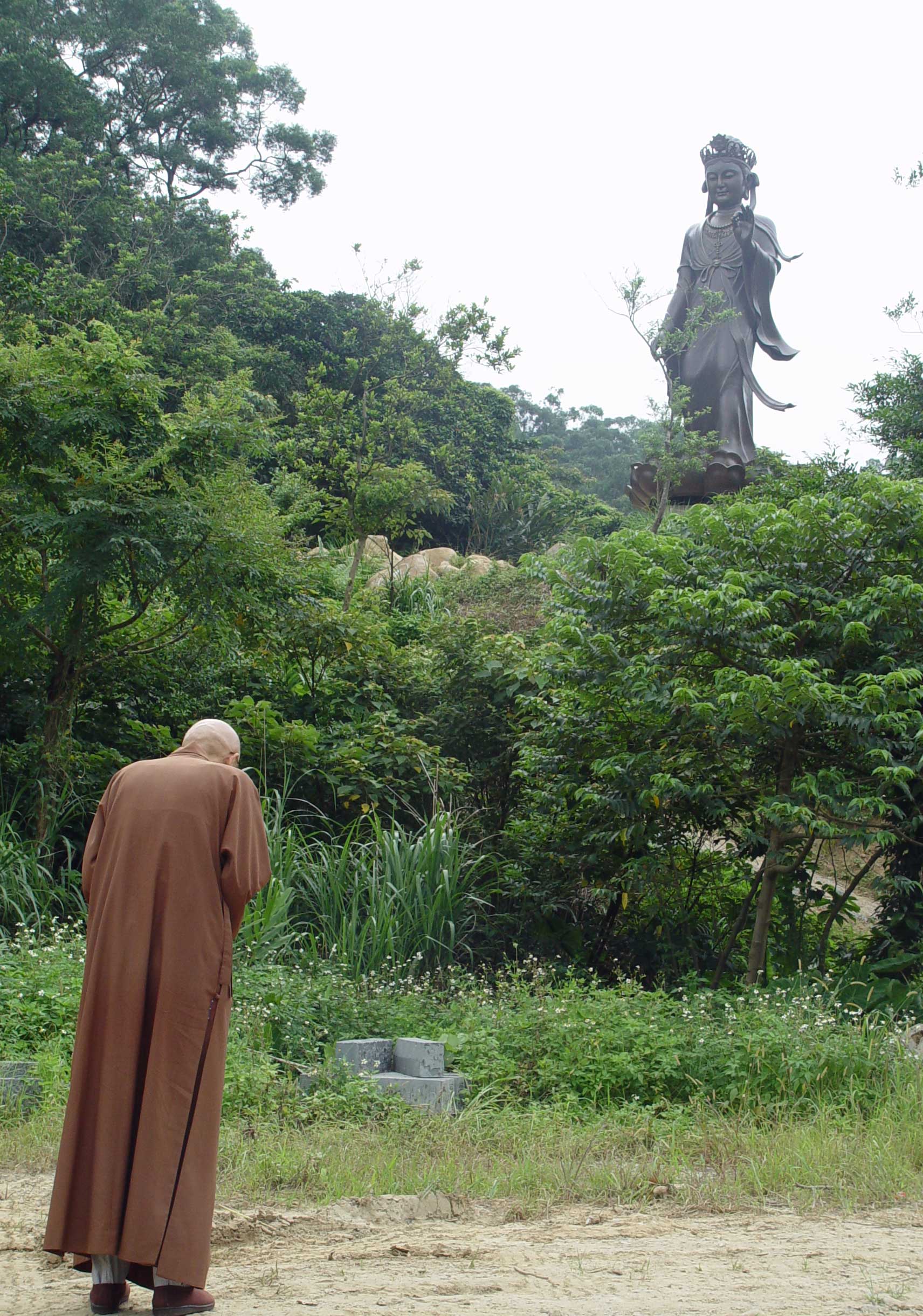
In 2009, Master Sheng Yen bequeathed to us his poem of departing from the mortal realm. Below is his final poem, translated into English by Guo Gu (Professor Jimmy Yu).
Busy with nothing, growing old.
Within emptiness, weeping, laughing.
Intrinsically, there is no “I,”
Life and death, thus cast aside.
Digital Version of Chan Magazine
Beginning with this issue, Chan Magazine is entering a new and challenging future which is to be edited and produced as a digital (non-paper) publication. With four issues per year, to date there have been around 180 issues of Chan Magazine. We therefore thank everyone who has been a part of publishing Chan Magazine since it began. Of course, our thanks begin with Shifu, whose teachings have been the opening chapter in every issue. (Shifu is named as “Founder/Teacher” in the staffing page of every issue.) Each issue includes the names of the contributing staff, so the best way to know who took part in each issue is to look at the staffing page!
However, since the beginning of Chan Magazine in 1977, there have been some individuals who gave much of their time, skills, and dedication to Chan Magazine. First, we thank Shifu for creating Chan Magazine as an important source of his Chan Buddhism teaching. We also thank Buffe Laffey who has been Editor-on-Chief for most of the 47 years, until she retired after the last issue of 2024. From the artistic aspect, there is Art Professor Rikki Asher, who contributed to art and photography in the beginning issues, and more since then. There is also David Berman who was Editor-in-Chief or Associate Editor for nearly 11 years. We owe our thanks to them, and all the others who gave their time and energy to Chan Magazine during its 47 years of publication.
And of course we now thank Edward Lin for becoming the new Editor-in-Chief of Chan Magazine.
Finally, our thanks to you as readers and subscribers of Chan Magazine, and hope you will continue to see it as part of your practice of Chan Buddhism.
— ✦ —
Editor's note
In The Origin of Chan Magazine, Ernest Heau traces how Master Sheng Yen’s early teachings in America took root in the form of a small publication that became a lasting record of Chan practice in the West. Ernest connects the magazine's creation to Shifu's journey from a young monk, through his Ph.D. in Buddhist literature from Rissho University, to his pioneering work bringing Chan teachings to American practitioners. As Chan Magazine transitions to digital format, this article chronicle’s Shifu’s vision and honors contributors including long-serving Editor-in-Chief Buffe Laffey while bridging the magazine's history with its continuing mission to preserve Chan Buddhism wisdom for future generations.
— ✦ —
To write about the origin of Chan Magazine, it is important to recall and appreciate the legacy of Chan Master Sheng Yen (1930-2009) who became known to his followers as “Shifu.” Shifu was born in China to a family of farmers who were not Buddhists. However at the age of 13, he became a member of a Buddhist monastery in Shanghai, where among his monastic duties, he performed funeral rites for lay practitioners. It was during this period that he became committed to remain a Buddhist monk.
At the age of 18, he was drafted into the National Army as the part of the country’s reaction to the rise of Communism. But eventually, the Chinese government (Kuomintang) relocated to Taiwan, and Shifu served for several years in the Army there.
Young Shifu as a Soldier in Taiwan.
While in the Army, Shifu spent much time developing his writing interests and publishing skills. “My greatest gain in the Army was to develop my writing skills…the essays I wrote often won awards, and the [unit’s] newspaper would post my articles regularly.” This tells us that the Army helped Shifu by giving him enough spare time to become a devoted writer and publisher.
Becoming a Scholar
After Shifu returned to a monk’s life, his master Dong Chu made Shifu the new editor of Humanity Magazine, a journal of Chinese Buddhism. Next, beginning in 1961 he spent six years in solitary retreat in a mountainous area, dedicating himself to the study of the Buddhist sila (moral discipline) and vinaya (precepts). Before ending his retreat, he completed The Essentials of Buddhist Sila and Vinaya, which became a classic.
Emerging from retreat in 1969, he enrolled at Rissho University in Tokyo, where in 1975 he completed his Ph.D. in Buddhist literature. Doing this gave him the ability to research and author deeply complex Buddhist texts at the highest level of scholarship. Thus his experiences made him a monk who was not just a devoted practitioner, but also a dedicated scholar, writer, editor, and publisher, even before he came to America.
Arriving in America: The Temple of Enlightenment
After earning his degree and returning to Taiwan, Master Sheng Yen was unsure about his prospects for the future. But due to karmic affinity and good fortune, in 1975 he was invited to come to America by a dedicated Buddhist and wealthy businessman, Dr. C. T. Shen, to the Temple of Enlightenment in the Bronx, a section of New York City. There Shifu started a Chan meditation class which was composed of a mix of Westerners and ethnic Chinese.
The Temple of Enlightenment in the Bronx, a part New York City.
After at least a year of developing his own group of students at the Temple of Enlightenment, a decision was made to begin a magazine whose purpose would be to collect and publish Shifu’s teachings, as well as recording the activities of the group to promote Chan Buddhism in America. It was called Chan Magazine.
Shifu at center, and early students probably on retreat at the home of Dr. C. T. Shen (standing left of Shifu), at Dr. Shen’s home in Setauket, Long Island, New York.
Beginning the Chan Meditation Center
Because his group of meditation classes at the Temple of Enlightenment was growing so rapidly, Shifu had to consider moving out. By moving to Queens in a building that used to be a factory, Shifu probably did not realize that his actions would lead to his group becoming one of America’s most prominent Chan Buddhism organizations. Shifu named his new organization the Chan Meditation Center, and a key part of its activities was to continue the publishing of Chan Magazine.
Shifu and early students at the first Chan Meditation Center, in Elmhurst, in Queens,
New York City. The new Chan Meditation Center is on the same street.
From that time on, Master Sheng Yen began a journey of nearly 32 years, during which he jetted back and forth between America and Taiwan, while creating two thriving environments for Chan practice, and authoring a stunning array of scholarly and more accessible books. Despite having to share his time between Taiwan and the United States, Shifu made the Chan Meditation Center a successful gathering place to American practitioners of Buddhism. So much so that he eventually had to move the Chan Meditation Center to a larger location on the same street in Queens, and today it is thriving with a huge gathering of followers.
Having endured chronic illness for several years, in 2006, Shifu returned to Taiwan, where he continued to direct the growth of the practice and educational centers at Dharma Drum Mountain. He also engaged in one of his favorite post-retirement activities, which was calligraphy.
Shifu devoted much of his later life to calligraphy
In 2009, Master Sheng Yen bequeathed to us his poem of departing from the mortal realm. Below is his final poem, translated into English by Guo Gu (Professor Jimmy Yu).
Busy with nothing, growing old.
Within emptiness, weeping, laughing.
Intrinsically, there is no “I,”
Life and death, thus cast aside.
Digital Version of Chan Magazine
Beginning with this issue, Chan Magazine is entering a new and challenging future which is to be edited and produced as a digital (non-paper) publication. With four issues per year, to date there have been around 180 issues of Chan Magazine. We therefore thank everyone who has been a part of publishing Chan Magazine since it began. Of course, our thanks begin with Shifu, whose teachings have been the opening chapter in every issue. (Shifu is named as “Founder/Teacher” in the staffing page of every issue.) Each issue includes the names of the contributing staff, so the best way to know who took part in each issue is to look at the staffing page!
However, since the beginning of Chan Magazine in 1977, there have been some individuals who gave much of their time, skills, and dedication to Chan Magazine. First, we thank Shifu for creating Chan Magazine as an important source of his Chan Buddhism teaching. We also thank Buffe Laffey who has been Editor-on-Chief for most of the 47 years, until she retired after the last issue of 2024. From the artistic aspect, there is Art Professor Rikki Asher, who contributed to art and photography in the beginning issues, and more since then. There is also David Berman who was Editor-in-Chief or Associate Editor for nearly 11 years. We owe our thanks to them, and all the others who gave their time and energy to Chan Magazine during its 47 years of publication.
And of course we now thank Edward Lin for becoming the new Editor-in-Chief of Chan Magazine.
Finally, our thanks to you as readers and subscribers of Chan Magazine, and hope you will continue to see it as part of your practice of Chan Buddhism.
— ✦ —
Get Chan Magazine sent to your inbox
Once quarterly
Please check your mailbox to confirm your subscription after clicking Subscribe.
Get Chan Magazine sent to your inbox
Once quarterly
Please check your mailbox to confirm your subscription after clicking Subscribe.