Practice
Settle the Mind in the Front and Live in the Present Moment.
Settle the Mind in the Front and Live in the Present Moment.
Settle the Mind in the Front and Live in the Present Moment.
by Venerable Guo Goang, Narrative by E. Yu
by Venerable Guo Goang, Narrative by E. Yu
Editor’s Note
In this retreat teaching, Venerable Guo Goang offers a clear and grounded approach to zhǐ guān—the practice of stillness and insight—through the method of “mindfulness placed in front.” Drawing on the Agama Sutras and the Chan tradition, she reminds us that by gently returning the mind to the present moment, we can cultivate both stability and clarity. This method, accessible yet profound, is a steady path toward seeing things as they truly are. Translated by Edward Lin
— ✦ —
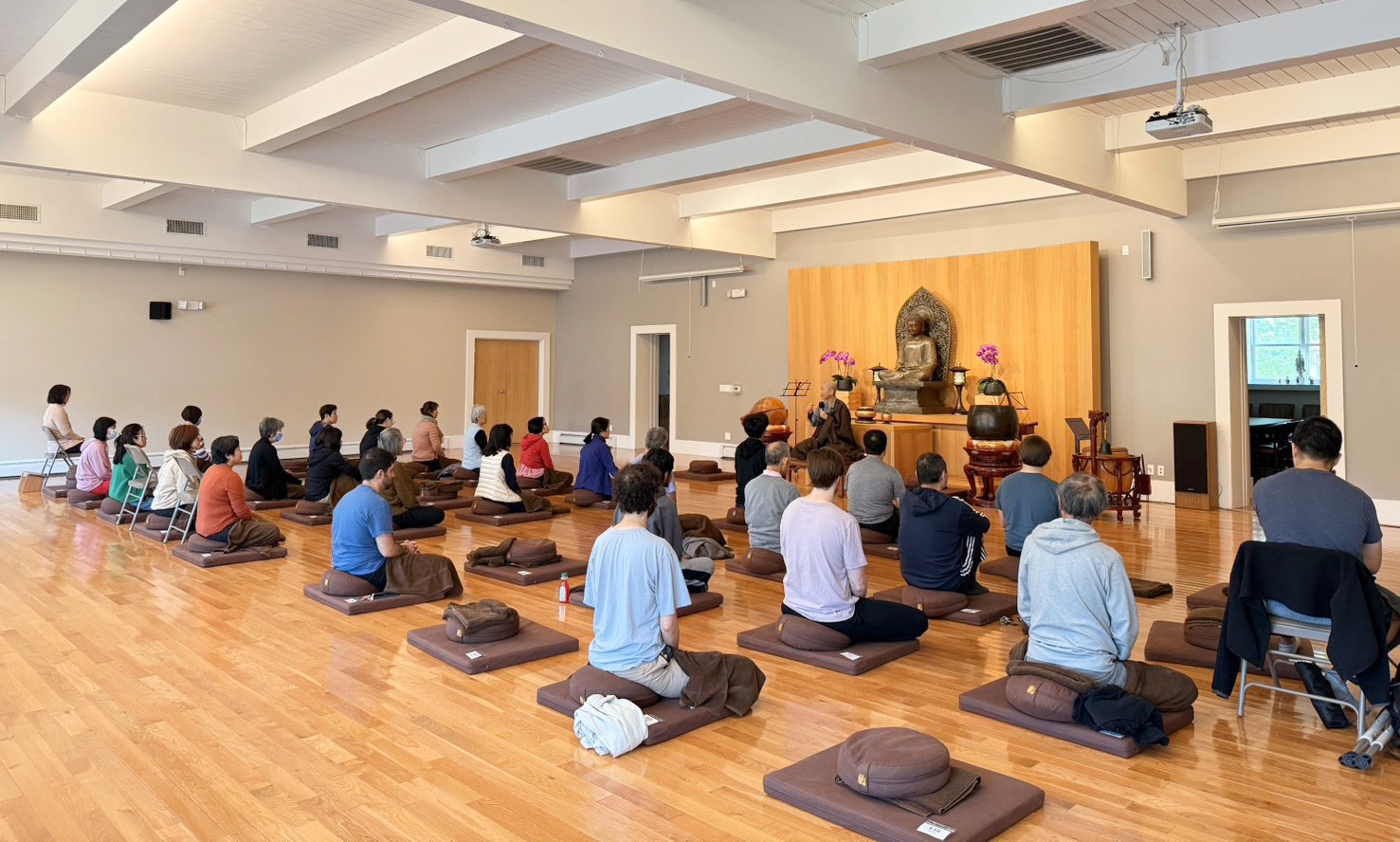
This two-day retreat featured the theme of zhǐ guān (止觀), “samatha and vipassana.” Samatha allows our minds, which habitually grasp at external objects, to settle and stabilize. Vipassana is the natural emergence of awareness once the mind is calm. Samatha gives rise to concentration (samadhi), vipassana develops wisdom (prajna). Concentration and wisdom form one integrated whole.
The Venerable’s teaching began with a fundamental question: What is the purpose of practice? She said that practice is for rú shí liǎo zhī (如實了知), “see things as they truly are” —understanding the true nature of self, others, and all phenomena. Because of the veil of ignorance (avidya), sentient beings are like those with cataracts who cannot perceive the world as it is. This gives rise to inverted and mistaken views, leading them to grasp at external appearances, generating afflictions (kleshas) and creating various karmic actions of good and evil, causing them to wander in the cycle of birth and death (samsara) without escape.
The twelve links of dependent origination (pratityasamutpada) describe this exactly: ignorance, formations, consciousness, name-and-form, and so forth, arise sequentially. Sentient beings float and sink endlessly in the ocean of samsara. Ignorance is the root of afflictions, keeping us trapped in “sentient beings’ view” rather than entering “Buddha’s view.”
So how do we eliminate ignorance? Just as treating cataracts requires knowing which part has the problem before a doctor can intervene, to counter ignorance, we must know where ignorance arises. The Venerable didn’t provide a direct answer but emphasized that through zhǐ guān “samatha and vipassana” practice, we can gradually tame the mind. “Settle the mind at one place”—zhì xīn yī chù (制心一處)—then nothing is unachievable (無事不辦). We don’t need to forcibly combat afflictions.
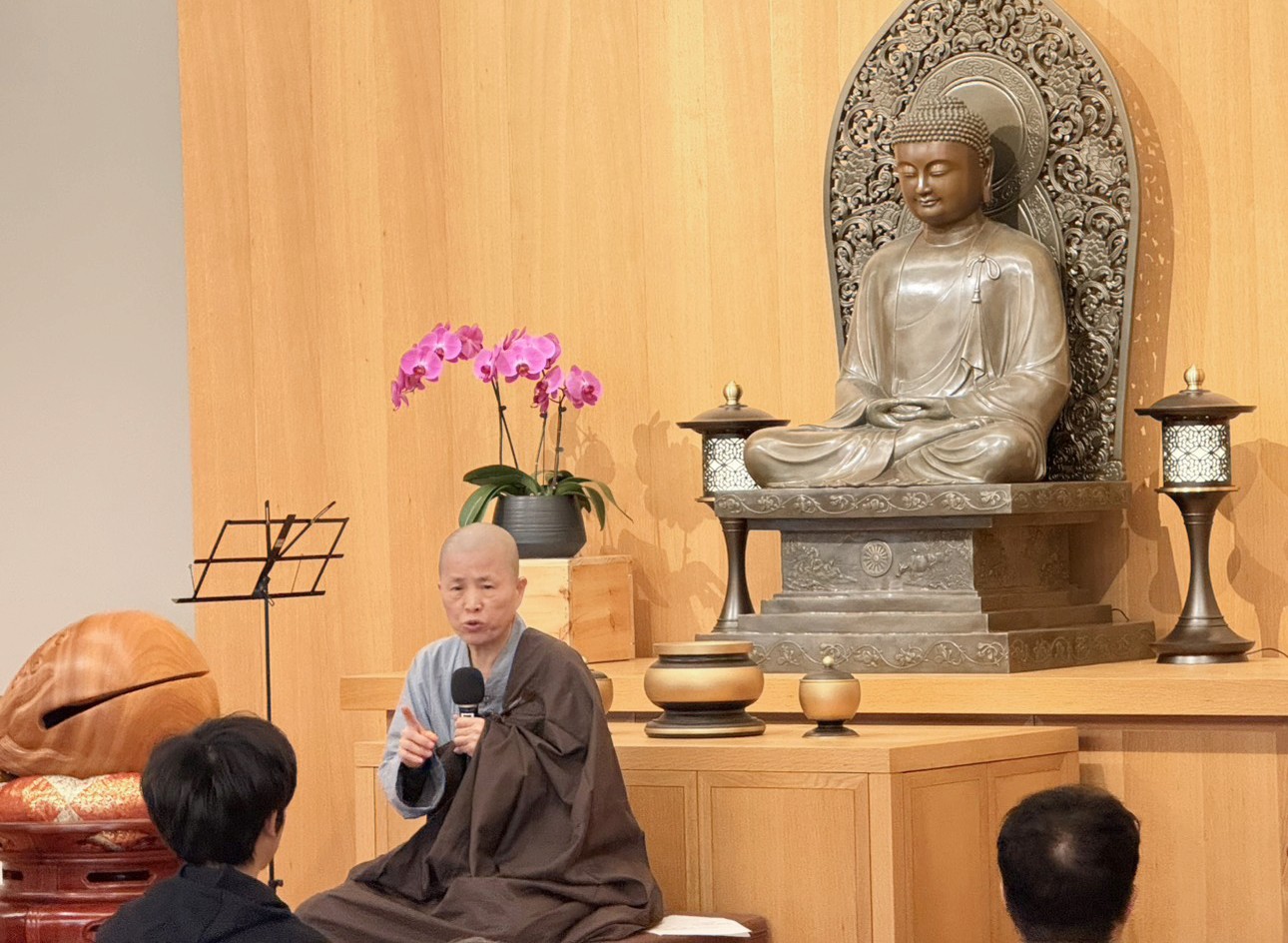
Venerable Guo Goang
How then do we achieve “one-pointed concentration?” It is by gathering the mind’s attention to the tip of the nose. The Venerable taught us to use xì niàn zài qián (繫念在前) “mindfulness placed in front” from the Agama Sutras to cultivate samatha, as taught by the Buddha. Establish your attention in front, that is, in the area around the nose tip, nostrils, and upper lip. Where the attention settles, the mind abides. Here, “mind” refers to the discriminating, grasping consciousness. The practice of xì niàn zài qián is to gently and continuously return this mind to the spot in the front. When it wanders, we simply guide it back with gentleness.
This is much like the “Ten Ox Herding Pictures” from the Chan tradition: once you find the ox (the mind), you must train it. The rope represents the method of practice. Even if the ox bolts, as long as we hold the rope, we can bring it back.
The Venerable also spoke about the difference between gǎnzhī (感知) “sensual awareness” and jué zhī (覺知) “intuitive awareness.” Sensual awareness is what ordinary beings experience when the six sense faculties contact the six sense objects, giving rise to the six types of consciousness. This process rushes like a stream—one thought follows another, mixed with preferences, memories, and delusions—leading conditions to constantly move the mind, resulting in endless afflictions.
Intuitive awareness, on the other hand, gets sharper after the mind is stilled and anchored. This awareness, like a calm surface of water reflecting reality, enables us clearly and truthfully perceive the breath, body, and environment as is—without grasping or aversion. Whatever arises is like a bubble in water: arising and passing away with clarity but without clinging. This present moment awareness is the practice of truly living in the now—free from being colored by past thoughts or memories. When rooted in this kind of awareness, other practices like Silent Illumination (mò zhào chán默照禪), huàtóu (話頭), or mindfulness of Buddha recitation, become more accessible.
“Settling the mind at one place” is the foundation of all practices. Once this foundation is stable, all other methods become effective. As calming and awareness deepen at the same time, both dharma practice and even complicated worldly tasks become easier to manage. This is the true meaning of “Settle the mind at one place, and nothing is unachievable.”
Ven. Guo Goang provide this effective practice of “mindfulness placed in front” to start with for any practice, which simultaneously strengthens stillness and awareness of the mind along the practice. Initially, one might only know the breath, but with deep and sustained practice, awareness will extend to the whole body and even the surrounding environment. For beginners, repeatedly training to bring attention back to the front, observing the breath when awareness arises, and returning to the front when the mind wanders again—progressing gradually through such cycles. As the power of awareness expands, the scope of contemplative objects can also be enlarged accordingly.
The Venerable reminded us that the most difficult stage of practice is precisely when we use the method but have not yet gained proficiency—experiencing either dullness (hūnchén 昏沉) or restlessness (diào jǔ 掉舉). At this time, we must have even more confidence and practice honestly, never giving up lightly. One cannot achieve proficiency overnight; it requires diligent, daily cultivation. As long as we plant and nourish the seeds, when causes and conditions ripen, the fruits will naturally appear. One day, we may suddenly realize: “So this is how it is!”
“Settle the mind at one place, and nothing is unachievable.” is not an abstract slogan but a practical meditation experience that one can cultivate. One can practice “mindfulness placed in front” not only during sitting meditation, but also anytime in daily life. Whether walking, drinking water, or even when conversing with others or handling complex tasks, as long as the power of stilling and awareness of the mind established by “mindfulness in front” is strong enough, one can abide in the present moment anywhere at any time. Whether rising, sitting down, or preparing for sleep, if the method is never far from us, this is the essence of continuous, integrated practice.
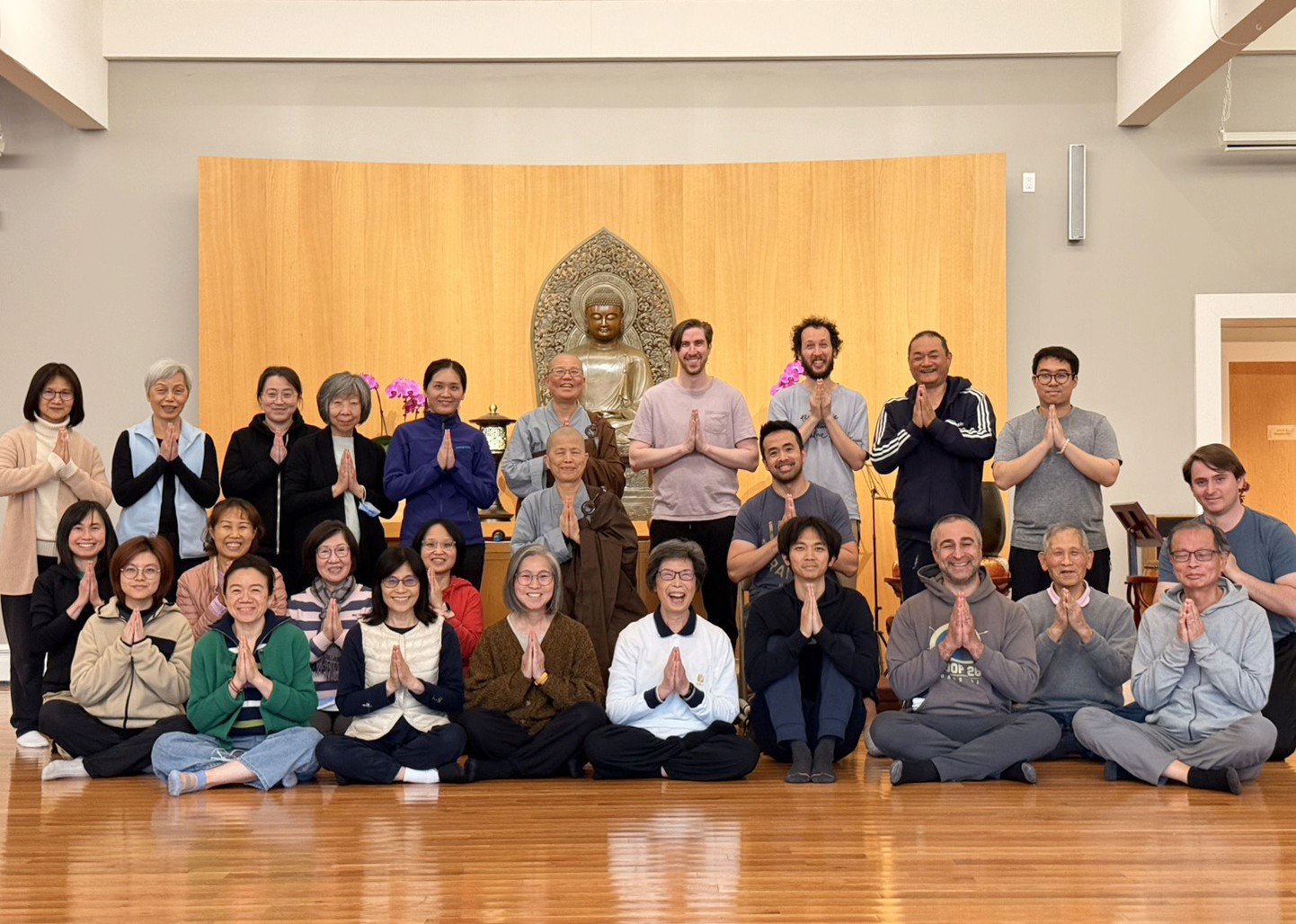
“Mindfulness placed in front” allows us to see the world without colored glasses. We perceive people and situations with clarity and pure awareness, truly living in the present—and naturally responding with wisdom and compassion. To practice well, we must start with a steady, grounded effort on the meditation cushion. The Venerable earnestly encouraged us: practice must be continuous and persevering. We can always make time, no matter how busy we are; a sincere belief in the importance of cultivation will always reveal a way.
— ✦ —
Editor’s Note
In this retreat teaching, Venerable Guo Goang offers a clear and grounded approach to zhǐ guān—the practice of stillness and insight—through the method of “mindfulness placed in front.” Drawing on the Agama Sutras and the Chan tradition, she reminds us that by gently returning the mind to the present moment, we can cultivate both stability and clarity. This method, accessible yet profound, is a steady path toward seeing things as they truly are. Translated by Edward Lin
— ✦ —
This two-day retreat featured the theme of zhǐ guān (止觀), “samatha and vipassana.” Samatha allows our minds, which habitually grasp at external objects, to settle and stabilize. Vipassana is the natural emergence of awareness once the mind is calm. Samatha gives rise to concentration (samadhi), vipassana develops wisdom (prajna). Concentration and wisdom form one integrated whole.
The Venerable’s teaching began with a fundamental question: What is the purpose of practice? She said that practice is for rú shí liǎo zhī (如實了知), “see things as they truly are” —understanding the true nature of self, others, and all phenomena. Because of the veil of ignorance (avidya), sentient beings are like those with cataracts who cannot perceive the world as it is. This gives rise to inverted and mistaken views, leading them to grasp at external appearances, generating afflictions (kleshas) and creating various karmic actions of good and evil, causing them to wander in the cycle of birth and death (samsara) without escape.
The twelve links of dependent origination (pratityasamutpada) describe this exactly: ignorance, formations, consciousness, name-and-form, and so forth, arise sequentially. Sentient beings float and sink endlessly in the ocean of samsara. Ignorance is the root of afflictions, keeping us trapped in “sentient beings’ view” rather than entering “Buddha’s view.”
So how do we eliminate ignorance? Just as treating cataracts requires knowing which part has the problem before a doctor can intervene, to counter ignorance, we must know where ignorance arises. The Venerable didn’t provide a direct answer but emphasized that through zhǐ guān “samatha and vipassana” practice, we can gradually tame the mind. “Settle the mind at one place”—zhì xīn yī chù (制心一處)—then nothing is unachievable (無事不辦). We don’t need to forcibly combat afflictions.
Venerable Guo Goang
How then do we achieve “one-pointed concentration?” It is by gathering the mind’s attention to the tip of the nose. The Venerable taught us to use xì niàn zài qián (繫念在前) “mindfulness placed in front” from the Agama Sutras to cultivate samatha, as taught by the Buddha. Establish your attention in front, that is, in the area around the nose tip, nostrils, and upper lip. Where the attention settles, the mind abides. Here, “mind” refers to the discriminating, grasping consciousness. The practice of xì niàn zài qián is to gently and continuously return this mind to the spot in the front. When it wanders, we simply guide it back with gentleness.
This is much like the “Ten Ox Herding Pictures” from the Chan tradition: once you find the ox (the mind), you must train it. The rope represents the method of practice. Even if the ox bolts, as long as we hold the rope, we can bring it back.
The Venerable also spoke about the difference between gǎnzhī (感知) “sensual awareness” and jué zhī (覺知) “intuitive awareness.” Sensual awareness is what ordinary beings experience when the six sense faculties contact the six sense objects, giving rise to the six types of consciousness. This process rushes like a stream—one thought follows another, mixed with preferences, memories, and delusions—leading conditions to constantly move the mind, resulting in endless afflictions.
Intuitive awareness, on the other hand, gets sharper after the mind is stilled and anchored. This awareness, like a calm surface of water reflecting reality, enables us clearly and truthfully perceive the breath, body, and environment as is—without grasping or aversion. Whatever arises is like a bubble in water: arising and passing away with clarity but without clinging. This present moment awareness is the practice of truly living in the now—free from being colored by past thoughts or memories. When rooted in this kind of awareness, other practices like Silent Illumination (mò zhào chán默照禪), huàtóu (話頭), or mindfulness of Buddha recitation, become more accessible.
“Settling the mind at one place” is the foundation of all practices. Once this foundation is stable, all other methods become effective. As calming and awareness deepen at the same time, both dharma practice and even complicated worldly tasks become easier to manage. This is the true meaning of “Settle the mind at one place, and nothing is unachievable.”
Ven. Guo Goang provide this effective practice of “mindfulness placed in front” to start with for any practice, which simultaneously strengthens stillness and awareness of the mind along the practice. Initially, one might only know the breath, but with deep and sustained practice, awareness will extend to the whole body and even the surrounding environment. For beginners, repeatedly training to bring attention back to the front, observing the breath when awareness arises, and returning to the front when the mind wanders again—progressing gradually through such cycles. As the power of awareness expands, the scope of contemplative objects can also be enlarged accordingly.
The Venerable reminded us that the most difficult stage of practice is precisely when we use the method but have not yet gained proficiency—experiencing either dullness (hūnchén 昏沉) or restlessness (diào jǔ 掉舉). At this time, we must have even more confidence and practice honestly, never giving up lightly. One cannot achieve proficiency overnight; it requires diligent, daily cultivation. As long as we plant and nourish the seeds, when causes and conditions ripen, the fruits will naturally appear. One day, we may suddenly realize: “So this is how it is!”
“Settle the mind at one place, and nothing is unachievable.” is not an abstract slogan but a practical meditation experience that one can cultivate. One can practice “mindfulness placed in front” not only during sitting meditation, but also anytime in daily life. Whether walking, drinking water, or even when conversing with others or handling complex tasks, as long as the power of stilling and awareness of the mind established by “mindfulness in front” is strong enough, one can abide in the present moment anywhere at any time. Whether rising, sitting down, or preparing for sleep, if the method is never far from us, this is the essence of continuous, integrated practice.
“Mindfulness placed in front” allows us to see the world without colored glasses. We perceive people and situations with clarity and pure awareness, truly living in the present—and naturally responding with wisdom and compassion. To practice well, we must start with a steady, grounded effort on the meditation cushion. The Venerable earnestly encouraged us: practice must be continuous and persevering. We can always make time, no matter how busy we are; a sincere belief in the importance of cultivation will always reveal a way.
— ✦ —
Get Chan Magazine sent to your inbox
Once quarterly
Please check your mailbox to confirm your subscription after clicking Subscribe.
Get Chan Magazine sent to your inbox
Once quarterly
Please check your mailbox to confirm your subscription after clicking Subscribe.