Outreach
Adapting to Change: Buddhist Teaching for Today
Adapting to Change: Buddhist Teaching for Today
2025 Buddhist Council of New York Forum
2025 Buddhist Council of New York Forum
2025 Buddhist Council of New York Forum
by Amanda Yeung
by Amanda Yeung
Editor’s Note
In this timely report from the 2025 Buddhist Council of New York Forum, Amanda Yeung captures the diverse voices of Buddhist leaders addressing the challenges of a rapidly changing world. With reflections on climate change, technology, and social unrest, speakers from various traditions explore how the Dharma continues to offer clarity, resilience, and compassionate response. Venerable Chang Hwa’s remarks in particular highlight the importance of regulating the mind and returning to core practices as we navigate uncertainty. Translated by Edward Lin
— ✦ —
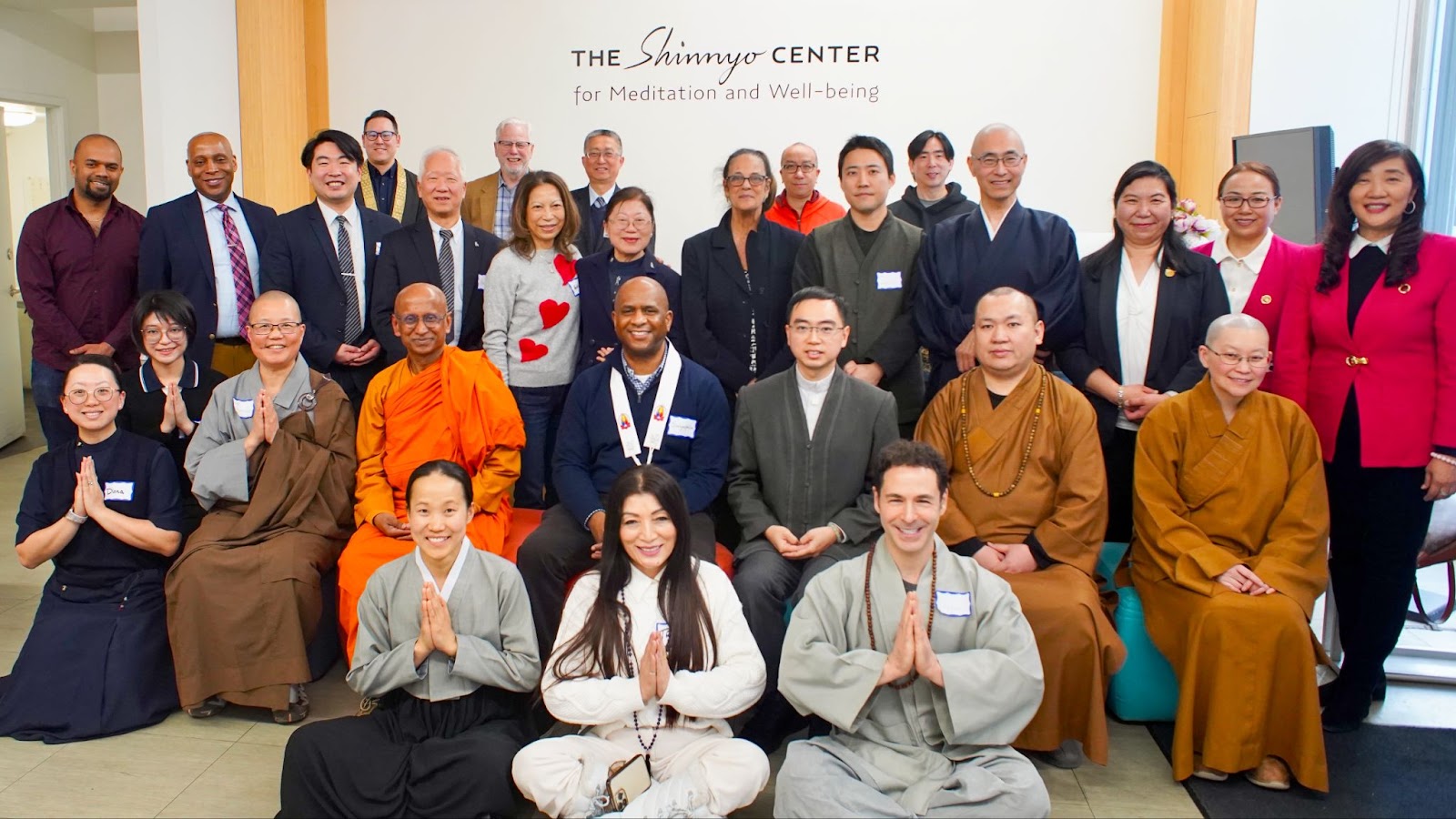
On March 22nd, from 1:00 to 4:00 PM Eastern Time, the Buddhist Council of New York (“BCNY”) held its 2025 Annual Forum at The Shinnyo Center in Midtown Manhattan. Venerable Chang Hwa, Director of Chan Meditation Center (東初禪寺) was invited as one of the speakers. This year’s theme was “Adapting to Change: Buddhist Teachings for Today.” Approximately 50 Buddhist leaders and practitioners from various traditions attended, engaging in lectures and dialogues that focused on current events and issues related to “transformation,” such as climate change, political transitions, and artificial intelligence. The forum explored how Buddhist teachings can provide wisdom and practical guidance to help people respond to change and uncertainty in today’s rapidly evolving world with clarity, compassion, and resilience.
The event opened with remarks from Venerable Zhi Long, Vice President of the American Buddhist Confederation, addressing the recent attacks on multiple Buddhist temples in New York’s Chinatown. In his speech titled “Speaking for Peace, Law, and Social Harmony,” he emphasized that while urging law enforcement to take action to protect religious sites, society should also promote understanding and tolerance through dialogue and exchange, eliminate religious violence, and eradicate hatred and prejudice.
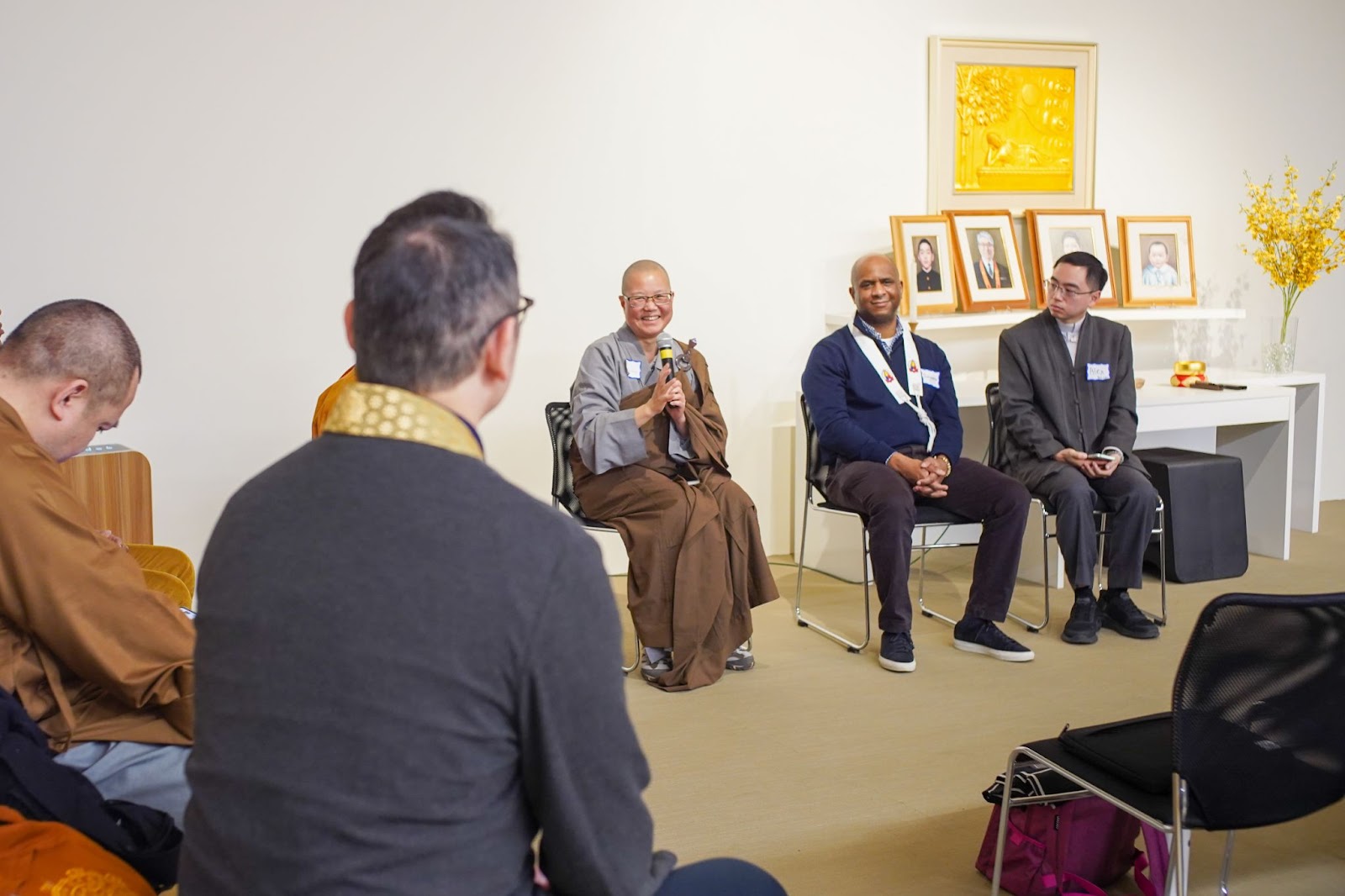
Next, Venerable Chang Hwa led the assembly in loving-kindness meditation (metta) to center their minds and bodies, reminding everyone to maintain compassionate hearts when dealing with matters that need to be addressed. In her speech, Venerable Chang Hwa mentioned several challenges, including: air pollution and climate warming caused by industrial development; genetic pollution brought about by biotechnological development, which also presents ethical and moral challenges; and information pollution resulting from information technology development, giving rise to another form of addiction and violence (cyberbullying), along with the flourishing development of artificial intelligence that is changing how people learn and work.
Venerable Chang Hua stressed that, overcoming these various challenges necessitates resisting the temptations of the wǔ yù (五欲) “five sensual desires”, recognizing subtle afflictions (kleshas), and subduing greed/addiction and anger/hatred remain the same. In this process, “regulating the mind” is closer to Buddhist practice than “confronting circumstances.” We shall not forget our wisdom and compassionate mind in facing people and the environment.
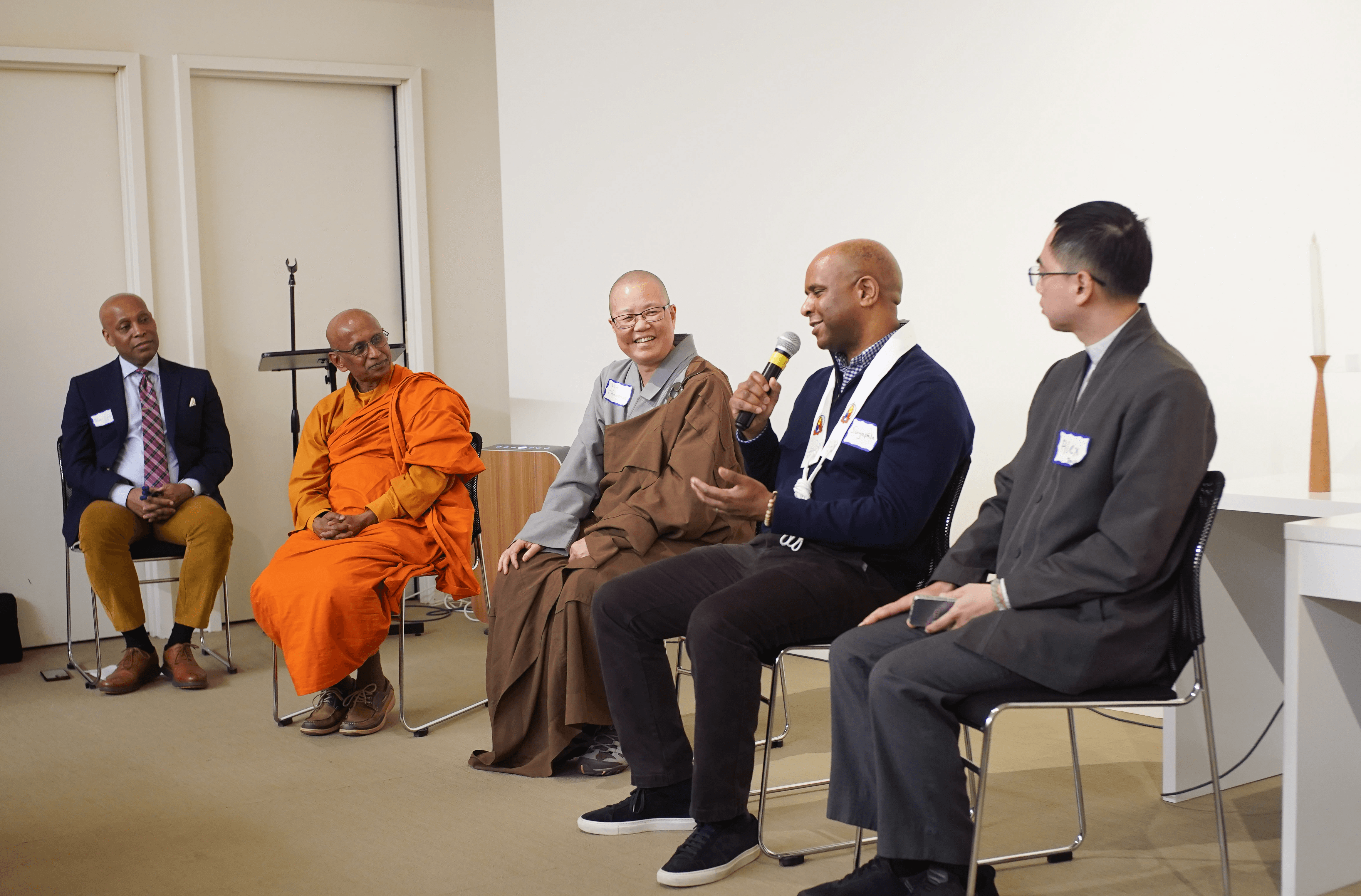
Suryapala (Todd Johnson) from the Triratna Buddhist Community, demonstrated the convenience and efficiency of using ChatGPT to retrieve Buddhist teachings. He encouraged everyone to use AI tools skillfully in the service of dharma practice and daily life, helping beings achieve liberation from suffering and attain happiness, rather than allowing them to become enslaved by these technologies.
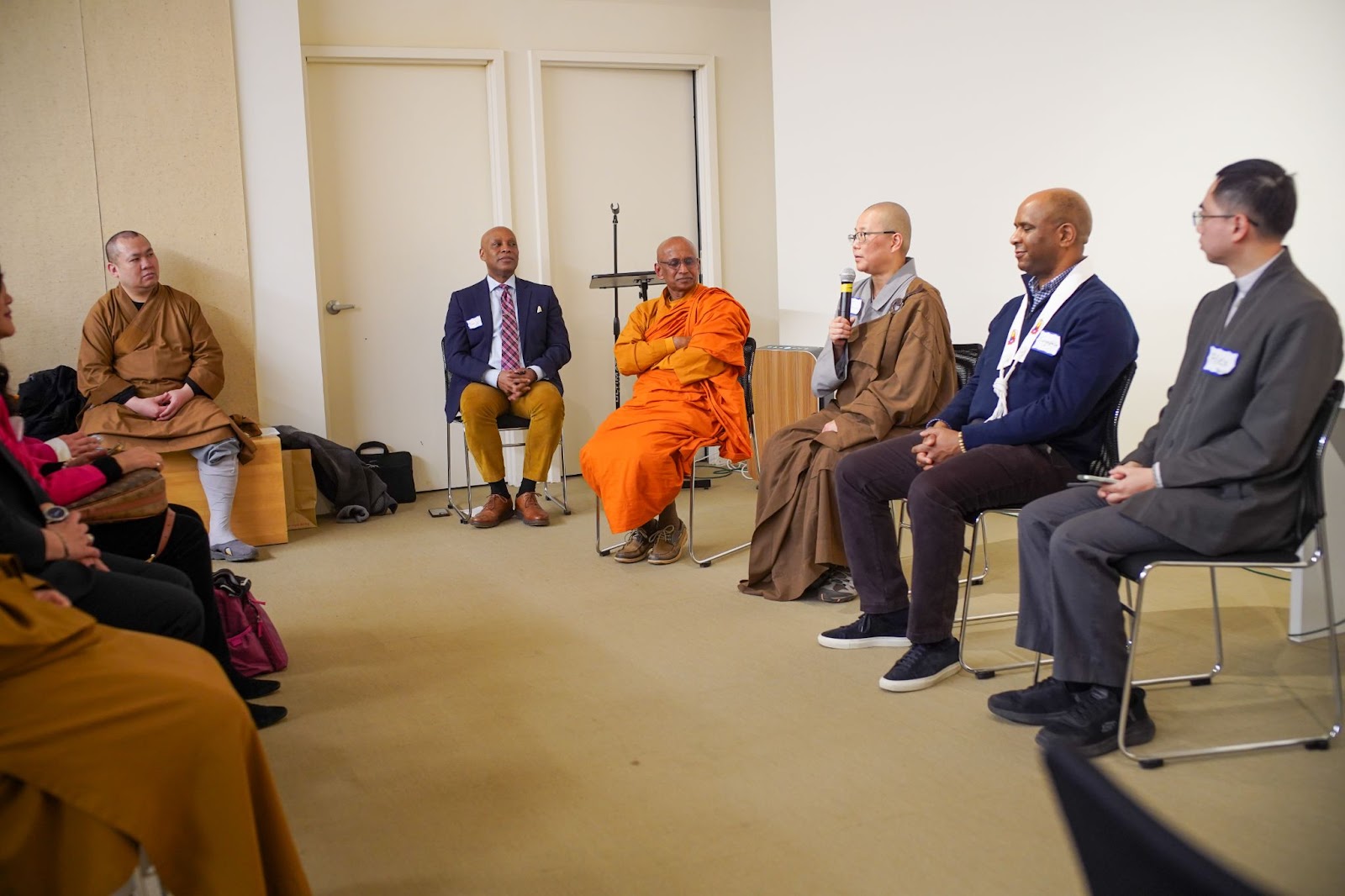
Venerable Kondañña from Staten Island Buddhist Vihara emphasized the importance of returning to the Buddha’s teachings and conduct. He cited stories from Buddhist scriptures to explain the principles that “the Dharma does not arise in isolation but manifests through conditions” and “to see the Dharma is to see the Buddha.” He encouraged everyone to practice as they speak, maintaining inner clarity and stability while sharing the dharma and benefiting all beings.
Dr. Alex Tan, Associate Professor at Tzu Chi University, who has worked extensively in-built environments, introduced the Tzu Chi Foundation’s efforts in charity and environmental protection. He urged everyone to work together to safeguard the planet we all depend on.
In closing, Rev. Doyeon Park, President of the BCNY, expressed heartfelt gratitude for everyone’s participation and cordially invited all Buddhist organizations to take part in the Vesak Day celebration scheduled for April 26th, commemorating together the birth, enlightenment, and parinirvāṇa of Shakyamuni Buddha.
Photos by: Yin Ting
— ✦ —
Editor’s Note
In this timely report from the 2025 Buddhist Council of New York Forum, Amanda Yeung captures the diverse voices of Buddhist leaders addressing the challenges of a rapidly changing world. With reflections on climate change, technology, and social unrest, speakers from various traditions explore how the Dharma continues to offer clarity, resilience, and compassionate response. Venerable Chang Hwa’s remarks in particular highlight the importance of regulating the mind and returning to core practices as we navigate uncertainty. Translated by Edward Lin
— ✦ —
On March 22nd, from 1:00 to 4:00 PM Eastern Time, the Buddhist Council of New York (“BCNY”) held its 2025 Annual Forum at The Shinnyo Center in Midtown Manhattan. Venerable Chang Hwa, Director of Chan Meditation Center (東初禪寺) was invited as one of the speakers. This year’s theme was “Adapting to Change: Buddhist Teachings for Today.” Approximately 50 Buddhist leaders and practitioners from various traditions attended, engaging in lectures and dialogues that focused on current events and issues related to “transformation,” such as climate change, political transitions, and artificial intelligence. The forum explored how Buddhist teachings can provide wisdom and practical guidance to help people respond to change and uncertainty in today’s rapidly evolving world with clarity, compassion, and resilience.
The event opened with remarks from Venerable Zhi Long, Vice President of the American Buddhist Confederation, addressing the recent attacks on multiple Buddhist temples in New York’s Chinatown. In his speech titled “Speaking for Peace, Law, and Social Harmony,” he emphasized that while urging law enforcement to take action to protect religious sites, society should also promote understanding and tolerance through dialogue and exchange, eliminate religious violence, and eradicate hatred and prejudice.
Next, Venerable Chang Hwa led the assembly in loving-kindness meditation (metta) to center their minds and bodies, reminding everyone to maintain compassionate hearts when dealing with matters that need to be addressed. In her speech, Venerable Chang Hwa mentioned several challenges, including: air pollution and climate warming caused by industrial development; genetic pollution brought about by biotechnological development, which also presents ethical and moral challenges; and information pollution resulting from information technology development, giving rise to another form of addiction and violence (cyberbullying), along with the flourishing development of artificial intelligence that is changing how people learn and work.
Venerable Chang Hua stressed that, overcoming these various challenges necessitates resisting the temptations of the wǔ yù (五欲) “five sensual desires”, recognizing subtle afflictions (kleshas), and subduing greed/addiction and anger/hatred remain the same. In this process, “regulating the mind” is closer to Buddhist practice than “confronting circumstances.” We shall not forget our wisdom and compassionate mind in facing people and the environment.
Suryapala (Todd Johnson) from the Triratna Buddhist Community, demonstrated the convenience and efficiency of using ChatGPT to retrieve Buddhist teachings. He encouraged everyone to use AI tools skillfully in the service of dharma practice and daily life, helping beings achieve liberation from suffering and attain happiness, rather than allowing them to become enslaved by these technologies.
Venerable Kondañña from Staten Island Buddhist Vihara emphasized the importance of returning to the Buddha’s teachings and conduct. He cited stories from Buddhist scriptures to explain the principles that “the Dharma does not arise in isolation but manifests through conditions” and “to see the Dharma is to see the Buddha.” He encouraged everyone to practice as they speak, maintaining inner clarity and stability while sharing the dharma and benefiting all beings.
Dr. Alex Tan, Associate Professor at Tzu Chi University, who has worked extensively in-built environments, introduced the Tzu Chi Foundation’s efforts in charity and environmental protection. He urged everyone to work together to safeguard the planet we all depend on.
In closing, Rev. Doyeon Park, President of the BCNY, expressed heartfelt gratitude for everyone’s participation and cordially invited all Buddhist organizations to take part in the Vesak Day celebration scheduled for April 26th, commemorating together the birth, enlightenment, and parinirvāṇa of Shakyamuni Buddha.
Photos by: Yin Ting
— ✦ —
Get Chan Magazine sent to your inbox
Once quarterly
Please check your mailbox to confirm your subscription after clicking Subscribe.
Get Chan Magazine sent to your inbox
Once quarterly
Please check your mailbox to confirm your subscription after clicking Subscribe.