Tribute
Memory of My Mother's Guanyin Faith
Memory of My Mother's Guanyin Faith
Memory of My Mother's Guanyin Faith
by Venerable Guo Ru (1951 - 2024) in Taipei, June 11th, 2014
by Venerable Guo Ru (1951 - 2024) in Taipei, June 11th, 2014
Editor’s Note:
In memory of Chan Master Guo Ru (1951-2024), who set an example for us all with his actions and teachings. Chan Master Guo RU passed away at Chan Grove Monastery in Taipei, October 2nd, 2024. Chan Master Guo Ru founded the Chan Grove Monastery in Taipei and was Master Shen Yen’s first disciple and monastic dharma heir. In June of 2014 Chan Master Guo Ru wrote this article: Memory of My Mother. Translated by Edward Lin.
— ✦ —
"What gave me the greatest strength was my mother's compassion and faith. My mother always believed in Guanyin Bodhisattva (Guānshìyīn Púsà). Even when times were hard, she taught me to recite the sacred name of Guanyin Bodhisattva. I was only four years old……."
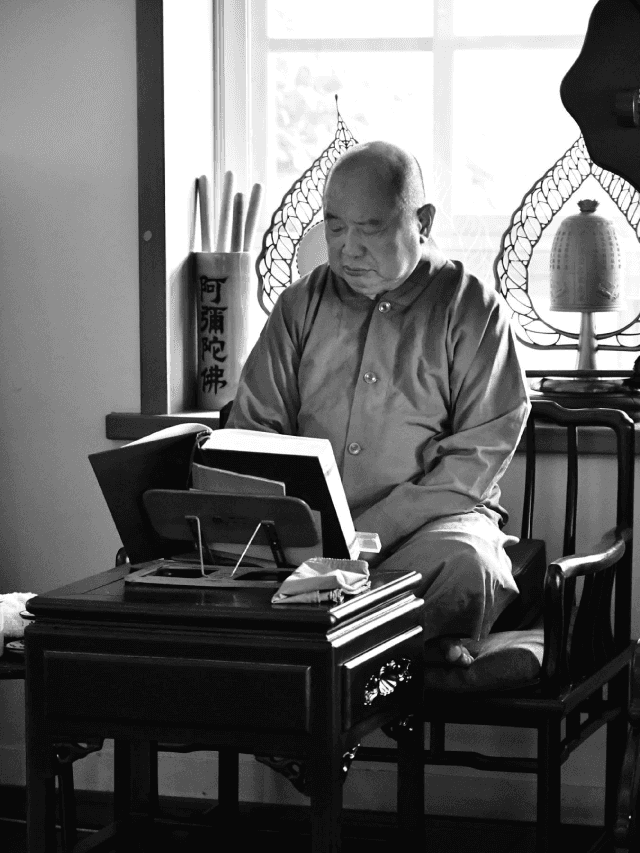
Photo by Chan Grove
She lived to be 100 years old. I would like to use this article to remember a few things about my mother. From now on, I will encourage and motivate myself to never forget my mother’s kindness.
If I have been able to improve in my life, I owe it to the discipline I received from Master Dongchu and the training I received from Master Sheng Yen. What few people know is that behind me, there is also a kind mother who silently cared for me with her endless love, giving me the strength to move forward step by step.
My mother was short and small and had no education. From a young age, her parents gave her away to other people. Then, still very young, she was given to our Lo family to be my father's wife and help him start a family and build a business. After waiting so long for the family's finances to slowly improve, I never imagined that once we had a little money, my father would start fooling around with a second wife and never cared for us again.
When I was four years old, my mother took me away from home and we went from place to place, working as domestic helpers to make ends meet. We moved around a lot and never had a permanent place to live. I remember most vividly that we went to stay with a relative who ran a coal factory. Although we were living with relatives, we still had difficulty making ends meet. So we built a small shed made of wooden boards next to the coal factory, like a rain shelter, and stocked it with snacks and groceries. We made a living from this business, which was not much of a business.
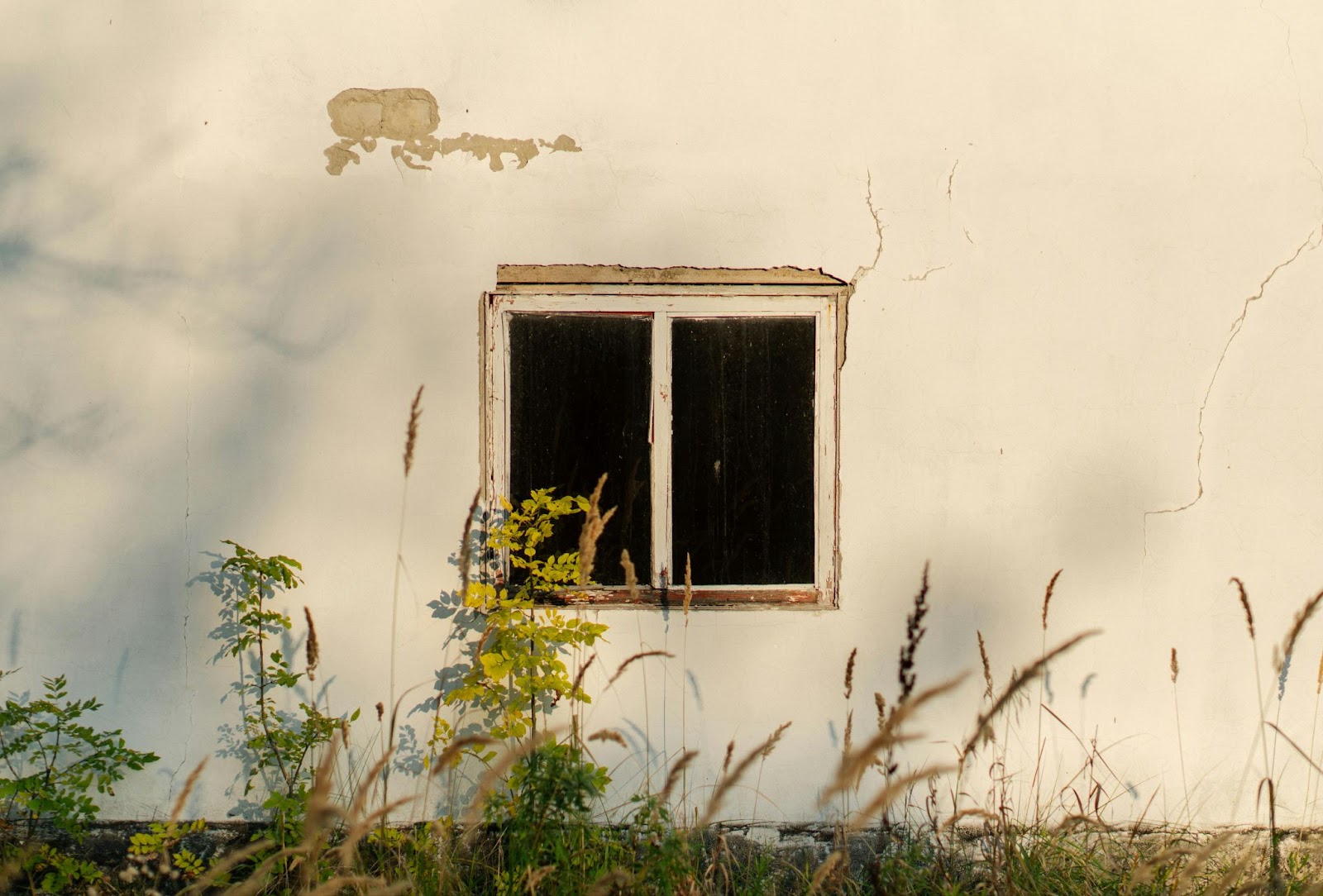
Photo by Pexels
We had nowhere to live. There was a small, dilapidated wooden shack next to the coal factory, and we nailed a small bed to the wooden planks, finally having a corner where we could sleep and treat it as our home. Because the roof was broken, in this room that could only fit a small bed, you could always see the sky. During the day, I had the sun as a friend; at night, the stars and moon accompanied me to sleep. Whenever it rained, the cabin automatically played the “Rain Sonata”, which was really beautiful! The only downside was that I had to quickly collect the rainwater in jars and bottles, otherwise the mattress would soon get wet. On rainy nights, it's cold, so my mother and I cuddled together for warmth and fall asleep in each other's arms.
Because of its remote location, the cabin was surrounded by weeds. Although we cleared the weeds next to the cabin, snakes often appeared in the summer. At first, we had no electricity and had to live in the dark. Later, when we got electricity and a light bulb, even though it was a small light bulb, it was still a source of warmth and light for us.
Back then, we were often bullied and insulted, but my mother always swallowed her grievances and never cried. Children were even more direct with their words, and I was often mocked by my peers. Sometimes I was laughed at for being poor, sometimes I was teased for being short. I could tolerate all these unpleasant things, but if anyone called me a “child without a father,” I would fight back. I always lost the fight, got myself all black and blue, and went home with tears and snot streaming down my face, crying, “I have a father, I have a father!” Usually my mom, who never cried, couldn't hold back her tears anymore.
Seeing my mother cry so sadly made me feel even worse. Slowly, I knew I had to learn to be strong. No matter what happened to me outside, I couldn't complain to my mother, because if I did, she would cry even more than I did. So I learned to swallow my tears.
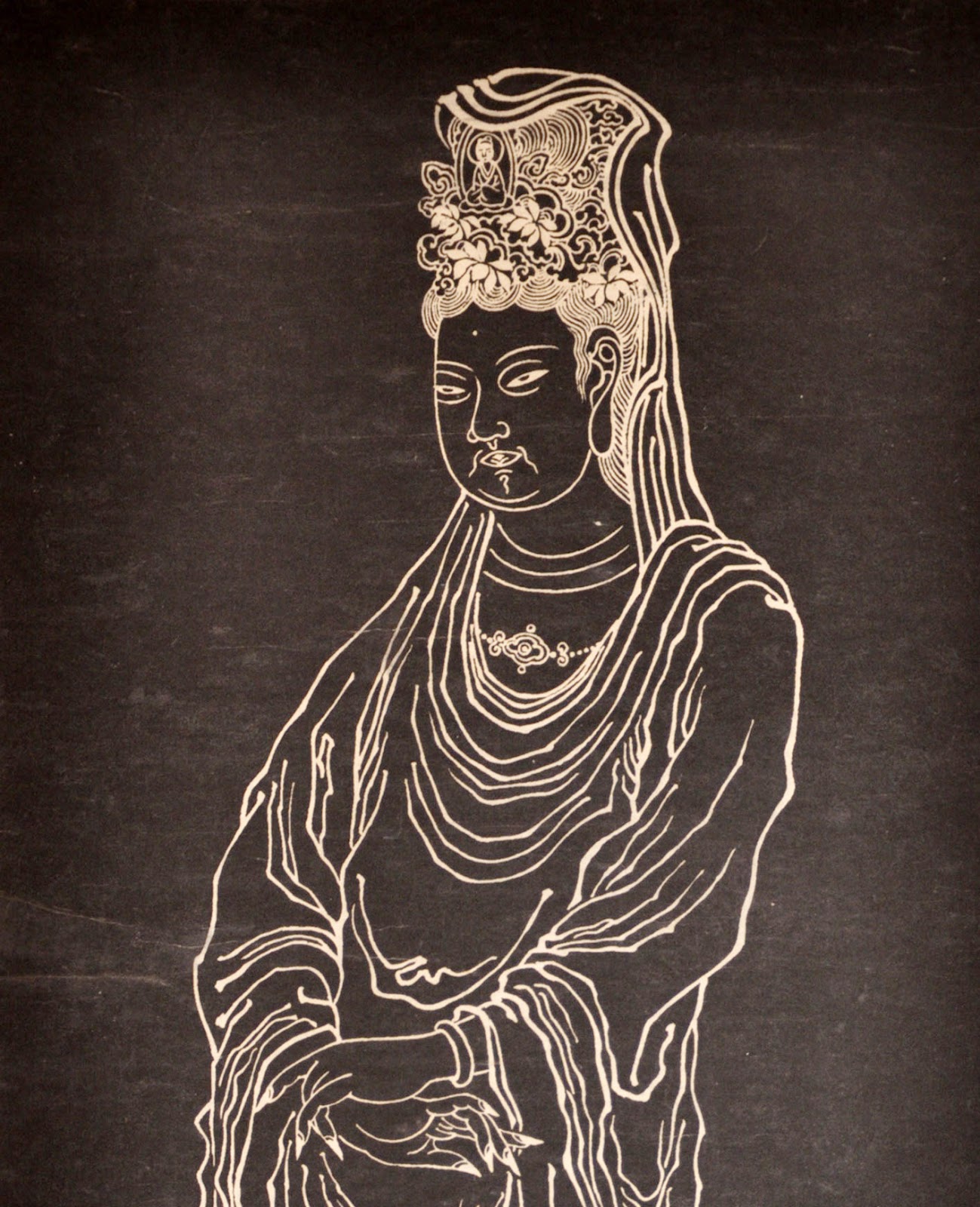
Photo by Chan Meditation Center
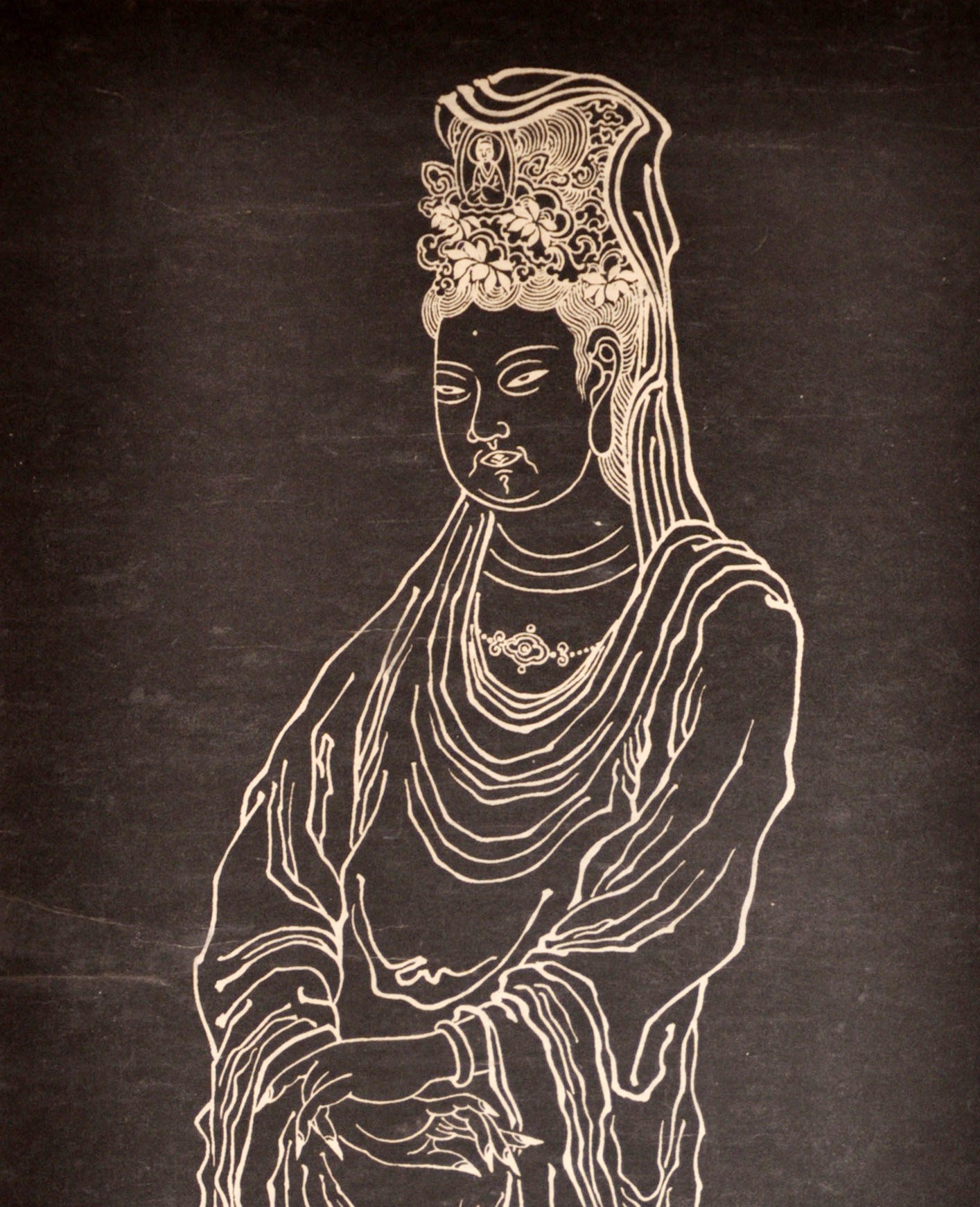
What gave me the greatest strength was my mother's compassion and faith. My mother always believed in Guanyin Bodhisattva (Guānshìyīn Púsà). Even when times were hard, she taught me to recite the sacred name of Guanyin Bodhisattva. I was only four years old, but I already knew how to recite: “Namo Da Ci Da Bei Jiu Ku Jiu Nan Guang Da Ling Gan Guanyin Bodhisattva” – homage to the Great Merciful and Great Compassion, saves the suffering and the vast inspiration, Guanyin Bodhisattva. Back then, we were often so poor that we could not even afford to offer incense to the Buddha. We did not have any Buddhist image either. We just stood there, facing the sky, with our hands in front of us, reciting “Namo Da Ci Da Bei Jiu Ku Jiu Nan Guang Da Ling Gan Guanyin Bodhisattva”. After finishing each sentence, we would bow to the ground.
Although I often encountered difficulties and was afraid to complain to my mother, and I often couldn't help but hide away and cry in secret, when I encountered difficulties and was in tears, always remembered what my mother taught me: to recite the holy name of Guanyin Bodhisattva and pray to Guanyin Bodhisattva to give me courage and strength. “Namo Great Compassion, Great Mercy, Rescuer of Suffering, and the Universal Spirit-Inspired Guanyin Bodhisattva,” sentence after sentence, I chanted and chanted, and as I did, my sadness seemed to fade away little by little. And truly, from the bottom of my heart, I felt the courage and strength to continue to face the various trials in life.
In those days, it was very difficult for a woman with a child to make a living. Later, my mother could only go to the temple to help with the cooking and chores, because compared to the social environment, the temple was relatively simple. At least the mother and child had a place to live and did not have to worry about accommodation. After many twists and turns, we arrived at Yuanhua Temple in Zhongli. As I grew up, I learned to suppress my grief, but my heart was full of anger and resentment. Why did my father not support me?
Why do I have to follow my mother around, suffer all kinds of hardships, and see the contempt in other people's faces? Why am I the only one in the world who is so miserable? Why is the world so cruel, treating all things as if they were worthless? I was full of resentment and couldn't hold it in. While helping to pick vegetables in the kitchen, I used long beans to form the Chinese character for “hate”, which scared the vegetarian monastic.
On the one hand, because Yuanhua Temple is a nunnery, and I was already in the fifth grade of elementary school and gradually entering puberty, it was not suitable for me to continue to stay. On the other hand, my rebellion really scared everyone, leaving the residents of Yuanhua Temple not knowing what to do.
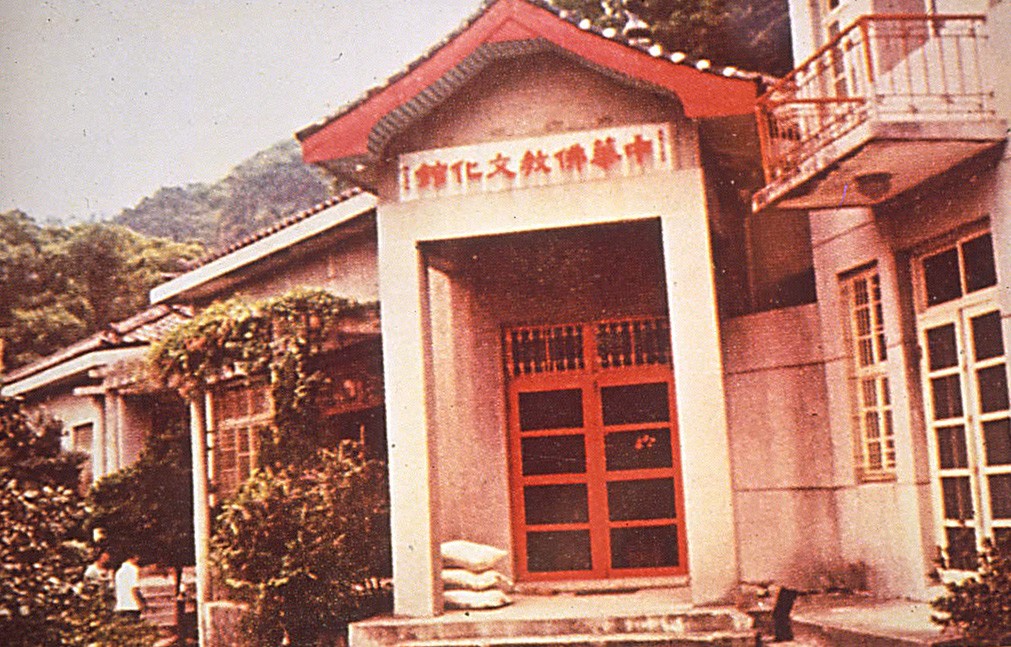
Chung-Hwa Buddhist Cultural Center
The monastics then discussed it with my mother and decided to send me to the Chung-Hwa Buddhist Cultural Center. At first, I thought I was just going to the cultural center for the summer vacation. But when the vacation was over, I realized that I had to stay at the cultural center and become a monk. Why me? I don't want to be a monk! At the age of twelve, I was so lonely and helpless; the future that awaited me had no way out at all. Why continue living like this? I ran to the back of the cultural center and tied a noose in a tree. Then I thought of my mother: what would happen to her if I left? Without hesitation, I walked sadly back down the mountain.
In traditional Chinese culture, parents always hope that their children will grow up quickly, get married and start a family, so that they can pass on the family name. They hope that when they are old, they can enjoy the company of their grandchildren and ideally have five generations living under the same roof. As long as life is tolerable, who would want to send their child to a temple to become a monk? Back in those days, my mother must have been exhausted and at a loss, with no one to turn to, crying quietly in a corner where no one could see her, day after day.
So, my mother and I stayed at the cultural center, with my mother cooking and me acting as a little acolyte. Although I was trained by Master Dongchu, I was still a headstrong child and difficult to control. I tried to escape and stayed at a classmate's house, and my mother had to use her meager savings to pay for my room and board. I kept escaping, and Master Dongchu kept catching me. As the mother of a monk who frequently ran away, every day, how did she face the strange looks from inside and outside the temple? But my mother was like a person without a voice, always silently reciting in her heart, “Namo Great Compassion, Great Mercy, Rescuer of Suffering, and the Universal Spirit-Inspired Guanyin Bodhisattva.” The sound of silence is the loudest sound of all. This is how she gently and firmly overcame the many difficulties in her life.
The worries and suffering my mother endured for me never ceased. After I graduated from the Oriental Buddhist College (now the Fo Guang Shan Buddhist College), I developed a brain tumor. I became partially paralyzed, with a crooked eye, a lopsided mouth, and a limp. I could die at any time from the rupture of the tumor. At that time, medical technology was not yet well developed. Even if the operation was successful and I could be saved, I would have to spend the rest of my life paralyzed in bed. In addition, at that time in Taiwan, there was no social medical insurance system, and medical expenses were exorbitant. As a poor monk, I could only look on in despair. Once again, I was alone, facing the trials of life with empty hands. And my poor mother, who had hoped so hard that I would grow into my twenties, can only watch helplessly as I drag along an old body in the prime of life.
At this time, I was no longer the miserable 12-year-old boy. I studied the classics, practiced Buddhism, and had already begun to preach the Dharma to the public. However, when faced with physical illness and inner fears, I was unable to use the Dharma to settle my body and mind, let alone use the difficulties of life to prove the Dharma. It was not until Master Sheng Yen returned to Taiwan from the United States that I was able to learn from this venerable master and, through his strict training, I was able to personally witness the truth of life! At the end of a meditation session, my master told me to share my meditation experience with the group. As I spoke, I burst into tears, and my master, who was sitting nearby, also began to cry. Afterward, the master walked over to my mother's side and told her in Hakka, “Xiuying, today I have finally gained a disciple, and you have finally gained a son!”
In 1984, after I returned from Malaysia to Taiwan, my seventy-year-old mother told me that she was extremely unwell and could no longer bear the burden of cooking in the kitchen. According to the rules, “lay people” were not allowed to “spend their old age” in the monastery. If my mother could no longer cook for the residents and no longer held a position in the monastery, there was no reason for her to continue living in the cultural center. What should I do? My mother had gone through a lot to raise me, so how could I bear to let her spend her twilight years alone, poor and sick? After much struggle, I took my mother and left the Academy.
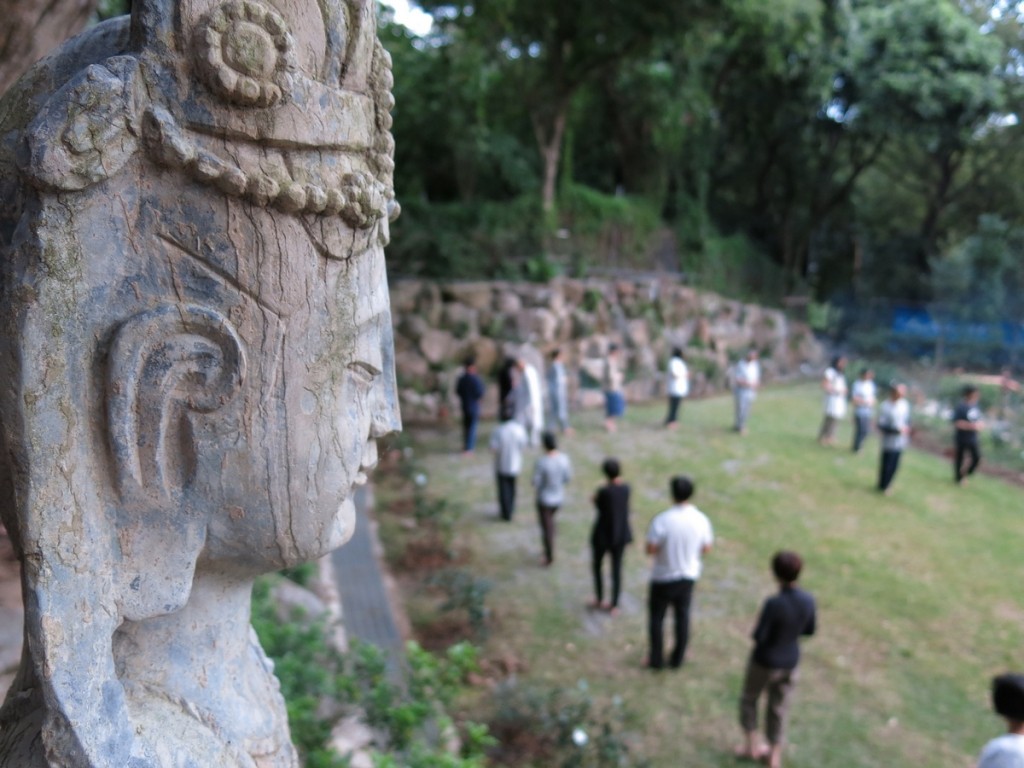
Photo by Chan Grove
Step by step, I set up practice centers in Zhonghe and Beitou, and my mother lived with me at the Yufo Temple in the Zhonghe practice center. Although her health was not as good as it used to be, her diet and daily routine were normal. She followed the daily schedule of the temple, doing morning and evening exercises, bowing to the Buddha and reciting Buddhist prayers, and counting her rosary beads by hand. Her thoughts were constantly on “Namo Great Compassion, Great Mercy, Rescuer of Suffering, and the Universal Spirit-Inspired Guanyin Bodhisattva.”
My mother often exhorted her Buddhist friends to recite the holy name of Guanyin Bodhisattva diligently. Seeing familiar faces, she occasionally shared the stories of Master Dongchu and Master Sheng Yen, and inevitably talked about her hard times and the embarrassing things that happened when I was a child.
Although my mother led a poor life, she was happy to give. She saved every penny she could, even the registration fee for doctor's visits when she was sick. She believed that as long as she kept chanting the name of Guanyin Bodhisattva, minor illnesses and injuries could be cured without medication.
For example, she used to be afraid of car sickness and was afraid to ride in a car, but as long as she “made a deal” with Guanyin Bodhisattva, she could travel safely without having to take motion sickness medication. She donated all the money she saved to the monastery for construction, hoping that it would promote Buddhism and let more people know about its benefits.
The greatest joy in my life was taking my mother's hand and strolling around the Jade Buddha Temple. In the past, my mother and I could go for walks outside together, but as she grew older and her energy and strength waned, we could only walk slowly around the main hall of the Jade Buddha Temple, taking a few laps. Sometimes, I felt endless happiness when I saw my mother feel at peace in the sound of the Buddha's chanting. When I led the group in the Buddha's chanting meditation, I often saw some older Bodhisattvas come to practice together. I always saw my mother's figure in them.
I'm in my sixties, but my mother still asks me from time to time, “Are you wearing enough clothes?” Every time I hear this, I felt puzzled: shouldn't I be asking her? Why was it that even then she was still caring for me and worrying about me? It could be seen that in my mother's eyes, I will always be a child who never grows up. All parents love their children, and a mother's love and care will never end just because her child has grown up.
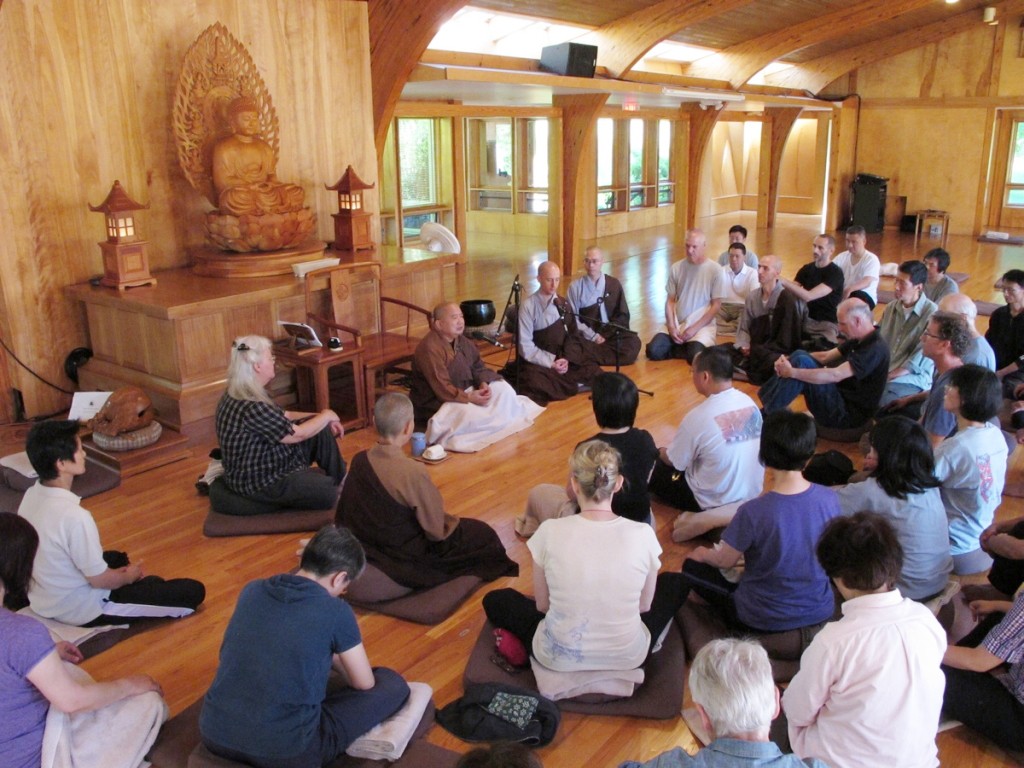
Photo from Chan Grove
In recent years, I had been invited to lead meditation sessions all over the world, and I had obviously spent less time with my mother. Whenever I went out, my mother always reminded me again and again: “You must teach the public well, with sincerity and humility, and teach everyone happily. If others don't understand or can't do something, don't blame them and don't think you're better than they are.” Every word and sentence is a sincere teaching, hope that Buddhist monastic can benefit more people with the Dharma
Even when I traveled far away, I always found a way to call back to the Jade Buddha Temple and wait for my mother's voice to come through the receiver. I always greeted her, “Mom, I'm full, are you full?” Mom always replied, “I'm full, are you full?” Then I answered, “I'm full.” The conversation between the mother and son ended simply and cleanly; I put down the receiver with a smile on my lips and a heart full of gratitude. Every mouthful of food that raised me was hard-won, and a simple “I'm full” brought peace to both mother and son.
Although my father broke my mother's heart, she was not unfeeling. Knowing that I was still angry with my father, my mother even told me that I was not qualified to be angry with my father because this was a matter between my parents and had nothing to do with me as a child. Moreover, my life was given to me by my father, and I should duly fulfill my duty as a son. When my father fell ill in his later years, my mother even asked me to give him money. When my father passed away, my mother also told me to take care of my father's funeral.
As I grew up, I sometimes couldn't help but speak loudly to my mother. For example, a few years ago, when my mother was still able to walk easily, she often picked wildflowers near the Jade Buddha Temple to offer to the Buddha. She was so enthusiastic that when she saw the weeds growing too thickly along the road, she not only worried that the elementary school children passing by would trip and fall, but also that the thick grass would easily hide snakes. So she often went out of her way to weed the grass, until she almost had heatstroke, but she still did not know when to stop. I scolded her angrily for not knowing how to take care of herself, but she told me that as long as she could still do things, she should do her best.
Two years ago, my mother's health took a turn for the worse due to her advanced age and severe osteoporosis. She was admitted to the hospital, but she completely ignored the doctor's orders and refused to cooperate with various tests. I was worried, so I tried to motivate her: “If you don't cooperate, I'm going to ignore you!” But my mother remained unperturbed and continued to ignore me. At most, she would take her medicine on time and eat reluctantly. Slowly, my mother's swallowing function deteriorated, and she could only be fed through a nasogastric tube. The functions of her body's organs also deteriorated, her muscles became weaker and weaker, and she needed someone to take care of her daily life.
My mother's body was old and didn't listen anymore, but her mind was still clear. Occasionally when she was feeling a little better, she could still have a few words with me. Even if she was tired and not in the mood to chat, her eyes always showed her endless love for me.
In the past year or two, my schedule has become increasingly busy, and I have less and less time to stay at the Jade Buddha Temple. Even when I was sick in bed, my mother never complained about our lack of time together. Every time I said goodbye to my mother, I could see even more care and even deeper expectations in her eyes.

Photo by pexels-mastercowley
This Mother's Day, as in the past, my mother sat with her eyes closed in the forecourt of the Jade Buddha Temple, enjoying the early summer afternoon sun. Two days later, as promised, I went to Europe to lead a meditation retreat. Soon after, I received the news that my mother had passed away. My 100-year-old mother had left me to go on her own, turning and letting go, how carefree and at ease! But I, who was in Switzerland leading the group meditation, could not hide my grief, and my mother's figure kept appearing before my eyes.
Although it is common to be separated from one's parents at death, the son sighs at the impermanence when he hears the news! The master's tempering, the master's training, and the mother's love and expectations have created the person I am today. If I cannot repay you, I will devote my life to letting more people see the truth of life and truly experience the goodness of Buddhism. From now on, I will encourage myself to never let down the kindness of my teacher, my mother, and all living beings.
— ✦ —
Editor’s Note:
In memory of Chan Master Guo Ru (1951-2024), who set an example for us all with his actions and teachings. Chan Master Guo RU passed away at Chan Grove Monastery in Taipei, October 2nd, 2024. Chan Master Guo Ru founded the Chan Grove Monastery in Taipei and was Master Shen Yen’s first disciple and monastic dharma heir. In June of 2014 Chan Master Guo Ru wrote this article: Memory of My Mother. Translated by Edward Lin.
— ✦ —
"What gave me the greatest strength was my mother's compassion and faith. My mother always believed in Guanyin Bodhisattva (Guānshìyīn Púsà). Even when times were hard, she taught me to recite the sacred name of Guanyin Bodhisattva. I was only four years old……."
Photo by Chan Grove
She lived to be 100 years old. I would like to use this article to remember a few things about my mother. From now on, I will encourage and motivate myself to never forget my mother’s kindness.
If I have been able to improve in my life, I owe it to the discipline I received from Master Dongchu and the training I received from Master Sheng Yen. What few people know is that behind me, there is also a kind mother who silently cared for me with her endless love, giving me the strength to move forward step by step.
My mother was short and small and had no education. From a young age, her parents gave her away to other people. Then, still very young, she was given to our Lo family to be my father's wife and help him start a family and build a business. After waiting so long for the family's finances to slowly improve, I never imagined that once we had a little money, my father would start fooling around with a second wife and never cared for us again.
When I was four years old, my mother took me away from home and we went from place to place, working as domestic helpers to make ends meet. We moved around a lot and never had a permanent place to live. I remember most vividly that we went to stay with a relative who ran a coal factory. Although we were living with relatives, we still had difficulty making ends meet. So we built a small shed made of wooden boards next to the coal factory, like a rain shelter, and stocked it with snacks and groceries. We made a living from this business, which was not much of a business.
Photo by Pexels
We had nowhere to live. There was a small, dilapidated wooden shack next to the coal factory, and we nailed a small bed to the wooden planks, finally having a corner where we could sleep and treat it as our home. Because the roof was broken, in this room that could only fit a small bed, you could always see the sky. During the day, I had the sun as a friend; at night, the stars and moon accompanied me to sleep. Whenever it rained, the cabin automatically played the “Rain Sonata”, which was really beautiful! The only downside was that I had to quickly collect the rainwater in jars and bottles, otherwise the mattress would soon get wet. On rainy nights, it's cold, so my mother and I cuddled together for warmth and fall asleep in each other's arms.
Because of its remote location, the cabin was surrounded by weeds. Although we cleared the weeds next to the cabin, snakes often appeared in the summer. At first, we had no electricity and had to live in the dark. Later, when we got electricity and a light bulb, even though it was a small light bulb, it was still a source of warmth and light for us.
Back then, we were often bullied and insulted, but my mother always swallowed her grievances and never cried. Children were even more direct with their words, and I was often mocked by my peers. Sometimes I was laughed at for being poor, sometimes I was teased for being short. I could tolerate all these unpleasant things, but if anyone called me a “child without a father,” I would fight back. I always lost the fight, got myself all black and blue, and went home with tears and snot streaming down my face, crying, “I have a father, I have a father!” Usually my mom, who never cried, couldn't hold back her tears anymore.
Seeing my mother cry so sadly made me feel even worse. Slowly, I knew I had to learn to be strong. No matter what happened to me outside, I couldn't complain to my mother, because if I did, she would cry even more than I did. So I learned to swallow my tears.
Photo by Chan Meditation Center
What gave me the greatest strength was my mother's compassion and faith. My mother always believed in Guanyin Bodhisattva (Guānshìyīn Púsà). Even when times were hard, she taught me to recite the sacred name of Guanyin Bodhisattva. I was only four years old, but I already knew how to recite: “Namo Da Ci Da Bei Jiu Ku Jiu Nan Guang Da Ling Gan Guanyin Bodhisattva” – homage to the Great Merciful and Great Compassion, saves the suffering and the vast inspiration, Guanyin Bodhisattva. Back then, we were often so poor that we could not even afford to offer incense to the Buddha. We did not have any Buddhist image either. We just stood there, facing the sky, with our hands in front of us, reciting “Namo Da Ci Da Bei Jiu Ku Jiu Nan Guang Da Ling Gan Guanyin Bodhisattva”. After finishing each sentence, we would bow to the ground.
Although I often encountered difficulties and was afraid to complain to my mother, and I often couldn't help but hide away and cry in secret, when I encountered difficulties and was in tears, always remembered what my mother taught me: to recite the holy name of Guanyin Bodhisattva and pray to Guanyin Bodhisattva to give me courage and strength. “Namo Great Compassion, Great Mercy, Rescuer of Suffering, and the Universal Spirit-Inspired Guanyin Bodhisattva,” sentence after sentence, I chanted and chanted, and as I did, my sadness seemed to fade away little by little. And truly, from the bottom of my heart, I felt the courage and strength to continue to face the various trials in life.
In those days, it was very difficult for a woman with a child to make a living. Later, my mother could only go to the temple to help with the cooking and chores, because compared to the social environment, the temple was relatively simple. At least the mother and child had a place to live and did not have to worry about accommodation. After many twists and turns, we arrived at Yuanhua Temple in Zhongli. As I grew up, I learned to suppress my grief, but my heart was full of anger and resentment. Why did my father not support me?
Why do I have to follow my mother around, suffer all kinds of hardships, and see the contempt in other people's faces? Why am I the only one in the world who is so miserable? Why is the world so cruel, treating all things as if they were worthless? I was full of resentment and couldn't hold it in. While helping to pick vegetables in the kitchen, I used long beans to form the Chinese character for “hate”, which scared the vegetarian monastic.
On the one hand, because Yuanhua Temple is a nunnery, and I was already in the fifth grade of elementary school and gradually entering puberty, it was not suitable for me to continue to stay. On the other hand, my rebellion really scared everyone, leaving the residents of Yuanhua Temple not knowing what to do.
Chung-Hwa Buddhist Cultural Center
The monastics then discussed it with my mother and decided to send me to the Chung-Hwa Buddhist Cultural Center. At first, I thought I was just going to the cultural center for the summer vacation. But when the vacation was over, I realized that I had to stay at the cultural center and become a monk. Why me? I don't want to be a monk! At the age of twelve, I was so lonely and helpless; the future that awaited me had no way out at all. Why continue living like this? I ran to the back of the cultural center and tied a noose in a tree. Then I thought of my mother: what would happen to her if I left? Without hesitation, I walked sadly back down the mountain.
In traditional Chinese culture, parents always hope that their children will grow up quickly, get married and start a family, so that they can pass on the family name. They hope that when they are old, they can enjoy the company of their grandchildren and ideally have five generations living under the same roof. As long as life is tolerable, who would want to send their child to a temple to become a monk? Back in those days, my mother must have been exhausted and at a loss, with no one to turn to, crying quietly in a corner where no one could see her, day after day.
So, my mother and I stayed at the cultural center, with my mother cooking and me acting as a little acolyte. Although I was trained by Master Dongchu, I was still a headstrong child and difficult to control. I tried to escape and stayed at a classmate's house, and my mother had to use her meager savings to pay for my room and board. I kept escaping, and Master Dongchu kept catching me. As the mother of a monk who frequently ran away, every day, how did she face the strange looks from inside and outside the temple? But my mother was like a person without a voice, always silently reciting in her heart, “Namo Great Compassion, Great Mercy, Rescuer of Suffering, and the Universal Spirit-Inspired Guanyin Bodhisattva.” The sound of silence is the loudest sound of all. This is how she gently and firmly overcame the many difficulties in her life.
The worries and suffering my mother endured for me never ceased. After I graduated from the Oriental Buddhist College (now the Fo Guang Shan Buddhist College), I developed a brain tumor. I became partially paralyzed, with a crooked eye, a lopsided mouth, and a limp. I could die at any time from the rupture of the tumor. At that time, medical technology was not yet well developed. Even if the operation was successful and I could be saved, I would have to spend the rest of my life paralyzed in bed. In addition, at that time in Taiwan, there was no social medical insurance system, and medical expenses were exorbitant. As a poor monk, I could only look on in despair. Once again, I was alone, facing the trials of life with empty hands. And my poor mother, who had hoped so hard that I would grow into my twenties, can only watch helplessly as I drag along an old body in the prime of life.
At this time, I was no longer the miserable 12-year-old boy. I studied the classics, practiced Buddhism, and had already begun to preach the Dharma to the public. However, when faced with physical illness and inner fears, I was unable to use the Dharma to settle my body and mind, let alone use the difficulties of life to prove the Dharma. It was not until Master Sheng Yen returned to Taiwan from the United States that I was able to learn from this venerable master and, through his strict training, I was able to personally witness the truth of life! At the end of a meditation session, my master told me to share my meditation experience with the group. As I spoke, I burst into tears, and my master, who was sitting nearby, also began to cry. Afterward, the master walked over to my mother's side and told her in Hakka, “Xiuying, today I have finally gained a disciple, and you have finally gained a son!”
In 1984, after I returned from Malaysia to Taiwan, my seventy-year-old mother told me that she was extremely unwell and could no longer bear the burden of cooking in the kitchen. According to the rules, “lay people” were not allowed to “spend their old age” in the monastery. If my mother could no longer cook for the residents and no longer held a position in the monastery, there was no reason for her to continue living in the cultural center. What should I do? My mother had gone through a lot to raise me, so how could I bear to let her spend her twilight years alone, poor and sick? After much struggle, I took my mother and left the Academy.
Photo by Chan Grove
Step by step, I set up practice centers in Zhonghe and Beitou, and my mother lived with me at the Yufo Temple in the Zhonghe practice center. Although her health was not as good as it used to be, her diet and daily routine were normal. She followed the daily schedule of the temple, doing morning and evening exercises, bowing to the Buddha and reciting Buddhist prayers, and counting her rosary beads by hand. Her thoughts were constantly on “Namo Great Compassion, Great Mercy, Rescuer of Suffering, and the Universal Spirit-Inspired Guanyin Bodhisattva.”
My mother often exhorted her Buddhist friends to recite the holy name of Guanyin Bodhisattva diligently. Seeing familiar faces, she occasionally shared the stories of Master Dongchu and Master Sheng Yen, and inevitably talked about her hard times and the embarrassing things that happened when I was a child.
Although my mother led a poor life, she was happy to give. She saved every penny she could, even the registration fee for doctor's visits when she was sick. She believed that as long as she kept chanting the name of Guanyin Bodhisattva, minor illnesses and injuries could be cured without medication.
For example, she used to be afraid of car sickness and was afraid to ride in a car, but as long as she “made a deal” with Guanyin Bodhisattva, she could travel safely without having to take motion sickness medication. She donated all the money she saved to the monastery for construction, hoping that it would promote Buddhism and let more people know about its benefits.
The greatest joy in my life was taking my mother's hand and strolling around the Jade Buddha Temple. In the past, my mother and I could go for walks outside together, but as she grew older and her energy and strength waned, we could only walk slowly around the main hall of the Jade Buddha Temple, taking a few laps. Sometimes, I felt endless happiness when I saw my mother feel at peace in the sound of the Buddha's chanting. When I led the group in the Buddha's chanting meditation, I often saw some older Bodhisattvas come to practice together. I always saw my mother's figure in them.
I'm in my sixties, but my mother still asks me from time to time, “Are you wearing enough clothes?” Every time I hear this, I felt puzzled: shouldn't I be asking her? Why was it that even then she was still caring for me and worrying about me? It could be seen that in my mother's eyes, I will always be a child who never grows up. All parents love their children, and a mother's love and care will never end just because her child has grown up.
Photo from Chan Grove
In recent years, I had been invited to lead meditation sessions all over the world, and I had obviously spent less time with my mother. Whenever I went out, my mother always reminded me again and again: “You must teach the public well, with sincerity and humility, and teach everyone happily. If others don't understand or can't do something, don't blame them and don't think you're better than they are.” Every word and sentence is a sincere teaching, hope that Buddhist monastic can benefit more people with the Dharma
Even when I traveled far away, I always found a way to call back to the Jade Buddha Temple and wait for my mother's voice to come through the receiver. I always greeted her, “Mom, I'm full, are you full?” Mom always replied, “I'm full, are you full?” Then I answered, “I'm full.” The conversation between the mother and son ended simply and cleanly; I put down the receiver with a smile on my lips and a heart full of gratitude. Every mouthful of food that raised me was hard-won, and a simple “I'm full” brought peace to both mother and son.
Although my father broke my mother's heart, she was not unfeeling. Knowing that I was still angry with my father, my mother even told me that I was not qualified to be angry with my father because this was a matter between my parents and had nothing to do with me as a child. Moreover, my life was given to me by my father, and I should duly fulfill my duty as a son. When my father fell ill in his later years, my mother even asked me to give him money. When my father passed away, my mother also told me to take care of my father's funeral.
As I grew up, I sometimes couldn't help but speak loudly to my mother. For example, a few years ago, when my mother was still able to walk easily, she often picked wildflowers near the Jade Buddha Temple to offer to the Buddha. She was so enthusiastic that when she saw the weeds growing too thickly along the road, she not only worried that the elementary school children passing by would trip and fall, but also that the thick grass would easily hide snakes. So she often went out of her way to weed the grass, until she almost had heatstroke, but she still did not know when to stop. I scolded her angrily for not knowing how to take care of herself, but she told me that as long as she could still do things, she should do her best.
Two years ago, my mother's health took a turn for the worse due to her advanced age and severe osteoporosis. She was admitted to the hospital, but she completely ignored the doctor's orders and refused to cooperate with various tests. I was worried, so I tried to motivate her: “If you don't cooperate, I'm going to ignore you!” But my mother remained unperturbed and continued to ignore me. At most, she would take her medicine on time and eat reluctantly. Slowly, my mother's swallowing function deteriorated, and she could only be fed through a nasogastric tube. The functions of her body's organs also deteriorated, her muscles became weaker and weaker, and she needed someone to take care of her daily life.
My mother's body was old and didn't listen anymore, but her mind was still clear. Occasionally when she was feeling a little better, she could still have a few words with me. Even if she was tired and not in the mood to chat, her eyes always showed her endless love for me.
In the past year or two, my schedule has become increasingly busy, and I have less and less time to stay at the Jade Buddha Temple. Even when I was sick in bed, my mother never complained about our lack of time together. Every time I said goodbye to my mother, I could see even more care and even deeper expectations in her eyes.
Photo by pexels-mastercowley
This Mother's Day, as in the past, my mother sat with her eyes closed in the forecourt of the Jade Buddha Temple, enjoying the early summer afternoon sun. Two days later, as promised, I went to Europe to lead a meditation retreat. Soon after, I received the news that my mother had passed away. My 100-year-old mother had left me to go on her own, turning and letting go, how carefree and at ease! But I, who was in Switzerland leading the group meditation, could not hide my grief, and my mother's figure kept appearing before my eyes.
Although it is common to be separated from one's parents at death, the son sighs at the impermanence when he hears the news! The master's tempering, the master's training, and the mother's love and expectations have created the person I am today. If I cannot repay you, I will devote my life to letting more people see the truth of life and truly experience the goodness of Buddhism. From now on, I will encourage myself to never let down the kindness of my teacher, my mother, and all living beings.
— ✦ —
Get Chan Magazine sent to your inbox
Once quarterly
Please check your mailbox to confirm your subscription after clicking Subscribe.
Get Chan Magazine sent to your inbox
Once quarterly
Please check your mailbox to confirm your subscription after clicking Subscribe.