teachings
A Study of the Mahāyāna Practice of Śamatha and Vipāśyanā (Chapter One)
A Study of the Mahāyāna Practice of Śamatha and Vipāśyanā (Chapter One)
A Study of the Mahāyāna Practice of Śamatha and Vipāśyanā (Chapter One)
by Master Sheng Yen
by Master Sheng Yen
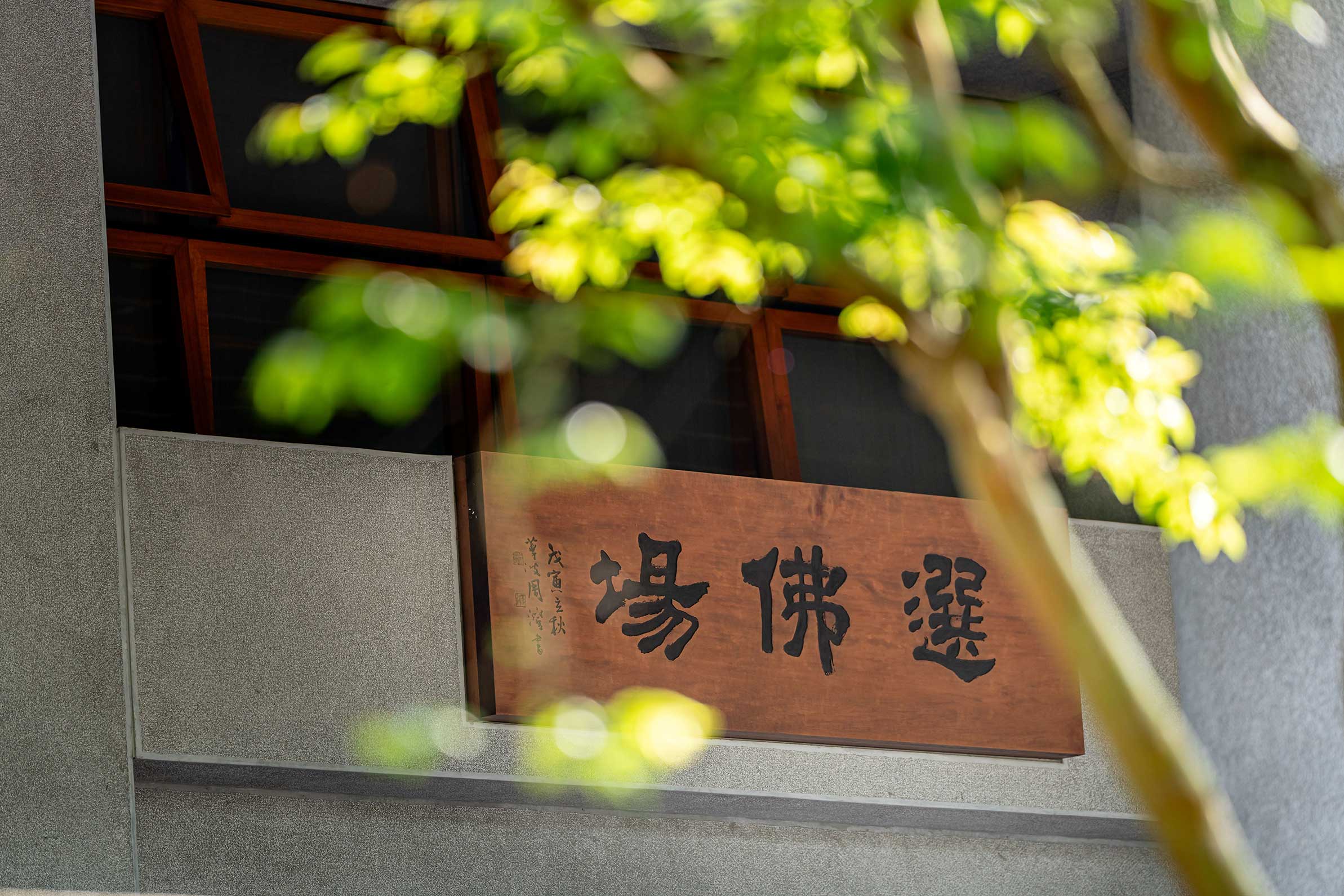
Editor's Note
Master Sheng Yen is known to Western practitioners primarily as a Chan master. While this understanding is not inaccurate, it is incomplete, largely due to the limited availability of his earlier scholarly writings in English. This essay, Chapter One of his 1971 master’s thesis, A Study of the Mahāyāna Practice of Śamatha and Vipāśyanā, was selected to reveal the breadth and depth of Master Sheng Yen’s intellectual and spiritual contributions as they have long been recognized in the Chinese-speaking world. We chose this chapter to share with our English-speaking audience in the hope that practitioners may gain insight into Master Huisi’s thoughts on the combination of doctrine and practice.
In the preface to his thesis, Master Sheng Yen explained his motivation for choosing this topic: “It is because that Chinese Buddhism has always emphasized the balanced integration of learning and practice, or the dual cultivation of compassion and wisdom, in order to actualize the Buddha’s fundamental teachings or the Bodhisattva ideal of benefiting oneself while benefiting others.”
He further addressed the scholarly context surrounding the text and his own conclusions regarding its authorship: “Therefore, although The Mahāyāna Practice of Calming-and-Insight has no scholars in Japan who specialize exclusively in its study, some scattered philological and textual discussions appeared in Buddhist journals before the war. These studies examined the work mainly from its wording and superficial ideological structure, which led them to doubt that it was authored by Chan Master Huisi. However, after my own research, I am convinced that this text is indeed a mature synthesis of Master Huisi’s lifelong thought, compiled in his later years.”
Master Sheng Yen’s deep engagement with this treatise was not merely academic. He regarded it as a practical guide for spiritual development, writing, “Through Huisi’s careful guidance from doctrinal exposition into actual practice, his book is able to lead an ordinary person deep into the ocean of the Dharma and to personally realize the true nature of reality. Thus, after studying it, I was able both to submit my paper in fulfillment of the school’s requirements and to use it as a guideline for my own personal practice.”
This Editor's Note is offered to present a fuller portrait of Master Sheng Yen—not only as a Chan master, but also as a profound scholar and practitioner. We hope that this translation will provide readers with a glimpse into the depth of his understanding and, in turn, offer inspiration for their own study and practice.
The article was translated by Iris Wang and edited by Venerable Chang-Hwa and Edward Lin.
— ✦ —
Chapter One: The Structure and Content of The Mahāyāna Practice of Calming-and-Insight
Section One: The Structure of This Treatise
The Mahāyāna Practice of Śamatha and Vipāśyanā (大乘止觀法門)—abbreviated Śamatha and Vipāśyanā (大乘止觀) (hereafter “this treatise”)—is primarily a doctrinal work that explains the methods of Mahāyāna śamatha and vipāśyanā.1 This treatise is based on the thought of tathāgatagarbha-dependent origination (如來藏緣起). Centered on the fundamental consciousness in the doctrine of mind, which integrates both the true and the deluded (真妄和合), it also deliberately presents another system structured around the two natures of defilement and purity (染淨二性). These two systems serve as each other’s inner and outer aspects, and within the latter one, tendencies toward the view of innate evilness (性惡思想) frequently appear. Ultimately, through the development of the theories of the Three Natures (三性) and the Three Non-natures (三無性), the treatise arrives at the aims of “eliminating the illusion to realize the truth” (除妄成真) and “Fulfilling the truth to exercise the illusory” (全真起妄).
Regarding the organization of this treatise, it is divided into three major sections:
1. A concise outline
2. Extensive analysis
3. Sequential guidance through concrete topics
This structure generally corresponds to the usual scriptural format of introduction section (序分), main exposition (正宗分), and circulation section (流通分). Therefore, the central content of the treatise lies in the second part—the extensive analysis—which is further divided into the “Five Aspects of Establishment” (五番建立), explaining the method of Mahāyāna calming-and-insight.
The so-called Five Aspects of Establishment are:
Ⅰ. The basis on which calming-and-insight rely (止觀依止)
Ⅱ. The objects contemplated in calming-and-insight (止觀境界)
Ⅲ. The essence and characteristics of calming-and-insight (止觀體狀)
Ⅳ. The afflictions severed through calming-and-insight (止觀斷得)
Ⅴ. The functions of calming-and-insight (止觀作用)
The following are the explanations for each aspect:
(I) “The basis on which calming-and-insight rely” explains that one who cultivates this method must first rely on the “One Mind.” This treatise lists many alternative names for the One Mind, such as: the mind that is pure by nature, true suchness (tathatā), Buddha-nature, tathāgatagarbha, Dharmadhātu, and dharma-nature. These correspond precisely to the fundamental stance of the so-called “The Eternal Suchness is Mind-Only Theory” (真常唯心論).2 Within this treatise, Buddha-nature is further derived into the “Suchness-Buddha” (如如佛) and the “Wisdom-Buddha” (智慧佛) to explain the awakening state and non-awakening state in the processes of so-called “delusion of the truth gives rise to the illusion” (迷真起妄) and “redirecting the illusion back to the truth” (返妄歸真). This theoretical perspective is largely influenced by the essential teachings of the three subtle appearances (三細) and six coarse appearances (六粗) presented in the Mahāyāna Awakening of Faith (大乘起信論) (hereafter Awakening of Faith).
Furthermore, the characteristics of the “pure mind” that calming-and-insight relies upon have three different types. First, this mind is the tathatā-mind of the ultimate truth. From the very beginning it has been free from all naming (名) and forms (相), and from all discriminative dharmas that can be apprehended or described. Second, although this mind is free from all marks of discrimination and from all objective phenomena, it is nonetheless neither identical with nor different from those phenomenal marks (不一不異). Third, the two kinds of tathāgatagarbha—the “empty” and the “non-empty”—are presented to thoroughly examine the meaning of “true suchness.”
The so-called “empty tathāgatagarbha” (空如來藏) refers to the fact that although this One Mind, through dependent origination, can establish such dharmas as saṃsāra, nirvāṇa, and those that accord with or oppose them, yet at the same time the essence of mind remains equivalent and wondrously ceases the notions of both defilement and purity. The nature of mind is thus quiescent (寂); it is called the empty tathāgatagarbha. But this does not mean that the essence of mind is empty in the sense of being non-existent; for this reason, the treatise next speaks of the “non-empty tathāgatagarbha” (不空如來藏). It is called non-empty because this mind possesses both pure and defiled dharmas.
The so-called pure dharmas refer to the virtuous dharma without outflow and the pure dharmas that transcend all obstacles and detach all afflictions. The so-called defiled dharmas mean that sages, who have transcended all obstacles, still possess the ability to transform expediently to deliver sentient beings, and that’s why they keep the nature of defilement (染性); while ordinary beings who have not yet escaped saṃsāra unavoidably exist as defiled phenomena.
Further, the treatise verifies the true existence of the tathāgatagarbha by the properties of oneness and difference of the essence. It provides six explanations to prove the verification, which are:
(1) the perfect merging vs. discrimination;
(2) the different nomenclature of Dharmakāya in the causal vs. fruition stage;
(3) the different meanings of being within obstruction vs. free from obstruction;
(4) the attributes of mutual containment of phenomena and function;
(5) the distinct ways in which delusions are cured and retributions received;
(6) the differences between “share” vs. “non-shared” cognition.
If we examine carefully, the basis of this theory is nothing other than the standpoint of the Awakening of Faith. Hence this treatise frequently quotes the Awakening of Faith as a doctrinal authority.3 In discussing the non-empty tathāgatagarbha, the treatise contains the following passage:
“The tathāgatagarbha, from the very beginning, simultaneously possesses both defiled and pure natures. Because it possesses the defiled nature, it can manifest the defiled phenomena of all sentient beings; therefore, this garbha (store) is called the ‘fundamental Dharmakāya abiding within obstruction’ and is also named Buddha-nature. Furthermore, because it possesses the pure nature, it can manifest the pure virtues of all buddhas; therefore, this garbha is called the ‘Dharmakāya free from obstruction,’ also called the ‘Dharma-body of pure nature,’ and the ‘nirvāṇa of pure nature.’”4
Among these statements, the claim that “the tathāgatagarbha, from the very beginning, simultaneously possesses both defiled and pure natures” is the most noteworthy point relevant to the problem of the Buddhist view of innate evilness, for it represents the earliest appearance of such an idea in Buddhist history. It can therefore be inferred that Zhiyi’s Tiantai doctrine of the “inherent inclusion of all natures” (性具) was established under the inspiration of this theory of the innate defilement.5

Photo by Ven. Chang Duo
Furthermore, why must one rely on the One Mind to cultivate Mahāyāna calming-and-insight? Because this mind is the root of all mundane and supramundane dharmas. If one were to abandon this root, there would be no basis from which cultivation could proceed. As for where one begins in practicing Mahāyāna calming-and-insight, one must exert effort starting from the consciousness that appears from the discrimination of the One Mind.
(II) “The objects contemplated in calming-and-insight” talks about using the true nature (真實性), the dependent nature (依他性), and the discriminated nature (分別性) as the contemplative spheres for Mahāyāna calming-and-insight. Among these, the true suchness free from obstruction and the pure virtues of the Buddha are called the true nature; the ālaya-consciousness out of the true suchness within obstruction combining with defilement, is called the dependent nature; and the deluded discriminations of the sixth and seventh consciousnesses are called the discriminated nature.6
Moreover, because each of the three natures as presented in this treatise possesses both a pure and a defiled aspect, they differ slightly from the three natures in Yogācāra doctrine. The three natures in this treatise encompass both purity and defilement and therefore valid throughout all ten Dharma-realms, whereas the three natures in Yogācāra apply only to ordinary beings. At the same time, the standpoint of this treatise is based on a pure mind or true-suchness mind as the foundation for explaining the content of the three natures; thus, it does not fully coincide with the Yogācāra position. For example, in scroll three of this treatise, it states:
“The undefiled true nature refers to the essence which shows no obstruction—this is the substance. The pure dependent nature can manifest things based on different perfuming power and varied pure virtues—this is the appearance. The pure discriminated nature is the ability to construct in response to conditions—this is the function.”
This line of reasoning clearly draws upon the three great categories of substance (體), appearance (相), and function (用) discussed in the Awakening of Faith.7 However, when we compare this treatise with Yogācāra doctrine concerning the three natures, it becomes evident that the two are not identical. In scroll two of this treatise, it offers the following elaboration:
“When it is said that all ordinary beings and saints rely solely on the One Mind as their substance, this mind, considered in terms of substance and appearance, has two types:
(1) The true-suchness mind of equality, which is the substance, refers to the Dharmakāya of the shared equality of all ordinary beings and saints.
(2) The ālaya-consciousness, which is the appearance, further appears as two forms:
a. The pure portion of the dependent nature, also called the pure amalgamated consciousness, which is the basis of all sages;
b. The defiled portion of the dependent nature, also called the defiled amalgamated consciousness, which is the basis of all sentient beings.
Although these two forms of the dependent nature differ in their functions, their substance merges into a single flavor, being none other than the One Mind of equal suchness.”8
This explanation is largely based on the Mahāyāna doctrinal viewpoint that the ālaya-consciousness possesses both functions of liberative and defiled quality. Furthermore, the theories in this treatise concerning the seeds and the three natures are influenced by the treatise of Mahāyāna-saṃgraha (攝大乘論).9 Thus, the purpose of this treatise is to instruct practitioners on how to cultivate the Mahāyāna method of calming-and-insight and to explain its profound efficacy in cutting through delusions and realizing the truth. Its theoretical foundation lies in its adoption of the Awakening of Faith’s doctrine of tathāgatagarbha-dependent origination or true-suchness-dependent origination, together with the Mahāyāna-saṃgraha’s doctrine of the three natures and three non-natures.
Originally, the Awakening of Faith is a key text of the Mind-Only tradition, while the Mahāyāna-saṃgraha is an important treatise of the Consciousness-Only (Yogācāra) tradition; the two cannot easily be synthesized. Yet, through the author’s skillful insight, the treatise uses the Awakening of Faith’s true-suchness-dependent origination as the basis of the mind to cultivate Mahāyāna calming-and-insight—thus establishing the only reliance on the pure mind as the start to practice calming-and-insight; while using the Mahāyāna-saṃgraha’s contemplation of the three-nature as the methods for practice. Issues concerning the doctrinal differences between Mind-Only and Consciousness-Only are not the focus of this treatise’s inquiry; hence no contradiction or inconsistency arises.

Photo by Ven. Chang Duo
(III) “The essence and characteristics of calming-and-insight” refer to the introductory steps for cultivating the Mahāyāna practice of calming-and-insight, which is divided into two approaches:
1. from the defiled aspects of the three natures, and
2. from the pure aspects of the three natures.
Within each of these two approaches, the three natures of discrimination, dependence, and true reality are each discussed in detail to explain the processes of “entering the calming state through contemplation” (由觀入止) and “cultivate the insight out of the calming state” (從止起觀). This is different from the previous section on “the objects of calming-and-insight.” That earlier section used the three natures to show the existence of the absolute Mind of true suchness (唯一真如心). In the present section on the “essence and characteristics of calming-and-insight,” the focus is on explaining the methods of how to enter the three non-natures through contemplation of the three natures; that is, transforming the discriminated nature (分別性) into “the nature of non-form” (無相性), the dependent nature (依他性) into “the nature of non-arising” (無生性), the true nature (真實性) into “the nature of non-nature” (無性性). When one enters the three non-natures, the practice of calming is accomplished, thereafter, one will dwell in the realm of constant quiescence. Furthermore, out of the calming state, one initiates the contemplation (of the insight), that means, abiding in the calming state and generating the great functioning of the three karmic activities (body, speech and mind) to rescue the mundane world and manifest throughout the ten directions.
(IV) “The afflictions severed through calming-and-insight” refers to how, after practicing the Mahāyāna practice of calming-and-insight, one gradually eliminates the obstacles of delusion and gradually gains real benefit. This is also explained according to the sequence of the three natures: first using the discriminated nature, next the dependent nature, and finally the true nature to cultivate the calming-and-insight to demonstrate every respective result in cutting delusion and realizing truth (斷惑證真) achieved at each level. In fact, when one is capable of eliminating delusions, one already obtains the benefit of Dharma-joy at that moment. Therefore, the treatise analyzes in detail the cutting off of obstacles, while offering briefer remarks on the benefits obtained.
(V) “The functions of calming-and-insight” describe the powers that arise when the Mahāyāna practice of calming-and-insight reaches accomplishment. If the practice of calming reaches perfection, one is able to directly realize the non-dual reality of the pure mind, the Dharma-nature, identical with all beings, and share the same all-perfect body. The Three Jewels then merge indistinguishably into one; the Two Truths become spontaneously non-dual. Functioning without “the appearance of functioning,” movement without “the appearance of movement,” for all dharmas are originally equal—it is simply thus by nature.
If the practice of insight reaches perfection, then, because the pure mind reveals its essence, the unobstructed functions of the Dharma-realm’s three karmas naturally arise. The great powers of both purity and defilement emerge effortlessly: making great offerings, filling limitless buddha-lands; offering service to the Three Jewels; giving benevolence to the four modes of birth; inhaling winds and storing fire; emitting light and shaking the earth; drawing in the short and extending the long; manifesting the five supernormal powers; revealing transformations by means of the triple wheel. Thus, anyone who follows the skillful means set forth in this treatise and practices accordingly will be fully capable of “swallowing the entire ocean of Dharma in a single sip.”
The final section, “Guidance for Activities” (歷事指點), incorporates every aspect of our daily life—paying homage to the Buddha, eating, drinking, even urinating and defecating—into the path of cultivating Mahāyāna calming-and-insight, dividing each activity into two separate methods of calming and insight and encouraging the followers to practice accordingly. This is one of the sources for the later Chan (Zen) teaching that “carrying firewood, drawing water, eating, drinking, defecating—all are Zen.”
Thus, the treatise of Mahāyāna Practice of Calming-and-Insight is both the source of Tiantai doctrinal studies and its view of inherent inclusion of all natures, and also the frontier of Chan philosophy. Therefore, it is the earliest comprehensive Buddhist treatise written by Chinese authors. Unfortunately, in the history of Chinese Buddhism, there have not been many who have given this great work the attention it deserves.
Notes
1. Master Ouyi’s Essential Explanation of Mahāyāna Śamatha–Vipāśyanā, fascicle 4, states: “Only when one realizes the reliance on the One Mind and practices accordingly is it called Mahāyāna śamatha–vipāśyanā; if one does not realize the reliance on the One Mind and practices, it becomes Hīnayāna śamatha–vipāśyanā.”
(Manji Shinsan Dainihon Zokuzōkyō, vol. 98, p. 936b).
2. See Chapter 15 of Ven. Yinshun’s Buddhism in India. Also see my own work, A History of Indian Buddhism, Chapter 9, Section 3.
3. In Mahāyāna Śamatha–Vipāśyanā, it has already been clearly established that the Awakening of Faith is cited as authoritative evidence eight times; within the section on “Non-Empty Tathāgatagarbha,” it is quoted three times.
4. This book, fascicle 2. Taishō Shinshū Daizōkyō (hereafter abbreviated as T.), vol. 46, p. 647b.
5. Toshio Andō’s Tendai Studies: Fundamental Thought and Its Development, pp. 169–170; Mochizuki’s Buddhist Dictionary, p. 3270b.
6. T. 46, p. 656b.
7. T. 32, p. 575b.
8. T. 46, p. 652b–c; Mochizuki’s Buddhist Dictionary, p. 3270b–c.
9. Mochizuki’s Buddhist Dictionary, p. 3270c.
Editor's Note
Master Sheng Yen is known to Western practitioners primarily as a Chan master. While this understanding is not inaccurate, it is incomplete, largely due to the limited availability of his earlier scholarly writings in English. This essay, Chapter One of his 1971 master’s thesis, A Study of the Mahāyāna Practice of Śamatha and Vipāśyanā, was selected to reveal the breadth and depth of Master Sheng Yen’s intellectual and spiritual contributions as they have long been recognized in the Chinese-speaking world. We chose this chapter to share with our English-speaking audience in the hope that practitioners may gain insight into Master Huisi’s thoughts on the combination of doctrine and practice.
In the preface to his thesis, Master Sheng Yen explained his motivation for choosing this topic: “It is because that Chinese Buddhism has always emphasized the balanced integration of learning and practice, or the dual cultivation of compassion and wisdom, in order to actualize the Buddha’s fundamental teachings or the Bodhisattva ideal of benefiting oneself while benefiting others.”
He further addressed the scholarly context surrounding the text and his own conclusions regarding its authorship: “Therefore, although The Mahāyāna Practice of Calming-and-Insight has no scholars in Japan who specialize exclusively in its study, some scattered philological and textual discussions appeared in Buddhist journals before the war. These studies examined the work mainly from its wording and superficial ideological structure, which led them to doubt that it was authored by Chan Master Huisi. However, after my own research, I am convinced that this text is indeed a mature synthesis of Master Huisi’s lifelong thought, compiled in his later years.”
Master Sheng Yen’s deep engagement with this treatise was not merely academic. He regarded it as a practical guide for spiritual development, writing, “Through Huisi’s careful guidance from doctrinal exposition into actual practice, his book is able to lead an ordinary person deep into the ocean of the Dharma and to personally realize the true nature of reality. Thus, after studying it, I was able both to submit my paper in fulfillment of the school’s requirements and to use it as a guideline for my own personal practice.”
This Editor's Note is offered to present a fuller portrait of Master Sheng Yen—not only as a Chan master, but also as a profound scholar and practitioner. We hope that this translation will provide readers with a glimpse into the depth of his understanding and, in turn, offer inspiration for their own study and practice.
The article was translated by Iris Wang and edited by Venerable Chang-Hwa and Edward Lin.
— ✦ —
Chapter One: The Structure and Content of The Mahāyāna Practice of Calming-and-Insight
Section One: The Structure of This Treatise
The Mahāyāna Practice of Śamatha and Vipāśyanā (大乘止觀法門)—abbreviated Śamatha and Vipāśyanā (大乘止觀) (hereafter “this treatise”)—is primarily a doctrinal work that explains the methods of Mahāyāna śamatha and vipāśyanā.1 This treatise is based on the thought of tathāgatagarbha-dependent origination (如來藏緣起). Centered on the fundamental consciousness in the doctrine of mind, which integrates both the true and the deluded (真妄和合), it also deliberately presents another system structured around the two natures of defilement and purity (染淨二性). These two systems serve as each other’s inner and outer aspects, and within the latter one, tendencies toward the view of innate evilness (性惡思想) frequently appear. Ultimately, through the development of the theories of the Three Natures (三性) and the Three Non-natures (三無性), the treatise arrives at the aims of “eliminating the illusion to realize the truth” (除妄成真) and “Fulfilling the truth to exercise the illusory” (全真起妄).
Regarding the organization of this treatise, it is divided into three major sections:
1. A concise outline
2. Extensive analysis
3. Sequential guidance through concrete topics
This structure generally corresponds to the usual scriptural format of introduction section (序分), main exposition (正宗分), and circulation section (流通分). Therefore, the central content of the treatise lies in the second part—the extensive analysis—which is further divided into the “Five Aspects of Establishment” (五番建立), explaining the method of Mahāyāna calming-and-insight.
The so-called Five Aspects of Establishment are:
Ⅰ. The basis on which calming-and-insight rely (止觀依止)
Ⅱ. The objects contemplated in calming-and-insight (止觀境界)
Ⅲ. The essence and characteristics of calming-and-insight (止觀體狀)
Ⅳ. The afflictions severed through calming-and-insight (止觀斷得)
Ⅴ. The functions of calming-and-insight (止觀作用)
The following are the explanations for each aspect:
(I) “The basis on which calming-and-insight rely” explains that one who cultivates this method must first rely on the “One Mind.” This treatise lists many alternative names for the One Mind, such as: the mind that is pure by nature, true suchness (tathatā), Buddha-nature, tathāgatagarbha, Dharmadhātu, and dharma-nature. These correspond precisely to the fundamental stance of the so-called “The Eternal Suchness is Mind-Only Theory” (真常唯心論).2 Within this treatise, Buddha-nature is further derived into the “Suchness-Buddha” (如如佛) and the “Wisdom-Buddha” (智慧佛) to explain the awakening state and non-awakening state in the processes of so-called “delusion of the truth gives rise to the illusion” (迷真起妄) and “redirecting the illusion back to the truth” (返妄歸真). This theoretical perspective is largely influenced by the essential teachings of the three subtle appearances (三細) and six coarse appearances (六粗) presented in the Mahāyāna Awakening of Faith (大乘起信論) (hereafter Awakening of Faith).
Furthermore, the characteristics of the “pure mind” that calming-and-insight relies upon have three different types. First, this mind is the tathatā-mind of the ultimate truth. From the very beginning it has been free from all naming (名) and forms (相), and from all discriminative dharmas that can be apprehended or described. Second, although this mind is free from all marks of discrimination and from all objective phenomena, it is nonetheless neither identical with nor different from those phenomenal marks (不一不異). Third, the two kinds of tathāgatagarbha—the “empty” and the “non-empty”—are presented to thoroughly examine the meaning of “true suchness.”
The so-called “empty tathāgatagarbha” (空如來藏) refers to the fact that although this One Mind, through dependent origination, can establish such dharmas as saṃsāra, nirvāṇa, and those that accord with or oppose them, yet at the same time the essence of mind remains equivalent and wondrously ceases the notions of both defilement and purity. The nature of mind is thus quiescent (寂); it is called the empty tathāgatagarbha. But this does not mean that the essence of mind is empty in the sense of being non-existent; for this reason, the treatise next speaks of the “non-empty tathāgatagarbha” (不空如來藏). It is called non-empty because this mind possesses both pure and defiled dharmas.
The so-called pure dharmas refer to the virtuous dharma without outflow and the pure dharmas that transcend all obstacles and detach all afflictions. The so-called defiled dharmas mean that sages, who have transcended all obstacles, still possess the ability to transform expediently to deliver sentient beings, and that’s why they keep the nature of defilement (染性); while ordinary beings who have not yet escaped saṃsāra unavoidably exist as defiled phenomena.
Further, the treatise verifies the true existence of the tathāgatagarbha by the properties of oneness and difference of the essence. It provides six explanations to prove the verification, which are:
(1) the perfect merging vs. discrimination;
(2) the different nomenclature of Dharmakāya in the causal vs. fruition stage;
(3) the different meanings of being within obstruction vs. free from obstruction;
(4) the attributes of mutual containment of phenomena and function;
(5) the distinct ways in which delusions are cured and retributions received;
(6) the differences between “share” vs. “non-shared” cognition.
If we examine carefully, the basis of this theory is nothing other than the standpoint of the Awakening of Faith. Hence this treatise frequently quotes the Awakening of Faith as a doctrinal authority.3 In discussing the non-empty tathāgatagarbha, the treatise contains the following passage:
“The tathāgatagarbha, from the very beginning, simultaneously possesses both defiled and pure natures. Because it possesses the defiled nature, it can manifest the defiled phenomena of all sentient beings; therefore, this garbha (store) is called the ‘fundamental Dharmakāya abiding within obstruction’ and is also named Buddha-nature. Furthermore, because it possesses the pure nature, it can manifest the pure virtues of all buddhas; therefore, this garbha is called the ‘Dharmakāya free from obstruction,’ also called the ‘Dharma-body of pure nature,’ and the ‘nirvāṇa of pure nature.’”4
Among these statements, the claim that “the tathāgatagarbha, from the very beginning, simultaneously possesses both defiled and pure natures” is the most noteworthy point relevant to the problem of the Buddhist view of innate evilness, for it represents the earliest appearance of such an idea in Buddhist history. It can therefore be inferred that Zhiyi’s Tiantai doctrine of the “inherent inclusion of all natures” (性具) was established under the inspiration of this theory of the innate defilement.5
Photo by Ven. Chang Duo
Furthermore, why must one rely on the One Mind to cultivate Mahāyāna calming-and-insight? Because this mind is the root of all mundane and supramundane dharmas. If one were to abandon this root, there would be no basis from which cultivation could proceed. As for where one begins in practicing Mahāyāna calming-and-insight, one must exert effort starting from the consciousness that appears from the discrimination of the One Mind.
(II) “The objects contemplated in calming-and-insight” talks about using the true nature (真實性), the dependent nature (依他性), and the discriminated nature (分別性) as the contemplative spheres for Mahāyāna calming-and-insight. Among these, the true suchness free from obstruction and the pure virtues of the Buddha are called the true nature; the ālaya-consciousness out of the true suchness within obstruction combining with defilement, is called the dependent nature; and the deluded discriminations of the sixth and seventh consciousnesses are called the discriminated nature.6
Moreover, because each of the three natures as presented in this treatise possesses both a pure and a defiled aspect, they differ slightly from the three natures in Yogācāra doctrine. The three natures in this treatise encompass both purity and defilement and therefore valid throughout all ten Dharma-realms, whereas the three natures in Yogācāra apply only to ordinary beings. At the same time, the standpoint of this treatise is based on a pure mind or true-suchness mind as the foundation for explaining the content of the three natures; thus, it does not fully coincide with the Yogācāra position. For example, in scroll three of this treatise, it states:
“The undefiled true nature refers to the essence which shows no obstruction—this is the substance. The pure dependent nature can manifest things based on different perfuming power and varied pure virtues—this is the appearance. The pure discriminated nature is the ability to construct in response to conditions—this is the function.”
This line of reasoning clearly draws upon the three great categories of substance (體), appearance (相), and function (用) discussed in the Awakening of Faith.7 However, when we compare this treatise with Yogācāra doctrine concerning the three natures, it becomes evident that the two are not identical. In scroll two of this treatise, it offers the following elaboration:
“When it is said that all ordinary beings and saints rely solely on the One Mind as their substance, this mind, considered in terms of substance and appearance, has two types:
(1) The true-suchness mind of equality, which is the substance, refers to the Dharmakāya of the shared equality of all ordinary beings and saints.
(2) The ālaya-consciousness, which is the appearance, further appears as two forms:
a. The pure portion of the dependent nature, also called the pure amalgamated consciousness, which is the basis of all sages;
b. The defiled portion of the dependent nature, also called the defiled amalgamated consciousness, which is the basis of all sentient beings.
Although these two forms of the dependent nature differ in their functions, their substance merges into a single flavor, being none other than the One Mind of equal suchness.”8
This explanation is largely based on the Mahāyāna doctrinal viewpoint that the ālaya-consciousness possesses both functions of liberative and defiled quality. Furthermore, the theories in this treatise concerning the seeds and the three natures are influenced by the treatise of Mahāyāna-saṃgraha (攝大乘論).9 Thus, the purpose of this treatise is to instruct practitioners on how to cultivate the Mahāyāna method of calming-and-insight and to explain its profound efficacy in cutting through delusions and realizing the truth. Its theoretical foundation lies in its adoption of the Awakening of Faith’s doctrine of tathāgatagarbha-dependent origination or true-suchness-dependent origination, together with the Mahāyāna-saṃgraha’s doctrine of the three natures and three non-natures.
Originally, the Awakening of Faith is a key text of the Mind-Only tradition, while the Mahāyāna-saṃgraha is an important treatise of the Consciousness-Only (Yogācāra) tradition; the two cannot easily be synthesized. Yet, through the author’s skillful insight, the treatise uses the Awakening of Faith’s true-suchness-dependent origination as the basis of the mind to cultivate Mahāyāna calming-and-insight—thus establishing the only reliance on the pure mind as the start to practice calming-and-insight; while using the Mahāyāna-saṃgraha’s contemplation of the three-nature as the methods for practice. Issues concerning the doctrinal differences between Mind-Only and Consciousness-Only are not the focus of this treatise’s inquiry; hence no contradiction or inconsistency arises.
Photo by Ven. Chang Duo
(III) “The essence and characteristics of calming-and-insight” refer to the introductory steps for cultivating the Mahāyāna practice of calming-and-insight, which is divided into two approaches:
1. from the defiled aspects of the three natures, and
2. from the pure aspects of the three natures.
Within each of these two approaches, the three natures of discrimination, dependence, and true reality are each discussed in detail to explain the processes of “entering the calming state through contemplation” (由觀入止) and “cultivate the insight out of the calming state” (從止起觀). This is different from the previous section on “the objects of calming-and-insight.” That earlier section used the three natures to show the existence of the absolute Mind of true suchness (唯一真如心). In the present section on the “essence and characteristics of calming-and-insight,” the focus is on explaining the methods of how to enter the three non-natures through contemplation of the three natures; that is, transforming the discriminated nature (分別性) into “the nature of non-form” (無相性), the dependent nature (依他性) into “the nature of non-arising” (無生性), the true nature (真實性) into “the nature of non-nature” (無性性). When one enters the three non-natures, the practice of calming is accomplished, thereafter, one will dwell in the realm of constant quiescence. Furthermore, out of the calming state, one initiates the contemplation (of the insight), that means, abiding in the calming state and generating the great functioning of the three karmic activities (body, speech and mind) to rescue the mundane world and manifest throughout the ten directions.
(IV) “The afflictions severed through calming-and-insight” refers to how, after practicing the Mahāyāna practice of calming-and-insight, one gradually eliminates the obstacles of delusion and gradually gains real benefit. This is also explained according to the sequence of the three natures: first using the discriminated nature, next the dependent nature, and finally the true nature to cultivate the calming-and-insight to demonstrate every respective result in cutting delusion and realizing truth (斷惑證真) achieved at each level. In fact, when one is capable of eliminating delusions, one already obtains the benefit of Dharma-joy at that moment. Therefore, the treatise analyzes in detail the cutting off of obstacles, while offering briefer remarks on the benefits obtained.
(V) “The functions of calming-and-insight” describe the powers that arise when the Mahāyāna practice of calming-and-insight reaches accomplishment. If the practice of calming reaches perfection, one is able to directly realize the non-dual reality of the pure mind, the Dharma-nature, identical with all beings, and share the same all-perfect body. The Three Jewels then merge indistinguishably into one; the Two Truths become spontaneously non-dual. Functioning without “the appearance of functioning,” movement without “the appearance of movement,” for all dharmas are originally equal—it is simply thus by nature.
If the practice of insight reaches perfection, then, because the pure mind reveals its essence, the unobstructed functions of the Dharma-realm’s three karmas naturally arise. The great powers of both purity and defilement emerge effortlessly: making great offerings, filling limitless buddha-lands; offering service to the Three Jewels; giving benevolence to the four modes of birth; inhaling winds and storing fire; emitting light and shaking the earth; drawing in the short and extending the long; manifesting the five supernormal powers; revealing transformations by means of the triple wheel. Thus, anyone who follows the skillful means set forth in this treatise and practices accordingly will be fully capable of “swallowing the entire ocean of Dharma in a single sip.”
The final section, “Guidance for Activities” (歷事指點), incorporates every aspect of our daily life—paying homage to the Buddha, eating, drinking, even urinating and defecating—into the path of cultivating Mahāyāna calming-and-insight, dividing each activity into two separate methods of calming and insight and encouraging the followers to practice accordingly. This is one of the sources for the later Chan (Zen) teaching that “carrying firewood, drawing water, eating, drinking, defecating—all are Zen.”
Thus, the treatise of Mahāyāna Practice of Calming-and-Insight is both the source of Tiantai doctrinal studies and its view of inherent inclusion of all natures, and also the frontier of Chan philosophy. Therefore, it is the earliest comprehensive Buddhist treatise written by Chinese authors. Unfortunately, in the history of Chinese Buddhism, there have not been many who have given this great work the attention it deserves.
Notes
1. Master Ouyi’s Essential Explanation of Mahāyāna Śamatha–Vipāśyanā, fascicle 4, states: “Only when one realizes the reliance on the One Mind and practices accordingly is it called Mahāyāna śamatha–vipāśyanā; if one does not realize the reliance on the One Mind and practices, it becomes Hīnayāna śamatha–vipāśyanā.”
(Manji Shinsan Dainihon Zokuzōkyō, vol. 98, p. 936b).
2. See Chapter 15 of Ven. Yinshun’s Buddhism in India. Also see my own work, A History of Indian Buddhism, Chapter 9, Section 3.
3. In Mahāyāna Śamatha–Vipāśyanā, it has already been clearly established that the Awakening of Faith is cited as authoritative evidence eight times; within the section on “Non-Empty Tathāgatagarbha,” it is quoted three times.
4. This book, fascicle 2. Taishō Shinshū Daizōkyō (hereafter abbreviated as T.), vol. 46, p. 647b.
5. Toshio Andō’s Tendai Studies: Fundamental Thought and Its Development, pp. 169–170; Mochizuki’s Buddhist Dictionary, p. 3270b.
6. T. 46, p. 656b.
7. T. 32, p. 575b.
8. T. 46, p. 652b–c; Mochizuki’s Buddhist Dictionary, p. 3270b–c.
9. Mochizuki’s Buddhist Dictionary, p. 3270c.
Get Chan Magazine sent to your inbox
Once quarterly
Please check your mailbox to confirm your subscription after clicking Subscribe.
Get Chan Magazine sent to your inbox
Once quarterly
Please check your mailbox to confirm your subscription after clicking Subscribe.